




Tragedy at Sea: Family Sues Royal Caribbean After Father’s Death
In a heartbreaking turn of events, what was meant to be a joyful family vacation became a nightmare that ended in tragedy. Michael Virgil, a 35-year-old father, boarded the Royal Caribbean’s Navigator of the Seas with his fiancée and their young son with autism on December 13, 2024. The family was looking forward to a four-day cruise from Los Angeles to Ensenada, Mexico—a brief respite from everyday life and a chance to create lasting memories together. None of them could have imagined that within hours of setting sail, Michael would be dead, and their lives forever changed. Seven months later, following an autopsy that ruled his death a homicide, the family has filed a wrongful death lawsuit against Royal Caribbean, seeking justice for what they describe as negligence that led to an entirely preventable tragedy.
The day began innocuously enough. When the family boarded the ship, they were informed their cabin wasn’t ready yet, so they were directed to a bar with live music to pass the time. As often happens with young children, especially those with autism who may struggle with unfamiliar environments, Michael’s 7-year-old son became restless. His mother took him to check if their room was ready, leaving Michael alone at the bar. According to the lawsuit filed in the U.S. District Court for the Southern District of Florida, what happened next reflects a devastating failure in Royal Caribbean’s duty of care. The suit alleges that crew members continued to serve Michael alcohol—an astonishing 33 drinks in total—despite obvious signs of increasing intoxication. This overservice allegedly occurred after Michael had purchased the ship’s “Deluxe Beverage Package,” an all-inclusive alcohol option that the lawsuit notes is one of Royal Caribbean’s primary revenue streams, with ships designed to maximize alcohol sales through numerous outlets throughout the vessel.
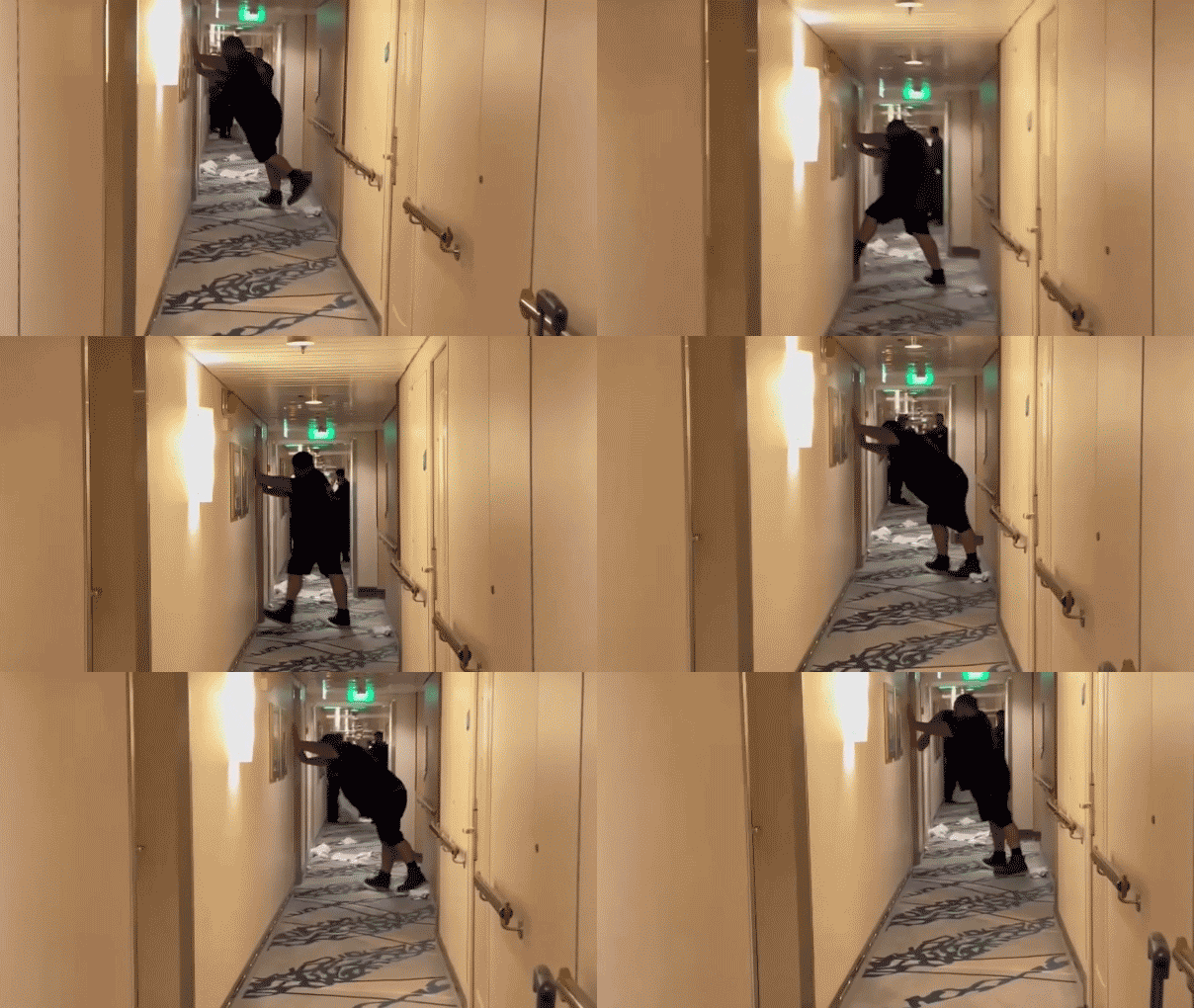
As the evening progressed, Michael, now heavily intoxicated, became disoriented and increasingly agitated while trying to find his cabin. What should have been a situation calling for compassionate assistance quickly escalated into something far more serious. According to the complaint, security and crew members responded by physically restraining Michael, tackling him and compressing his body until he stopped moving. The lawsuit further alleges that under the staff captain’s direction, crew members injected Michael with the sedative Haloperidol and used three cans of pepper spray on him. The combination of physical restraint, chemical sedation, and pepper spray proved fatal. The medical examiner’s report would later confirm that Michael died from “combined effects of mechanical asphyxia, obesity, cardiomegaly and ethanol intoxication,” with the injury occurring from “body compression during restraint by multiple ship security personnel” and “ingestion of ethanol.” Perhaps most disturbingly, after his death, Michael’s body remained refrigerated on the ship until it returned to Los Angeles three days later on December 16.
“Michael’s family has suffered unimaginable heartache and torment caused by Royal Caribbean, a mega cruise line that prioritizes profit over passenger safety,” said Kevin Haynes, a partner at Kherkher Garcia representing the family. His statement cuts to the heart of the lawsuit’s allegations—that Royal Caribbean failed in its most basic duty to protect its passengers. The complaint specifically targets the cruise line’s practices regarding both alcohol service and security protocols. “Crew members, including security and medical personnel, are required to undergo rigorous competency training; it is very clear that Royal Caribbean is completely negligent in the hiring, training and supervision of its vast fleet of maritime employees,” Haynes continued. The lawsuit suggests that this wasn’t merely an unfortunate accident but the result of systemic failures in how the cruise line operates, particularly in situations involving intoxicated guests who need assistance rather than force.
For Michael’s family, the pain extends far beyond the immediate shock of his death. His fiancée now faces raising their son alone, a child with autism who has lost his father in traumatic circumstances. The lawsuit seeks damages under the Death on the High Seas Act, including compensation for loss of support, inheritance, past and future earnings, net accumulations, funeral and medical expenses, loss of companionship and protection, and mental pain and suffering. But no financial settlement can truly compensate for the profound loss they’ve experienced. What was supposed to be a beautiful family vacation ended in unimaginable tragedy, leaving them to navigate grief while simultaneously fighting for accountability from a powerful corporation. Their attorney emphasized that their goal extends beyond their own case: “We are seeing an incredibly alarming number of serious injuries and fatalities on cruise ships of late. Our goal is to force systemic change in the way this industry operates to ensure that no person or family experiences tragedy like this again.”
Royal Caribbean has largely remained silent on the specifics of the case, offering only a brief statement to media: “We were saddened by the passing of one of our guests, worked with authorities on their investigation, and will refrain from commenting any further on pending litigation.” This case joins a growing number of troubling incidents on cruise ships that have made headlines in recent years, raising serious questions about safety protocols, crew training, and corporate responsibility in the cruise industry. As the lawsuit progresses through the legal system, it may shed light on practices that have long remained hidden from public view. For Michael Virgil’s family, however, the focus remains more personal—honoring his memory by seeking justice for his death and ensuring that other families don’t face similar heartbreak on what should be joyful vacations. Their lawsuit stands not just as a quest for compensation but as a demand for accountability in an industry where passengers place enormous trust in crews to keep them safe at sea.