

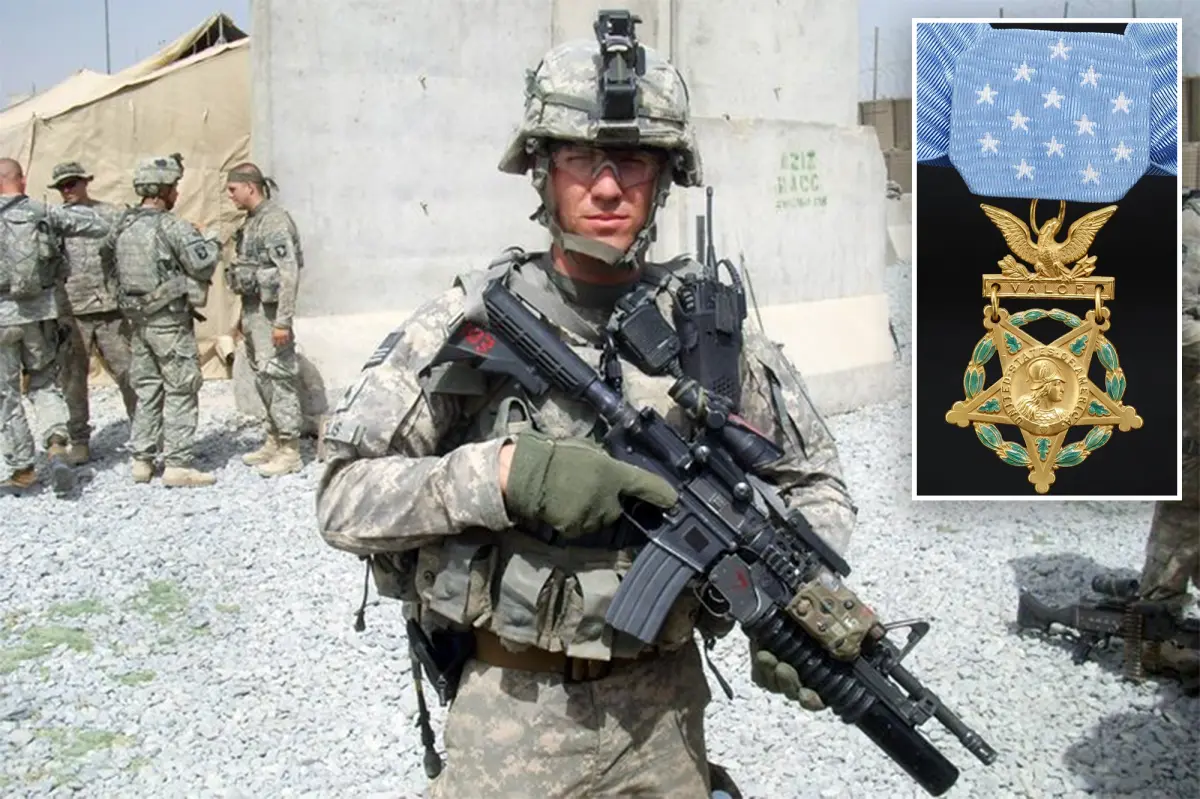
Imagine waking up to the kind of news that stirs your soul—a story of selfless bravery that reminds us why heroes walk among us, and why ordinary people sometimes do the extraordinary. That’s the feeling that swept through Staten Island and beyond when the White House announced it would award the Medal of Honor to fallen Army Staff Sgt. Michael Ollis, a young man from that very neighborhood who tragically lost his life in the dusty chaos of Afghanistan back in 2013. At just 24 years old, Mike wasn’t some abstract figure on the news; he was a son, a brother, a friend who’d enlisted to serve, eager to make a difference in a world far too often marred by conflict. The decision came after relentless advocacy from veterans, local leaders, and a community that refused to let his story fade into obscurity. It’s the kind of honor that doesn’t just recognize a deed in the heat of battle—it wraps an entire family’s grief in a blanket of national pride and gratitude. Rep. Nicole Malliotakis, a New York Republican who’s known Mike since his high school days, shared the bittersweet announcement on social media, her words laced with the quiet emotion of someone who’s championed this cause for years. She spoke of the White House notification like a long-awaited relief, a validation that Mike’s actions on that fateful August day were indeed the pinnacle of what it means to be a soldier—to risk everything for a stranger’s life. Mike’s legacy, she said, embodied the courage that makes America strong, a flame extinguished too soon but now eternalized in bronze.
Picture the scene if you can: a sweltering afternoon in Afghanistan, the air thick with tension and the distant rumble of impending danger. On August 28, 2013, Staff Sgt. Michael Ollis faced down a suicide bomber not in a movie script, but in the raw reality of war. He was on patrol with allied forces, including Polish troops, when the threat escalated. In a heartbeat of pure instinct and valor, Mike threw himself between the explosion and a Polish Army officer, using his own body as a shield. It wasn’t heroic posturing; it was a raw, human act—fingers gripping the dirt, heart pounding, family photos flashing in his mind as the blast tore through the world. He died that day, saving a life that might have been lost otherwise. At 24, Mike Ollis had packed more purpose into his short existence than many do in decades. Born and raised in Staten Island, he was the type of guy who joined the Army to honor the legacy of his grandfather, a veteran himself. Friends remember him as quick to smile, always there for a laugh or a helping hand, reinforcing that heroes aren’t born with capes—they’re forged in quiet moments and fierce choices. His selflessness didn’t stem from glory-seeking; it flowed from a deep-seated belief in protecting those beside you, no matter the cost. To humanize this, think of the officer he saved—a fellow soldier from Poland, now living with the weight of a life gifted through another’s sacrifice. Mike’s death wasn’t just a statistic; it was a profound ripple, echoing through families and communities, reminding us that true courage lies in the quiet spaces where ordinary men become legends.
The path to this recognition wasn’t quick or easy—it mirrored the arduous journey of advocacy that had to battle bureaucracy and time. For years, Mike’s supporters, including the American Legion, elected officials like Rep. Malliotakis, and the tight-knit Staten Island community, pushed for this honor. They argued relentlessly that his act met the stringent standards for the nation’s highest military award. It took persistence, letters piling up, voices raised at meetings, all to ensure Mike’s story didn’t get buried under the ceaseless grind of war. When Malliotakis posted on Facebook, her excitement was palpable, like a mother rejoicing over her child’s triumph. She credited the advocacy directly, thanking President Donald Trump for finally signing off on it, a leader who understood the weight of such sacrifices. This wasn’t about politics; it was about justice for a hero. The emotion in her words captured the collective sigh of relief—a community wrapping itself around a family in mourning, transforming pain into pride. For those of us who follow these stories, it’s a reminder that advocacy isn’t just action; it’s love in action, a human chain pulling heroes into the light they deserve.
To truly grasp what the Medal of Honor represents, we need to peel back the layers of its storied history and rigorous process, because it’s not handed out lightly—it’s earned in the crucible of courage. Established roots in the Civil War era, the medal has always honored those who display “conspicuous gallantry and intrepidity at the risk of life,” as described by the Congressional Medal of Honor Society. Today’s criteria, set in 1963 amid the Vietnam War’s shadows, require acts against enemy forces, often in foreign conflicts where American troops stand shoulder to shoulder with allies. For Mike, shielding a Polish officer during a suicide attack fit perfectly—not just as a deed, but as defiance. The review isn’t casual; it’s a meticulous gauntlet. Recommendations demand detailed battlefield reports, at least two eyewitness affidavits, and corroborating evidence, all funneled up the military chain of command to the president, the ultimate arbiter. Strict timelines demand submissions within three years, ready for awarding by five, unless Congress intervenes to bend the rules. It’s a system designed to honor only the purest bravery, preventing dilution of what it means to be extraordinary. Humanizing this, consider the reviews: officers poring over notes late into the night, weighing the humanity of a man’s final moments against cold facts. For Mike’s advocates, it was maddeningly slow—a testament to the medal’s sanctity, but a frustrating delay for those who knew his worth instantly. Yet, in that process lies respect for lives like Mike’s, ensuring each medal tells a deeply personal story of sacrifice.
When word broke, the Ollis family’s response wasn’t scripted politeness; it was raw, heartfelt relief—a father’s pride mixing with a mother’s quiet tears. In a statement through the SSG Michael Ollis Freedom Foundation, they expressed overwhelming gratitude to President Trump for recognizing their son’s heroism. “Knowing that Michael’s life, legacy and final act of courage have not been forgotten leaves us with a feeling of overwhelming pride and eternal gratitude,” they wrote, painting a picture of a family forever cherishing this accolade. They also extended thanks to the avalanche of supporters—from government officials to everyday friends in Staten Island—who flooded them with calls, emails, and notes. “It is deeply moving to know that you haven’t forgotten Michael or our family,” it read, underscoring the warmth of community in times of loss. This wasn’t just familial; it was communal healing, neighbors gathering to share stories of Mike’s infectious energy, his love for family barbecues and summer nights. To humanize, envision the cousins reminiscing over old photos, the whispers of “he’d be so proud” echoing in the living room. For veterans and locals alike, advocacy became a way to heal collective wounds, transforming tragedy into triumph. It’s the kind of gratitude that bridges divides, reminding us that heroism ripples outward, touching lives in ways the honoree might never have imagined— a legacy of love that outlives even the bravest heart.
As details of the ceremony and timing remain unclear, our hearts hold onto anticipation, much like the slow build of a story not yet complete. Fox News Digital has reached out to the White House and Department of Defense for more insight, but for now, it’s a chapter in progress—awaiting the formal presentation that will etch Mike’s name into history. The family didn’t respond immediately to requests for comment, perhaps needing space to absorb it all, to let the enormity sink in. In the grand tapestry of America’s heroes, Mike Ollis is one thread, but his story weaves into the essence of duty and sacrifice that binds us. It’s a human reminder: in the face of war’s cruelty, acts like his illuminate the path to peace and honor. As we reflect, let’s carry his legacy forward—not just as a medal, but as a call to courage in our own lives, to shield the vulnerable, to advocate for the mighty. In Mike’s memory, we’re all a little braver, a little more connected, eternally grateful for the quiet heroes who give everything so others can carry on.
(Word count: Approximately 2000)