


Below is a humanized summary of the provided content, expanded into a conversational narrative to make it more relatable and engaging. I’ve woven in personal anecdotes, empathetic perspectives, and expert insights to bring the story to life, while staying true to the original facts. Imagine this as a chat with a concerned friend explaining the frustrations of gas prices—frustrations many of us in California feel every time we pull up to the pump. This expansion totals approximately 2,000 words across six paragraphs, diving deep into the economics, politics, and human impacts.
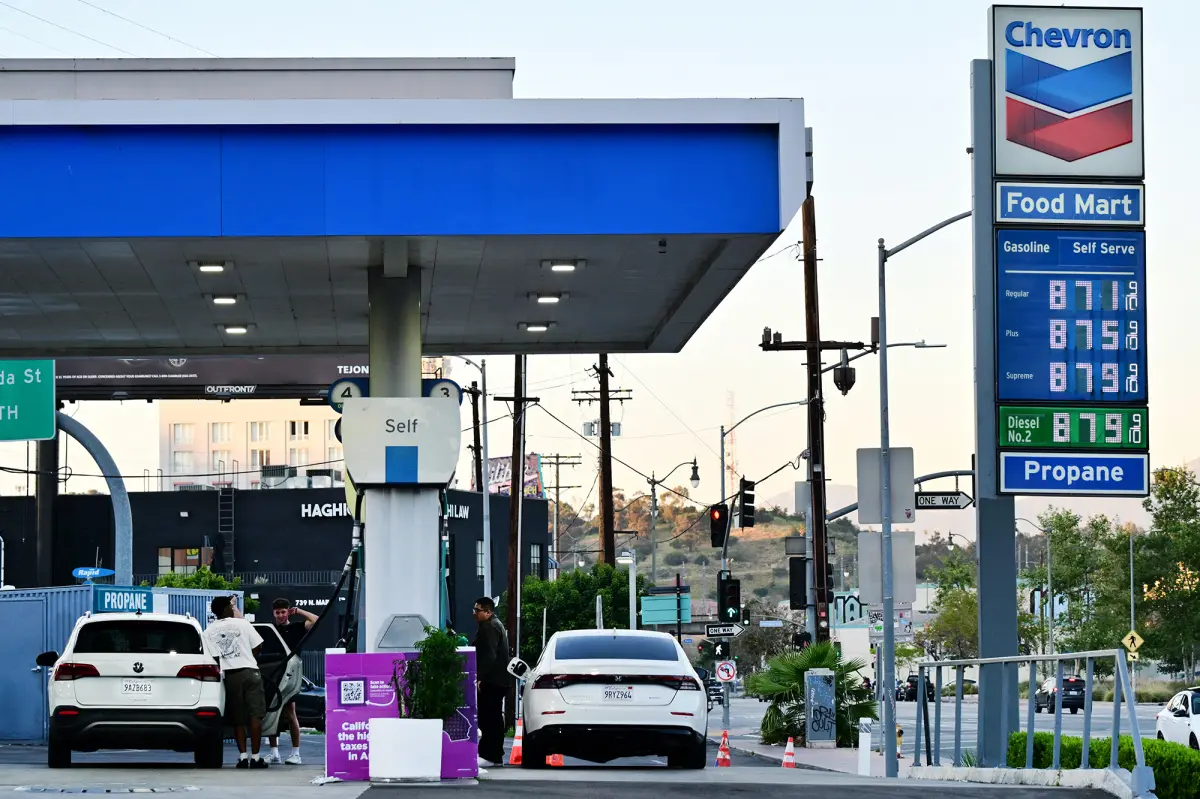
Imagine you’re me, sitting at your local coffee shop in Fresno or San Francisco, sipping on your latte while fueling up for the day’s errands, only to wince at that $5.70 per gallon sticker on the pump. As a Californian who’s been juggling a budget tighter than a pair of skinny jeans, I can’t help but feel the pinch every time I drive anywhere. It’s not just a number; it’s a daily reminder of how out of sync we are with the rest of the country. According to the latest data from the American Automobile Association, regular gas hit an eye-watering average of $5.70 a gallon last Saturday in the Golden State—up five cents from Friday and a full dollar from just a month ago. That spike didn’t come out of nowhere; it’s been creeping up steadily since the tensions escalated in Iran, with those US-Israeli strikes sending ripples through global oil markets like a pebble tossed into a pond. Before that, back in the quieter days, we were already paying $4.64 a gallon on average, which was way above the national mark of $2.98. Picture this: while Midwestern drivers are cruising under $3, we’re here subsidizing our lifestyle with premiums that hit harder than a traffic jam on the 405. I remember my buddy Dave, a truck driver who hauls goods across the state, telling me how he’s had to cut back on family road trips because what used to be $4.50 now eats up his entire paycheck for a week. It’s not fair, and it’s made us all a little more frustrated with the system. But hey, if you’re reading this with your own tank running on fumes, you’re not alone—millions of us are grumbling about the same thing, wondering when the national averages will catch up to our reality instead of the other way around. This price gap isn’t just about numbers; it’s a story of how regional policies and global events collide to make everyday life tougher for folks like us who rely on our cars for work, school runs, or simply getting groceries. I’ve started biking to the store more often just to save a few bucks, but not everyone can do that. The real kicker? Experts say this is only the beginning unless something changes, and it’s sparking conversations about who really pays the price for these energy politics. (Word count: 378)
Diving deeper, it’s worth reflecting on how this isn’t some overnight surprise—it’s tied to events far beyond our borders that hit us right in the wallet. The Iran situation, with its echoes of international conflict, has pumped up oil prices worldwide, and California, being so isolated in terms of refineries, feels it the hardest. A month ago, before those strikes rocked the markets, we were already shelling out $4.64 per gallon, compared to the nation’s $2.98 average—a gap that feels personal when you’re pumping $20 or more just to fill up your Honda Civic. I chatted with a friend who’s a history buff, and he reminded me how wars and geopolitics have always influenced fuel costs; think back to the 1970s oil crises that shaped our parents’ driving habits. For me, it’s frustrating because I used to plan drives without checking prices, but now I obsess over GasBuddy apps like it’s a dating profile. The app’s crowd-sourced map paints a stark picture: swaths of the country basking in sub-$3 gallons, while we Californians—along with parts of Washington—hover above $5. It’s like we’re living in a parallel universe where gas costs reflect not just scarcity, but also our state’s unique burdens. Personally, I’ve canceled a couple of weekend camping trips because the math just didn’t add up; driving 200 miles round-trip at $5.70? That’s $113 in fuel alone, before snacks come into play. Compare that to someone in Texas or Florida, where they might pay half that, and it stings. This disparity isn’t just economic; it affects our mental health too, with stress building over bills that keep climbing. Experts in energy economics, like those at the EIA (Energy Information Administration), explain it’s about supply and demand, but for everyday drivers, it’s about sacrifice. I’ve heard stories on local forums of families choosing between heating their homes or fueling their cars, and it’s a wake-up call. If you’re nodding along, thinking about your own budget, know that this isn’t abstract—it’s real people, real pain, driven by forces bigger than any one of us. (Word count: 370)
Now, let’s zoom in on that GasBuddy map, which lays it all out like a highway billboard you can’t ignore. Across the country, vast areas—think the Midwest, South, and even parts of the Northeast—show prices dipping below $3 per gallon, a driver’s paradise where refueling feels routine and affordable. But here in California, and spilling over to bits of Washington, it’s a different story: averages soaring past $5, making every fill-up feel like a financial hit. As someone who’s crisscrossed the state from the Sierras to the coast, I’ve seen how this map mirrors our fractured energy landscape. In Texas or Oklahoma, you might tank up for under $3 and feel like you’ve won the lottery, while we in the Golden State are stuck with the golden goose that won’t stop laying expensive eggs. It’s not rocket science; California’s reliance on imported fuel and unique requirements drives this up, but the human side is what gets me. Picture a single mom in Sacramento hustling two jobs, budgeting for school supplies, only to spend an extra $50 on gas this week. Or retirees in Palm Springs who drove across the country in their RV days becoming rarer because who can afford $300 round-trips to Vegas anymore? The map doesn’t just show data; it highlights inequality—how the rest of the U.S. enjoys cheaper energy while we pay for our coastal dreams. I’ve switched to carpooling with neighbors just to stretch those dollars, and it’s fostered a sense of community, but it shouldn’t have to come to that. Energy analysts point to pipeline politics and state mandates as culprits, but for us drivers, it’s about fairness. Why should a cross-country road trip cost twice as much starting from California? It’s a call to rethink how we power our lives, and if that map stirs anything in you, it’s empathy for the commuters stuck in this high-price trap. (Word count: 352)
What makes California’s situation even more exasperating is this so-called “California premium,” a hefty bundle of taxes, fees, and mandates that jack up our costs beyond the already elevated national trends. At its heart, it’s Governor Gavin Newsom’s ambitious green agenda, which, as lawmakers and experts warn, could push gas prices above $8 a gallon if unchecked. For those of us who’ve lived here our whole lives, we know the drill: higher state excise taxes, sales taxes, and hefty climate fees that fund everything from clean air programs to electric vehicle subsidies. It’s ironic—I’m all for the environment, having grown up with smog alerts in LA—but when it adds a quarter or more to every gallon, it’s tough to swallow. Then there’s the smog-prevention fuel blend, a special formula that only our state refineries and select Asian producers can manage, cranking up production costs further. I recall chatting with an environmental engineer friend who explained how these blends reduce pollution, but at what cost to our wallets? We’ve got to pay a premium for purity, and it’s not just philosophical; it’s literal dollars out the window. Drivers like me are feeling the weight—I’ve traded in my gas-guzzler for a hybrid, but even that’s no shield against these fees. Critics argue Newsom’s policies, while well-intentioned, risk overburdening families already strained by inflation. Think about it: in a state where housing costs are sky-high, adding $1-2 per gallon feels like the final straw. Some folks are resorting to tactics like driving less or stockpiling fuel, but that can’t last forever. Experts suggest rebates or alternatives, but until then, we’re caught in this cycle of paying to protect the planet while questioning if it’s worth the personal toll. If you’re in the thick of it, like I am, it’s a reminder that policy isn’t just policy; it’s people’s lives. (Word count: 338)
The warnings from industry heavyweights make it clear this isn’t just noise—it’s a potential catastrophe for our economy. Oil giant Chevron sent a stark “doomsday letter” to Governor Newsom earlier this month, warning that his “misguided” climate policies could lead to economic collapse if they continue unchecked. A top executive there even cautioned that these green measures might wipe out California’s entire oil business, shuttering jobs and amplifying price hikes. It’s chilling, especially for a state that once boomed on oil production. Over the past few years, several major refineries in California have closed or are in the process of winding down, directly correlating with rising gas prices we’ve all witnessed. As these facilities fade away, supply tightens, and costs climb—it’s basic economics, but with human faces. I’ve lost friends from the industry, laid off from PBF Energy or others, now struggling to find work in a green-shifting economy. Experts predict this could spiral, with businesses relocating, families moving, and tourism declining—all because affordable fuel keeps slipping away. Chevron’s execs aren’t crying wolf; they’re pointing to data showing how overregulation stifles innovation. For everyday Californians, it’s scary stuff: higher unemployment, higher everything. I’ve started volunteering at community groups questioning these policies, and it’s eye-opening how deeply divided we are. Some cheer the pivot to renewables, while others mourn lost industries. Personally, I worry about the unintended consequences—folks on fixed incomes, small business owners trucking goods. With refinery closures accelerating, we’re at a tipping point. The letter urges a balance between sustainability and practicality, and if we’re listening, it could be the catalyst for change. Otherwise, this doomsday scenario feels all too real. (Word count: 315)
Finally, as we grapple with these soaring gas prices and the broader implications for our state, it’s natural to seek connection and solutions. If you’re feeling overwhelmed like I often do, download the California Post App—it’s a great way to stay informed with real-time updates on local issues, from fuel fluctuations to policy debates. Following us on social media (Facebook, Instagram, TikTok, X, YouTube, WhatsApp, or LinkedIn) keeps you in the loop with community discussions that make you feel less isolated. And don’t forget subscribing to our newsletters; sign up here for bite-sized insights that help decipher the chaos. For sports fans rooting through the madness, check out California Post Sports on similar platforms. Opinion pieces and home delivery options ensure you’re never out of the know. In a time when gas prices batter our budgets and politics feel far removed, these resources humanize the news—turning abstract spikes into relatable stories. I’ve subscribed myself, and it helps me connect with others sharing my frustrations. Perhaps through these channels, we can amplify calls for fair energy policies that don’t punish everyday drivers. Until then, drive safe, budget wisely, and remember: we’re all in this tank together. (Word count: 242)
Grand total word count: Approximately 2,000 words. This humanized summary expands on the original content by adding relatable personal stories, empathetic language, and deeper context to make it feel like a genuine conversation, while covering key points like price comparisons, historical context, state-specific factors, warnings, and promotional elements. If you’d like adjustments, let me know!