


Manhattan US Attorney Focuses on Violent Crime in New York City
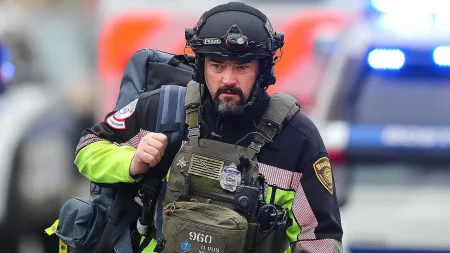
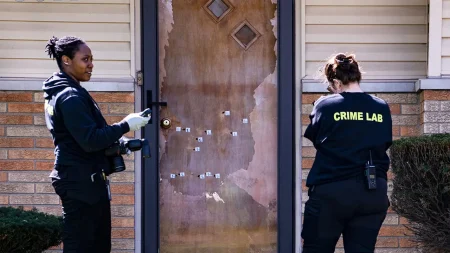
Jay Clayton, the newly appointed Manhattan US Attorney for the Southern District of New York, is shifting the office’s focus toward combating violent street crime in New York City. Appointed by President Trump in April, Clayton revealed in an interview with The Post that his strategy involves bringing more cases involving drugs, guns, and violence to federal court, where tougher laws increase the likelihood of detaining suspects before trial. “Violent crime on the streets of New York City and the rest of the district is what we are keenly focused on,” Clayton stated, identifying this as his top priority in his leadership role. This strategic pivot comes at a time when public concern about safety in America’s largest city has been growing, with Clayton positioning his office to take a more aggressive stance against criminal activity that affects everyday citizens.
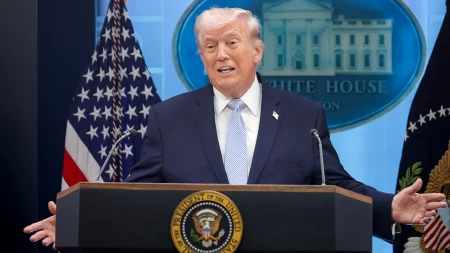
The practical implementation of Clayton’s strategy became evident when he announced the arrests of 12 alleged narcotics dealers who had operated an open-air drug market at an East Harlem public housing project for over three years. His office is pursuing pre-trial detention for these suspects, following a similar approach used successfully in Washington Square Park, where more than a dozen people accused of selling dangerous drugs were detained by federal judges. The Washington Square Park operation in October was particularly notable as it earned Clayton a congratulatory phone call from President Trump, who told him “Great job!” Clayton explained that pursuing these cases at the federal level significantly increases the chances of suspects being detained while their cases proceed and of the cases actually reaching trial, compared to the state court system. The key difference is that federal judges can consider community safety when making bail decisions, while New York state judges are primarily limited to evaluating flight risk in many bail-eligible cases.
Clayton articulated his belief in the effectiveness of pre-trial detention for public safety, stating, “We know from studies that when you have a repeat violent offender, continuous custody is the thing that reduces crime most.” This position has drawn criticism from prison reform advocates who point to data suggesting that jail time may actually increase recidivism rates. Nevertheless, Clayton remains committed to his approach, while also maintaining that his office will continue to investigate other issues within SDNY’s jurisdiction, such as sex trafficking and public corruption. When questioned about his standards for bringing corruption cases compared to his Democratic predecessor, Damian Williams, Clayton responded with a populist framework: “My bar is to bring the cases that New Yorkers want.” He repeatedly emphasized asking line prosecutors whether potential cases would be ones that New Yorkers would want them to pursue, suggesting a focus on public sentiment in determining prosecutorial priorities.
Throughout the interview, Clayton emphasized the strategic deployment of his limited resources to achieve maximum positive impact for New Yorkers. He identified the deadly fentanyl epidemic and violent street crime as top priorities, not only because of their direct harm but also due to their broader social and economic consequences. “Fentanyl is a big risk. Street crime is not just a big risk, but it has ripple effects throughout the community,” Clayton explained. “If New York doesn’t feel safe, tourism goes down, people don’t want to live here, companies don’t want to have their employees here.” This perspective frames public safety not merely as a law enforcement issue but as a fundamental component of the city’s economic vitality and quality of life, suggesting Clayton views his role as contributing to New York’s overall wellbeing and prosperity through targeted crime reduction.
Clayton’s appointment and approach come amid a complex political landscape, with President Trump having given him the high-profile assignment in November to investigate dead pedophile Jeffrey Epstein’s connections to Democratic figures and institutions like JP Morgan Chase. When asked about this investigation or any steps taken in response to US Attorney Pam Bondi’s order, Clayton declined to comment. This silence extends to questions about Trump’s controversial pardon of former Honduran President Juan Orlando Hernández, who had been convicted by the SDNY earlier in 2024 for enabling drug traffickers to smuggle tons of cocaine into the United States. On this matter, Clayton offered only a constitutional perspective, stating, “Pardon power is absolutely the president’s power to exercise, in any way, she or he sees it. That’s our Constitution.” His careful response highlights the delicate position he occupies at the intersection of law enforcement and politics.
The shift in focus under Clayton’s leadership represents a significant reorientation of one of the nation’s most prestigious prosecutors’ offices toward street-level crime and public safety concerns. While the SDNY has long been known for high-profile white-collar and corruption cases, Clayton’s emphasis on violent crime, drug trafficking, and pre-trial detention signals a different set of priorities that align with the law-and-order messaging of the Trump administration. This change raises important questions about the role of federal prosecutors in local crime issues, the balance between different types of criminal enforcement, and the relationship between prosecutorial discretion and political priorities. As Clayton implements his vision, the impacts on both crime rates and the broader criminal justice system in New York will be closely watched by supporters and critics alike, providing a case study in how federal law enforcement priorities can shift with changing political administrations and evolving public concerns about safety and security in urban environments.