



New York Socialists Preparing for Immigration Enforcement Response
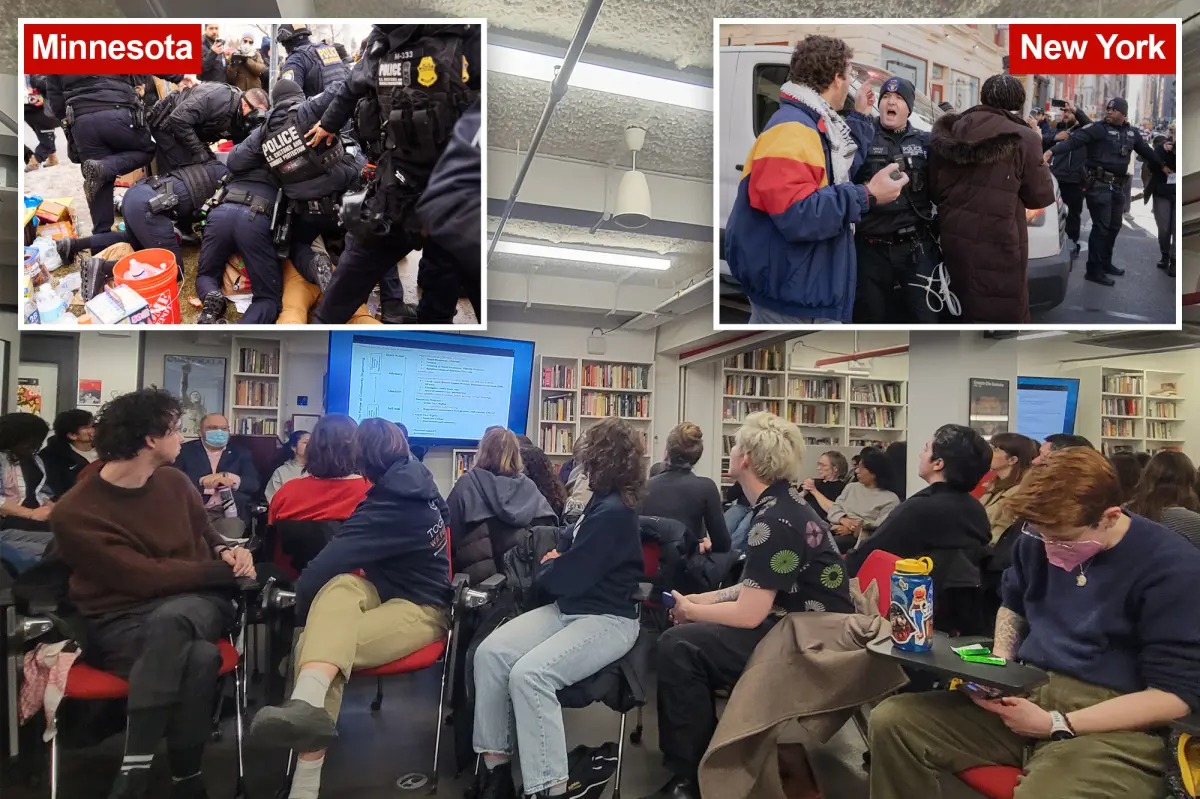
In the heart of New York City, a growing movement is taking shape as socialist activists organize what they describe as a community defense network against anticipated federal immigration enforcement operations. The Democratic Socialists of America (DSA) NYC chapter is mobilizing more than 4,000 volunteers to create “rapid response” teams, preparing for what they believe will be intensified Immigration and Customs Enforcement (ICE) actions in the city. At a recent monthly meeting of their Immigrant Justice Working Group held in Midtown Manhattan, organizers expressed concerns about potential enforcement waves similar to those seen in other American cities. “As we’ve seen in other cities, we still do anticipate a big wave of federal immigration enforcement,” explained a DSA leader identified as Marina, addressing over 100 attendees. “It can be confusing, it can be scary, it can be kind of uncertain what’s happening in New York right now… But we want to be on our front foot if and when it does.”
The organizational effort is substantial, with training programs underway for 2,000 DSA members and another 2,000 non-members, alongside the preparation of 50 additional trainers. The group is also expanding its ICE hotline to operate around the clock and actively recruiting multilingual volunteers who speak languages common among immigrant communities, including Pular, Creole, and Fulani. The gathering represented a diverse coalition, though observers noted many participants were younger, first-time attendees who cited the recent death of Renee Good—a Minneapolis activist fatally shot during an ICE operation—as their motivation for joining. The meeting had the dual purpose of organizing resistance while also serving as a fundraising opportunity, with organizers collecting donations throughout the event to support their planned activities.
The tactics discussed reveal an approach modeled after similar efforts in Minneapolis and other cities, focusing on community alertness and physical presence when enforcement actions are detected. The “form a crowd, stay loud” strategy involves mobilizing large groups to gather at locations where ICE agents are reported to be operating, with the belief that such presence can potentially deter detentions. One distinctive element of their approach includes distributing whistles to volunteers, creating a neighborhood alert system with specific codes to warn of ICE presence. “The whistles carry far and wide,” Marina assured the group, highlighting how this simple tool could serve as a communication method throughout immigrant neighborhoods. The DSA has already begun patrolling areas with large immigrant populations, including Chinatown, Bushwick, and Jackson Heights, both to monitor for enforcement activity and to recruit new volunteers.
The urgency behind these preparations stems from reports that ICE has significantly expanded its personnel over the past year, with agents conducting large-scale operations targeting migrants with criminal convictions or those without legal status. According to media reports cited at the meeting, a senior White House source recently indicated that “California and New York are next” following operations in other states. This comes as the Department of Homeland Security has announced plans to open a new 1,500-bed ICE detention facility in Chester, New York, approximately an hour from the city. This facility would more than double the detention capacity in the New York area, which currently consists of a 1,000-bed center in Newark, New Jersey, reopened during the previous administration. The expanded capacity is widely interpreted as preparation for increased enforcement activities throughout the region.
For many of the activists, their opposition to ICE reflects deeper political convictions about immigration policy and enforcement methods. “ICE is a violent organization and has been emboldened to respond to a lot of the work that many of you participated in,” one leader told the audience, while another member named Landry argued that “the immigrant crisis is part of the US imperialist project, and yet we treat immigrants to the experience of ICE.” These perspectives frame their resistance not merely as opposition to specific enforcement actions but as part of a broader critique of American immigration policies. Meanwhile, ICE officials maintain that their operations target individuals who pose public safety threats, with a December announcement highlighting arrests of migrants convicted of serious crimes including sexual assault and strangulation. “ICE law enforcement officers are sending criminal illegal aliens where they should have been all along – HOME for the holidays,” Assistant Secretary Tricia McLaughlin stated regarding those operations.
The emerging confrontation between activist groups and federal authorities highlights the deep divisions over immigration enforcement in America’s largest city. For the DSA and its allies, the organization represents community solidarity and protection for vulnerable populations facing deportation. Their multilingual hotlines, training sessions, and neighborhood alert systems reflect a grassroots approach to creating what they see as necessary safeguards. At the same time, federal authorities frame their enforcement actions as essential public safety measures targeting individuals with criminal backgrounds who are present in the country illegally. As both sides prepare for potential escalation, New York City finds itself at the center of one of the nation’s most contentious policy debates, with communities caught in between competing visions of public safety, national security, and human rights. The coming months will likely determine whether the activist networks being established will face the enforcement surge they anticipate, and how effective their prepared responses might prove to be.