




A Delicate Balance: New York City’s Changing Approach to Homelessness
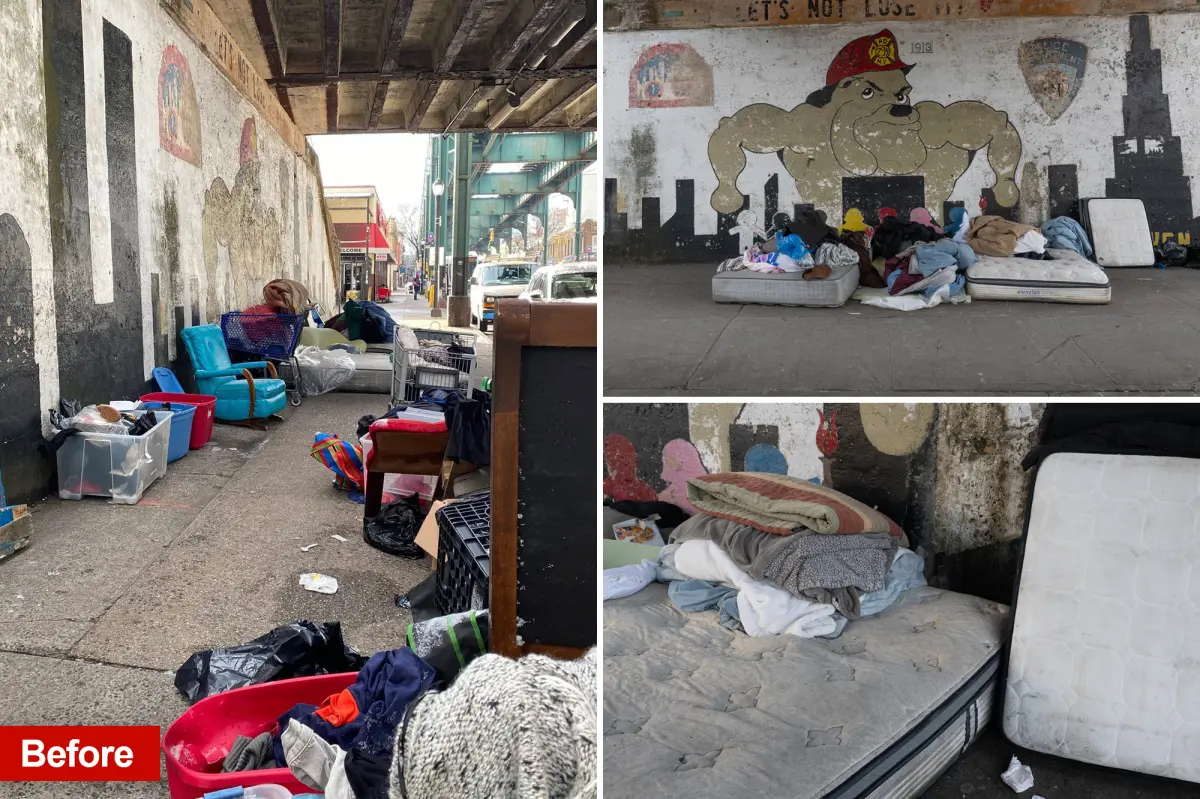
In the heart of Queens, beneath the Jamaica Avenue overpass near 98th Street in Woodhaven, a controversial situation has unfolded that highlights the complex challenges of addressing homelessness in New York City. Under Mayor Zohran Mamdani’s administration, there’s been a significant shift in how the city handles homeless encampments. This week, city sanitation workers cleaned around a makeshift shelter area but left behind air mattresses and neatly folded personal belongings—an approach that has sparked heated debate among local residents, business owners, and elected officials. Councilwoman Joann Ariola expressed her frustration, asking rhetorically, “What’s next, a city-funded turndown service for people sleeping on the streets?” Her concern reflects a broader sentiment among some community members who feel the pendulum has swung too far in accommodating street homelessness at the expense of neighborhood quality of life.
The situation in Woodhaven illustrates the practical effects of Mayor Mamdani’s new guidelines, which have fundamentally altered how law enforcement can respond to homeless encampments. Police officers who previously might have cleared such areas now find themselves in a more limited role—required to document cases with body cameras and offer medical services if needed, but unable to compel individuals to leave unless directed by a supervisor in life-threatening situations. This approach is part of Mamdani’s broader vision for a “more humane” strategy to tackle homelessness, centered around a “housing-first approach” to be implemented through his planned $1 billion Department of Community Safety. This department aims to rely primarily on civilian social workers rather than police officers to connect homeless individuals with supportive or rental housing options. The policy shift represents a fundamental philosophical change in how the city views its responsibilities toward its most vulnerable residents.
For the Woodhaven community, the impact has been immediate and tangible. Carmela Isabella, a 52-year-old lifelong resident, reported that a group of men living under the overpass for months became noticeably more established in their presence since Mamdani took office in January, gradually transforming the public walkway into what she described as “their own apartment.” Her concerns extend beyond mere aesthetics—she worries about schoolchildren who must walk past the encampment daily. The location itself is laden with symbolism: situated beneath a rusted steel trestle once used by the Long Island Rail Road, featuring a mural honoring first responders now splattered with pigeon droppings. When Isabella attempted to report the situation through the city’s 311 complaint system, she received a response claiming no encampment existed, despite photographic evidence she had submitted—highlighting potential disconnects between official responses and on-the-ground realities.
The statistics tell their own story about changing community perceptions and responses. This particular site has generated twelve complaints since January, all related to homeless encampment and illegal dumping—a stark contrast to 2025, when it prompted only a single 311 complaint. Frank Castelli, chairman of the Woodhaven Business Improvement District, voiced concerns about the economic impact, asking, “If you are going to go shopping on Jamaica Avenue, who’s going to want to pass by that?” His question underscores the challenging balance cities must strike between compassion for those experiencing homelessness and maintaining the viability of business districts that provide jobs and services to the broader community. The situation has created confusion among city agencies, with Councilwoman Ariola noting, “Agencies are paralyzed right now because there is no clear directive coming from the administration.” Fundamental questions remain unresolved, such as how long abandoned belongings should be preserved at vacated encampment sites before being removed.
The repercussions of Mamdani’s policy shift extend well beyond Woodhaven. In Chelsea, a relatively affluent Manhattan neighborhood, residents report both expanding existing encampments and new ones emerging. The perspectives are sharply divided: one homeless individual living under a West 18th Street sidewalk shed expressed appreciation for the end of encampment sweeps, noting that he had previously “lost a lot, a lot of stuff” during such operations. His comment highlights an often-overlooked reality—that homeless individuals frequently lose vital personal documents, medications, and irreplaceable mementos during traditional encampment clearances. Yet nearby resident Alejandro Rojas, a 51-year-old data scientist, voiced the counterpoint that the mayor must be “more aggressive” in addressing encampments or they will “keep growing,” arguing that the current approach amounts to “doing nothing.”
This situation in New York City reflects a nationwide struggle to find humane, effective approaches to homelessness—a crisis that touches on housing affordability, mental health care, substance abuse treatment, economic inequality, and the fundamental question of what public spaces are for and who has the right to occupy them. The Mamdani administration’s shift away from punitive measures toward a housing-first approach aligns with research suggesting that stable housing must precede addressing other issues like mental health or addiction. However, the implementation challenges are substantial, especially in a city with extraordinarily high housing costs and limited availability of supportive housing units. As the situation continues to unfold, New Yorkers across the political spectrum are watching closely to see whether this new approach will ultimately reduce homelessness and improve quality of life for all residents—those with homes and those without. The delicate balance between compassion and community standards, between immediate humanitarian needs and long-term solutions, remains elusive but essential to pursue.