



The Disco Light Drama: When Neighbors Clash Over Holiday Cheer
In the bustling heart of New York’s Upper West Side, a peculiar controversy recently illuminated the often complex dynamics of apartment living. What began as one resident’s simple attempt to bring holiday cheer to his modest room in the Dexter House hostel on West 86th Street spiraled into a neighborhood dispute that perfectly captures the delicate balance between personal expression and communal consideration in dense urban environments. The situation involved a bright, purple, rotating light that some neighbors described as a “disco ball inferno” casting unwelcome illumination into nearby apartments. The incident, while seemingly trivial at first glance, opens up a fascinating window into how different people perceive their rights and responsibilities within shared spaces, and how communication—or lack thereof—can either resolve or exacerbate tensions in community living.
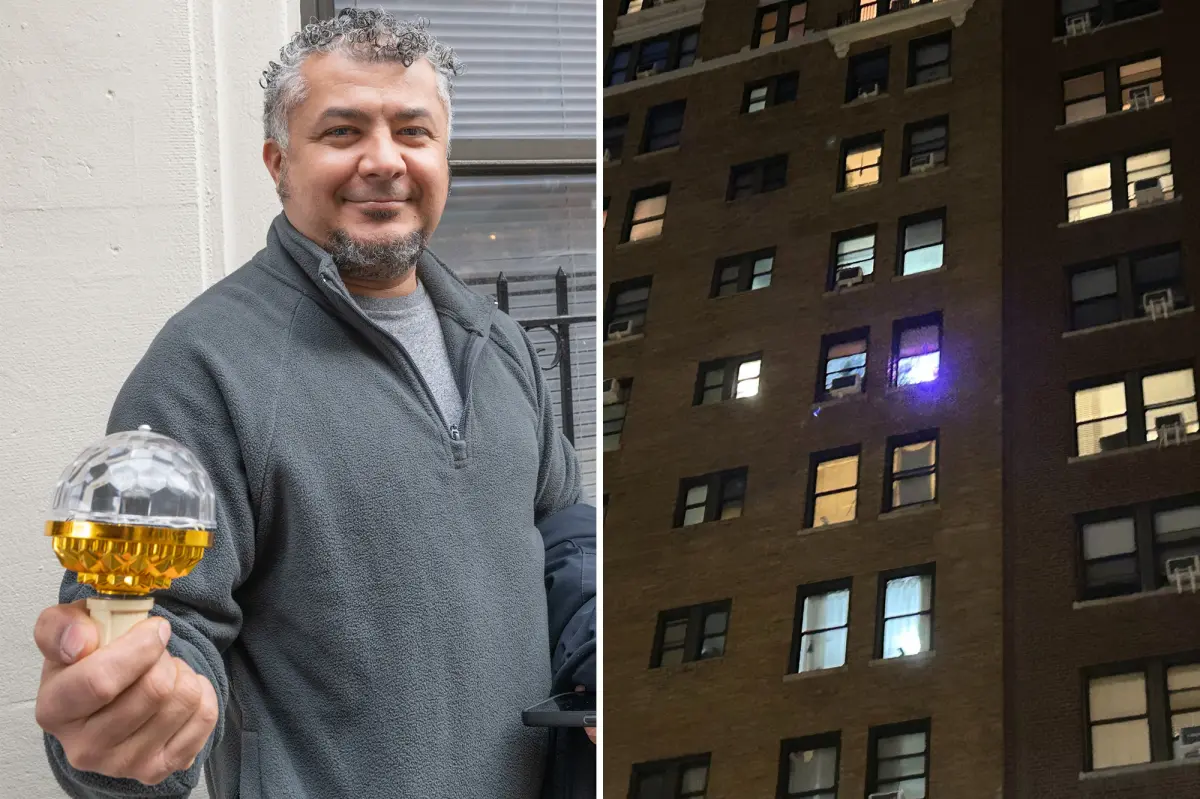
The controversy began when residents across from the Dexter House hostel between West End Avenue and Riverside Drive noticed bright purple lights flashing into their windows at night. Many assumed it was a disco ball, with one anonymous tipster telling West Side Rag that the light “flashes in the windows of all the apartments across the street all night and is extremely disruptive.” Some residents reported contacting non-emergency police services, only to be told that no laws were being broken, leaving them frustrated with what they perceived as inconsiderate behavior from a neighbor they dubbed “Disco Guy.” The criticism escalated on local forums, with comments ranging from comparisons to disruptive tap dancing at 3 AM to more serious concerns about health risks. “Light pollution is a serious problem and flashing lights can cause seizures,” one commenter warned, while others simply labeled the light’s owner as “not being a good neighbor” for disrupting the established peace of their living environment.
When approached about the situation, the source of the controversial light revealed a very different perspective. The ninth-floor resident, who spoke only Spanish and preferred to remain anonymous, explained that the offending item wasn’t actually a disco ball but a $2.50 rotating Christmas light purchased from a 99-cent store. “I would never think this would create such a scandal,” he said, expressing genuine surprise at the uproar his simple decoration had caused. Having moved into the building just six months prior, he had bought the light three weeks earlier “to feel happy in my room for the holiday,” with no intention of bothering anyone. The man seemed genuinely perplexed by the controversy, asking, “What problem is this creating? I stay in my room, I am peaceful, I am not bad.” Perhaps most tellingly, he mentioned that no one had approached him directly about the issue, and the building’s doorman confirmed that no complaints had been filed through official channels, suggesting a breakdown in the most basic form of neighborly communication.
Upon learning about the distress his festive light had caused, the resident immediately took it down and handed it to his friend and neighbor, Carol Moody, who defended his character: “Look how respectable he is, you told him there is a problem and he took it down. They should have come here and told the doorman, and the doorman would talk to him. This is crazy.” This swift resolution highlighted how quickly the problem could have been solved had the concerned neighbors attempted direct communication rather than anonymous complaints online or calls to authorities. The incident raises questions about how we navigate conflicts in communal living spaces—whether we choose direct dialogue that recognizes our neighbors’ humanity or indirect methods that can sometimes escalate tensions unnecessarily. It also reveals how cultural and language differences can sometimes create unintentional misunderstandings in diverse urban settings, where a simple holiday decoration can be interpreted very differently depending on one’s background and expectations.
Interestingly, public opinion on the matter was far from unanimous. While some residents were genuinely troubled by the light, many others rallied to defend the man’s right to decorate his personal space as he wished. “I don’t suppose any of the claimants have ever heard of shades, drapes or blinds,” one commenter quipped, suggesting that those bothered by the light had options to mitigate its impact without restricting others’ freedom of expression. Others took a more political angle, with comments like “Let’s hear it for UWS privilege” and references to “liberals with their artisanal lattes” who “can’t even deal with a little Disco Fever.” These responses reflect the broader cultural tensions that sometimes underlie seemingly simple neighborhood disputes, where class, cultural backgrounds, and different conceptions of personal rights can color how people interpret and respond to minor inconveniences in shared urban spaces.
At its core, this Upper West Side “disco ball” incident encapsulates the universal challenge of balancing individual expression with community consideration. What one person sees as a harmless decoration that brings personal joy, another experiences as an intrusive disruption to their home environment. The resolution—quick and amicable once direct communication occurred—demonstrates how many neighborhood conflicts might be more easily resolved through face-to-face conversation rather than escalation to authorities or public forums. As cities grow more dense and diverse, these small moments of friction and resolution offer valuable lessons about coexistence. The humble Christmas light, now removed from its window perch, illuminated not just a room but the complex social dynamics that make urban community living both challenging and rewarding—a reminder that behind every glowing window is a person with their own story, seeking their own small measure of joy in the shared tapestry of city life.