





The Fight for Power in the Big Apple: A Battle Over Bills and Blackouts
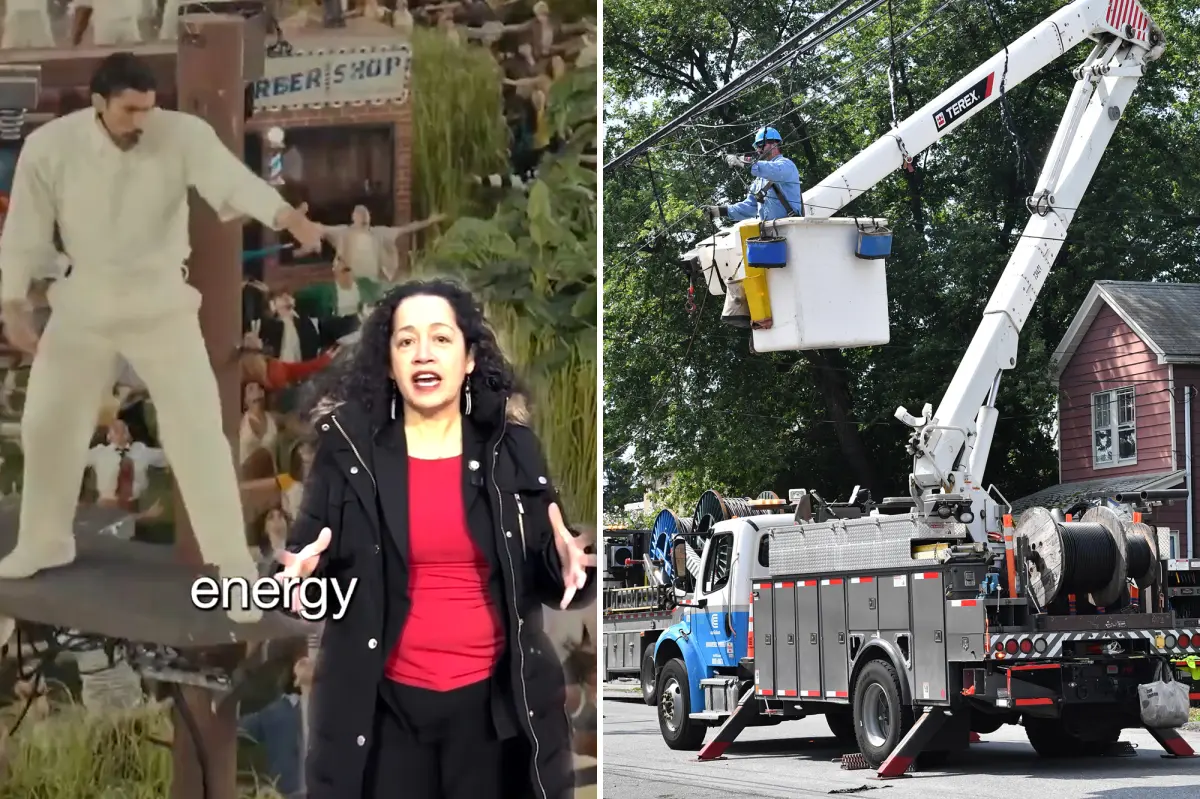
Imagine waking up in New York City to find your lights flickering out because the city’s energy grid is struggling under the weight of corporate greed and mismanagement. That’s the nightmare scenario painted by the Democratic Socialists of America (DSA) in New York City, who are rallying behind a bold vision: turning over control of our electricity to the public instead of leaving it in the hands of profit-hungry monopolists like Con Edison. Mayor Eric Adams—a former comrade in these progressive circles before his mayoral run—and the far-left crowd see this as a grassroots uprising against skyrocketing bills that hit working families hardest. It’s not just rhetoric; they’re channeling real-life frustrations, drawing parallels to Puerto Rico’s infamous energy woes to stir the pot. Remember that Super Bowl halftime show where Bad Bunny rapped about the apocalypse, dubbed “El Apagón” after his island’s endless blackouts? The DSA’s using that as fuel for their ad campaign, slamming Astoria Councilwoman Alexis Aviles for linking it to New York’s own privatized mess. It’s a call to action, they say, to reclaim our power and dethrone Con Ed, that giant lurking in the shadows of Gotham. But is this just political theater, or a genuine shot at empowerment? As someone who’s lived through my share of winter storms in the Bronx, where a single outage can derail an entire week, I get the appeal—it feels like the underdog pushing back against the big guys on Wall Street. Yet, the question lingers: Can the government really run this better than a corporation that’s weathered hurricanes and heatwaves? The DSA argues yes, pointing to Puerto Rico’s 2017 privatization as the smoking gun. They say it led to union-busting, jaw-dropping price hikes, and blackouts that turned daily life into a survival game. “From New York City to P fucking R,” they chant, “Con Ed out.” It’s catchy, sure, tapping into that raw anger over bills that seem to triple overnight without rhyme or reason. Back in 2017, Puerto Rico sold its energy system to a private firm, and boom—chaos ensued. Workers lost jobs, families drowned in debt, and the lights went out like clockwork. Fast-forward to our concrete jungle, where Con Ed holds a near-total monopoly on electricity, powering over 3.6 million homes across the five boroughs and Westchester. The DSA sees it as the same poison: shareholders lining their pockets while residents pay through the nose. In their eyes, it’s time to shift to “public power,” where the city takes the reins, prioritizing people over profits. But let’s be real—privatization didn’t exactly ruin Puerto Rico overnight; years of neglect and disaster response failed beforehand helped pave the way. Still, the analogy hits home for many, evoking that gut-wrenching sense of injustice. As I think about my own apartment, where every monthly bill feels like a punch in the gut, I can’t help but sympathize with the outrage. Why shouldn’t our energy be a public good, like water or roads? The DSA’s vision is tantalizing—imagine affordable power that adapts to our needs, not the stock market. But history shows public utilities can sometimes become bloated bureaucracies, bogged down by red tape. Is New York ready for that gamble? The movement’s gaining steam, with events and social media blasts amplifying voices from Queens to the Bronx, but critics are sharpening their knives.
Exposing the Monopoly and the Dream of Collective Control
Diving deeper into the DSA’s crusade, it’s clear they’re not just venting—they’re building a case that Con Ed’s iron grip on Gotham’s energy is strangling us all. With near 100% of the city’s electricity flowing through the company’s veins, it’s a monopoly in every sense of the word, pulling strings behind the scenes while we foot the bill. Imagine if one entity controlled all the water in NYC; that’s what we’re dealing with here, and the DSA says enough is enough. Their push for “public power” isn’t some utopian fantasy—it’s grounded in real grievances, like those erratic price spikes that can triple your bill on a whim. I recall last summer’s heatwave, when my AC gulped electricity like it was free, and the charge came back biting harder than expected. The group’s ad, starring Councilwoman Aviles, hammers home the point: Privatized energy equals pain for the people. They reference Puerto Rico not to dramatize, but to warn—after privatization, rates soared, unions crumbled, and blackouts became the norm, inspiring Bad Bunny’s fiery anthem. “El Apagón” isn’t just a song; it’s a rallying cry for resistance. Aviles, in the DSA’s Instagram video, lays it out plain: “That’s why NYC DSA is fighting to implement public power.” It’s a message for everyday New Yorkers tired of feeling powerless against corporate giants. From Astoria’s bustling streets to Harlem’s vibrant heart, people are nodding along. Mayor Mamdani, once a fiery voice for this cause as a Queens assemblymember, saw the potential early on. In 2021, he fronted a campaign video blasting “for-profit monopolies” for jacking up costs with Wall Street in mind. “Why not treat electricity as a public good?” he asked, his passion infectious. It resonated with folks like me, who see energy not as a commodity, but a right. The video painted a picture of an alternative: a system free from lobbyist dollars, focusing on sustainability and affordability. Yet, lurking in the background are questions. Con Ed isn’t just evil incarnate; they built this grid over decades, weathering storms like Sandy. Shifting to public control means massive upheaval—jobs, infrastructure, regulations. Would the city really innovate faster, or get mired in politics? The DSA counters that private greed breeds inefficiency, like how Con Ed’s spending on lobbying keeps prices high. It’s a debate as old as America itself: private enterprise versus public oversight. As I chat with neighbors at the local bodega, some swear by it, sharing stories of unaffordable winters. Others eye it warily, fearing higher taxes or worse service. The human side? It’s about fear and hope. For immigrants from places like Puerto Rico settling in the Bronx, this isn’t abstract—it’s about avoiding the blackouts they fled. The movement’s humanizing the energy debate, turning obscure policy into a fight for dignity. But can we sustain this momentum without alienating moderates? It’s a tightrope walk, balancing idealism with reality.
Critics Cry Foul: Dashing Hopes with Harsh Reality Checks
Not everyone’s buying the DSA’s narrative, though—and the pushback is coming loud and clear from critics who see the Puerto Rico comparison as a stretch that borders on insulting. Former NYC Councilman Joe Borelli, no stranger to blunt talk, called it out in an interview with The Post, saying the analogy “almost demeaned the crisis there.” Puerto Rico’s energy fiasco wasn’t just privatization’s fault, he argued; it’s a tangled mess of bad governance, policy blunders, and yes, those devastating hurricanes that crippled the grid long before any sale. Blackouts are endemic, a crisis so profound it birthed cultural touchstones like Bad Bunny’s track—a testament to real suffering, not a punchline for political ads. Borelli didn’t stop there: “Can anyone point to one thing New York City operates more efficiently than a private sector counterpart?” It’s a zinger that hits home, questioning whether handing power to City Hall—famous for bureaucratic snafus like delayed subway repairs—would fix anything. Imagine if the MTA ran our electricity; cue the irony, as riders deal with endless delays. Critics argue that public utilities often become playgrounds for political hackery, where jobs go to friends rather than talent, and innovation stalls. In New York’s case, Borelli suggested jokingly, “It’s probably better to let Bad Bunny run it than the city.” It’s harsh, but it underscores a deeper skepticism. As someone who’s navigated NYC’s public services—from parks to schools—I’ve seen the ups and downs. Sure, Con Ed isn’t perfect; outages happen, bills climb, but we’re talking New York City, where reliability is key. The grid here is one of the nation’s most dependable, not some rickety setup begging for overhaul. Pouring taxpayer dollars into a municipal takeover could lead to inefficiencies that worsen the problem. Moreover, governance in places like Puerto Rico shows how corruption can turn “public good” into personal gain. The DSA’s crusade risks overlooking these pitfalls, critics say, by romanticizing a solution that’s proven fickle elsewhere. Take Compton, California, where public power sparked hope but led to higher costs and debt. Or Seattle’s beloved city light, now grappling with climate goals but funded by regressive fees. The human cost? For blue-collar workers at Con Ed, this could mean layoffs or reduced wages in a “public” shift. It’s not just policy; it’s livelihoods on the line. Yet, the critics’ tone feels paternalistic sometimes, dismissing the DSA’s passion as naïve rather than addressing root injustices. In my neighborhood, where rising costs disproportionately hit low-income families, the outrage feels valid. But Borelli’s point lingers: Bravado isn’t enough. If public power fails, who takes the blame? The movement needs concrete plans beyond slogans, or it risks becoming another failed promise in a city that’s seen ’em come and go.
Mamdani’s Role and the Corporate Counterpunch
Peeling back the layers, Mayor Eric Adams’ past affiliation with the DSA adds intrigue to this power play. Before donning the mayoral sash, Adams—then Eric Mamdani—was a vocal advocate for socialist ideals, backing the group’s 2021 push for public energy while still a Queens assemblymember. In a compelling campaign video at age 29, he branded himself as the face of change, decrying how “for-profit monopolies” rake in profits while charging “some of the highest rates in the country.” “We need an energy system that treats electricity as it is—a public good,” he proclaimed, weaving in themes of prioritizing people and the planet over Wall Street shareholders. It was inspiring stuff, tapping into the frustrations of voters grappling with unpredictable bills that could spike threefold. Picture a young, charismatic leader under the spotlight, his words echoing in community meetings and online forums, rallying support from progressives eager for reform. Adams’ involvement humanized the cause, transforming abstract policy into a personal crusade. But as mayor, he’s toned down the rhetoric, navigating the realities of governance—balancing budgets, appeasing unions, and dealing with the DSA’s more radical edges. Con Edison, the target of all this ire, isn’t rolling over. As a publicly traded giant, they defend their monopoly with facts and figures, arguing that their model delivers unmatched reliability. A spokesperson pointed out that New York City’s energy system ranks among the nation’s premier, thanks to disciplined investments amid growing demands—from rising populations to tech booms. They highlight how purchasing power on wholesale markets keeps things agile, not shrouded in government inefficiencies. And here’s the kicker: Nearly 30% of your electric bill stems from the city’s own high property taxes on Con Ed’s infrastructure—a tax hike Adams himself proposed just weeks ago, as reported. It’s a juicy irony: The mayor advocating for lower bills by choking the grid-conscious spender. Adams’ move, aimed at funding education and housing, inadvertently fuels the cost spiral the DSA decries. As a resident paying those taxes, it stings—connecting the dots between policy decisions and my wallet. Con Edison’s rebuttal is clear: Public takeover wouldn’t magically cut prices; it might replicate the rigidities of state-run systems elsewhere, where innovation lags and costs soar. Think about it: In cities like L.A., where public power prevails, they’ve faced infrastructure backlogs and higher rates than neighboring privatized areas. For families like mine, budgeting energy already eat into groceries; any disruption could spell trouble. The corporate stance emphasizes stability over revolution, reminding us that Con Ed employs thousands of New Yorkers, from linemen to engineers, contributing to local economies. Adams’ pivot from fiery advocate to pragmatic mayor mirrors the city’s evolution—idealism meeting the grind of daily administration. Yet whispers persist: Is he quietly supporting the DSA’s agenda through allies, or has ambition shifted his loyalties? In human terms, it’s about trade-offs—dreams of equity clashing with the mechanics of a megalopolis.
The Broader Push for Public Power: Inspiration and Hurdles
Zooming out, the NYC DSA’s campaign isn’t isolated; it’s part of a national wave of energy-democratization efforts, inspired by global models and local frustrations. Their February Instagram video and Astoria Councilwoman Aviles’ ads galvanize, calling for “Con Ed out” in a chant that resonates with environmentalists, labor activists, and everyday rate-payers. It’s not mere idealism; it’s fueled by data: NYC’s bills are among the priciest, burdened by monopolistic practices that stifle competition. Aviles ties it to Puerto Rico’s privatization debacle, underscoring how corporate greed exacerbates crises like blackouts, which devastate livelihoods—from small businesses losing inventory to families enduring heat-related health scares. Bad Bunny’s “El Apagón” becomes a cultural bridge, reminding New Yorkers of vulnerable communities in oscillating analogies. This human element is key: Stories of elders shivering in apartments or kids studying by candlelight during outages make the abstract tangible. The DSA envisions a future where public power funds green initiatives, like solar panels on rooftops and cheaper access for the poor, aligning with Mayor Mamdani’s historic calls for planet-over-profits. Back in 2021, his video laid the groundwork, exposing how lobbying keeps the monopoly intact. It’s a narrative that empowers voices often drowned out, like single moms on fixed incomes or immigrants rebuilding lives post-storm. Yet, challenges loom large. Transitioning requires billions in bonds or taxes, risking voter backlash. Critics highlight failed experiments: Stockton, California, saw public power dreams crumble under cost overruns. Locally, Con Ed’s infrastructure—spanning substations and miles of wires—would need a seamless handoff, avoiding the disruptions that plagued other takeovers. Labour advocates celebrate potential for union-owned models, but skeptics fear bureaucracy. In my interactions with advocates, optimism bubbles—imagining community-driven grids. But realism tempers it; Puerto Rico’s “crisis” stems from flaws predating privatization, like underinvestment amid colonialism echoes. New York could learn, stressing transparency and efficiency. The DSA’s push, however, ignites dialogue on equity, urging fairness amid climate urgency. As temperatures rise, reliable power becomes survival. Personally, it evokes memories of my grandmother’s stories from a pre-privatization era, where stability felt assured. Is public power the answer? It’s alluring, democratizing something essential. But scalability matters—Could NY handle it without the snares ensnaring Puerto Rico? The debate evolves, blending passion with pragmatism, as citizens demand more than breadcrumbs from the electric throne.
Weighing the Costs: Economic Realities and Human Futures
At the core of this electrifying debate lies a fundamental economic truth: Shifting to public power isn’t a silver bullet, as Con Edison contends, because much of the cost burden originates not from corporate fat cats but from municipal levies and market dynamics. The company underscores that it doesn’t produce electricity in-house; instead, it buys on wholesale markets, a process unchanged by ownership style. Thus, any downturns in global energy prices or supply disruptions would still ripple through, be it under public or private hands. Imagine the city stepping in: It would inherit Con Ed’s obligations, like maintaining that sprawling grid, but without the profit motive driving efficiencies. Property taxes, which Adams championed to rise, inflate bills by nearly a third— a tacit admission that government decisions perpetuate inflation. For the average New Yorker, balancing this means tougher choices: Pay more for schooling or risk dimming lights? Critics like Borelli argue public entities rarely outshine private ones in efficiency, citing examples where state-run systems falter under political pressures. In human terms, families budgeting on $50,000 incomes feel the pinch acutely— a unexpected surplus becoming rare. The DSA’s vision could foster equity, subsidizing low-income households, but at what expense? Bond issuances might balloon debt, burdening generations. Con Ed’s reliability, hardened by events like Hurricane Sandy, offers stability; public overhauls risk instability, as seen in places with prolonged transitions. Advocates counter with inspirational tales: Boulder, Colorado’s model slashed costs through renewables. Yet, NY’s scale dwarfs it—3.6 million customers versus hundreds. Labour impacts loom: Con Ed’s workforce, vital to the economy, fears cuts in a takeover. As someone supporting community in Queens, I see benefits in localization, empowering neighborhoods. But hubris haunts; without robust plans, it mirrors Mamdani’s early zeal now tempered by office. Ultimately, the choice pits idealism against realism: Empower citizens or jeopardize reliability? In our diverse city, voices from Puerto Rican descendants advocate fervently, viewing it as justice overdue. Environmentalists push for sustainability, linking public power to green jobs. Skeptics urge caution against overreach. The conversation, charged with humanity, demands compromise— perhaps hybrids blending private agility with public accountability. As bill seasons approach, hopes hinge on informed decisions beyond rhetoric, ensuring energy serves all without deepening divides. It’s a poignant reminder: In the quest for power, the true winners must be the people, not policies. The DSA’s spark could ignite progress, but only if fueled by practicality and unity.