



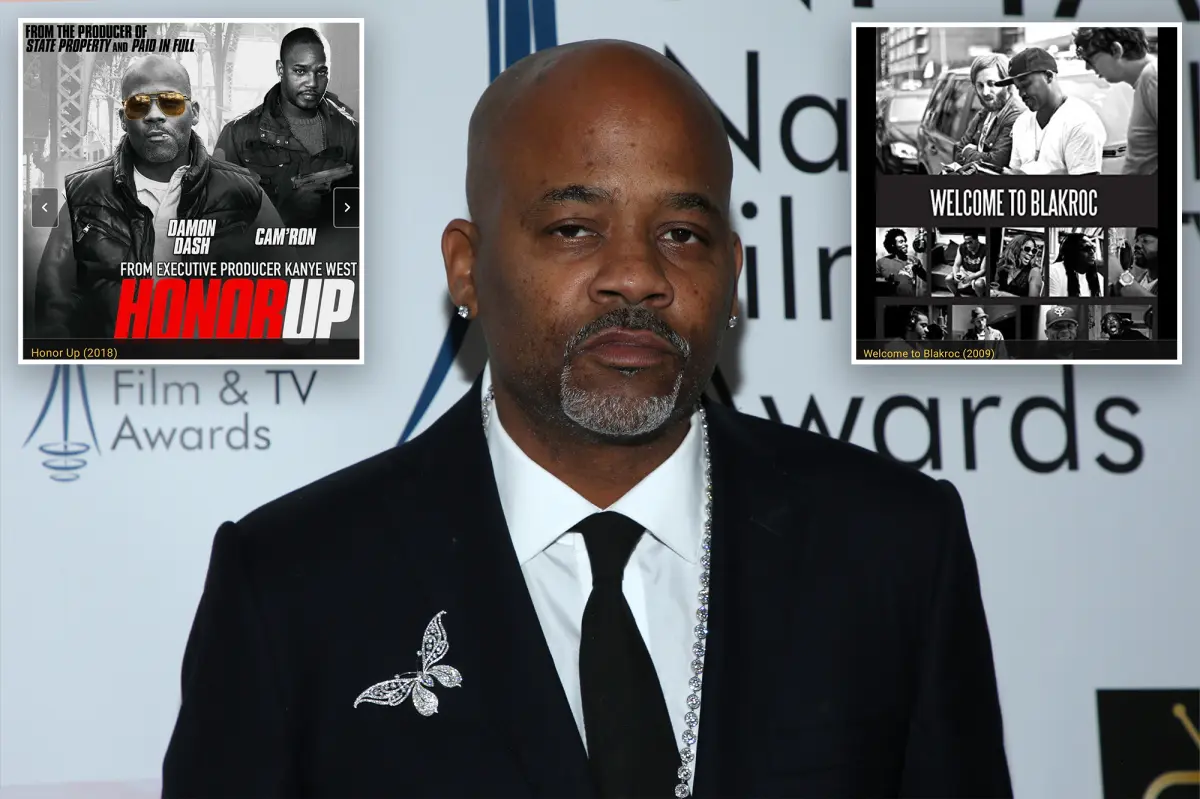
Damon Dash’s Fall From Hip-Hop Mogul to $100 Bankruptcy Auction
In a startling demonstration of how far the mighty can fall, former Roc-A-Fella Records co-founder Damon Dash saw his filmmaking company, Poppington LLC, auctioned off for a mere $100.50 on Tuesday. The auction was held in an attempt to offset the approximately $1 million Dash owes from multiple defamation lawsuits. Only one bidder showed up—Mike Muntaser, CEO of Muddy Water Motion Pictures, who himself has a claim to $973,000 of Dash’s debt from three civil lawsuits. “I think he’s a fool, man,” Muntaser remarked about Dash after placing his winning bid. The purchase wasn’t made for business reasons but rather as a “jab” at Dash, whom Muntaser blames for years of unnecessary litigation instead of resolving their differences amicably. “He’s just a problem,” Muntaser explained. “He has an ego. I think he’s just bitter [coming] from where he was to where he is, and he just blames everybody else and doesn’t look at himself in the mirror.”
The auction represents just one chapter in Dash’s ongoing financial saga. In September, he declared bankruptcy, claiming to have only a few thousand dollars to his name despite owing an estimated $25 million in federal and state taxes, child support, and various other debts. At least $5 million of that sum is owed in civil lawsuits with attorney Chris Brown’s clients. Brown, who will receive $33.50 from the auction after winning his own $150,000 civil lawsuit against Dash, suggests the bankruptcy filing is merely another attempt by Dash to evade his financial responsibilities. Dash has previously faced jail time threats for refusing to pay his civil debts, showing a pattern of avoidance rather than accountability. “It’s just silly,” Brown commented regarding Dash’s ongoing legal troubles and defiant behavior.
The auctioned Poppington LLC included rights to several films, most notably “Honor Up,” which featured performances by Dash himself, rapper Cam’ron, and Dash’s cousin Stacey Dash (known for her role in the ’90s classic “Clueless”). Other works in the portfolio included the sequel “Too Honorable,” a documentary called “Welcome to Blakroc,” and a personal project titled “We Went To China: Our Search For Like Minded Individuals.” Attorney Chris Brown had hoped the collection might fetch at least a few hundred thousand dollars from outside bidders, but interest was nonexistent. “It’s more of an undertaking of what they viewed Dash’s work to be as opposed to anything else,” Brown noted, referencing Cam’ron’s recent Instagram comment calling “Honor Up” simply “wack.” Brown added with apparent bewilderment, “Like, no one cares that you went to China, Mr. Dash. I guess I really don’t know what to make of that.”
Behind the auction lies a complex web of legal disputes between Dash and filmmaker Josh Webber, along with Muntaser. The pair have successfully sued Dash twice for defamation, and just the week before the auction, they filed a third defamation lawsuit against him for comments made during his appearance on the popular “Breakfast Club” podcast earlier this fall. These allegedly slanderous statements mirror claims Dash had previously made under oath at an earlier defamation trial. Brown expressed frustration at Dash’s persistent behavior: “I have no idea why he continues to slander Josh [Webber]. Frankly, what I desire the most is for him to just stop talking about my clients.” This ongoing pattern suggests that Dash has difficulty accepting the consequences of his actions or moving on from perceived slights.
The auction and Dash’s current circumstances represent a dramatic fall from grace for a man who once stood alongside industry titans like Jay-Z. In the late 1990s and early 2000s, Dash was a major force in hip-hop as co-founder of Roc-A-Fella Records, helping launch and develop some of the most successful careers in the music industry. He projected an image of wealth, power, and business acumen, making his current predicament all the more striking. The contrast between his former glory and present struggles raises questions about the sustainability of success without proper financial management and interpersonal skills. While some of his peers have maintained or grown their wealth and influence, Dash appears caught in cycles of conflict and financial distress.
Muntaser’s final comments perhaps most poignantly capture the tragedy of Dash’s trajectory: “For him being on a big stage with like Jay-Z and [Ye], why are your peers doing good, [being] constructive, and you’re just playing games with others?” he questioned, before adding simply, “May God guide him.” This sentiment reflects not just frustration but a certain sadness at watching someone who once had tremendous potential and opportunity squander it through what appears to be poor decision-making and an inability to adapt. The $100 auction is thus not merely a financial transaction but a symbolic representation of how reputation, relationships, and resources can diminish when not properly managed—a cautionary tale from the entertainment industry about the fragility of success and the importance of character in sustaining it.