






The Enigmatic Journey of Nadia Marcinko
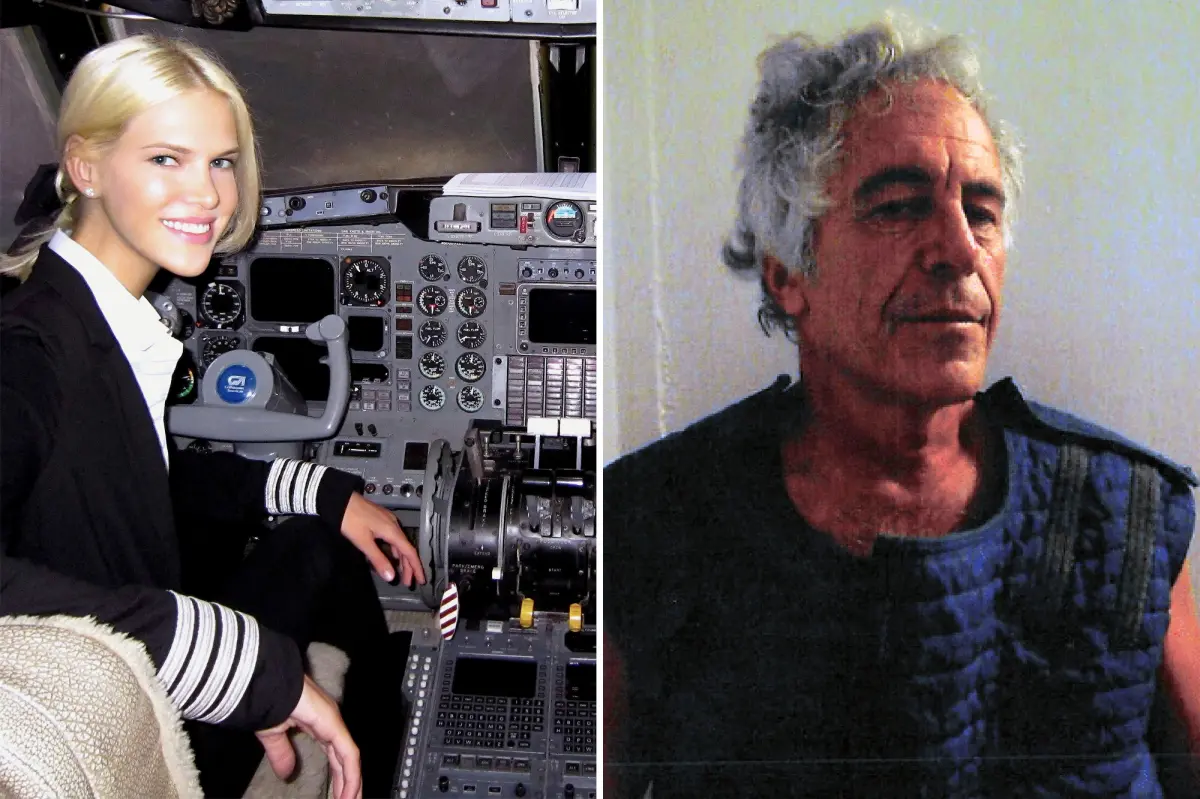
Nadia Marcinko was once a radiant Slovak model with dreams of a glamorous life in the spotlight, but her path led her into the dark underbelly of Jeffrey Epstein’s world. At just a young age, she was lured to the United States with promises of fame and fortune, only to find herself entangled in a web of manipulation and exploitation. By the time she was flying Epstein’s infamous Lolita Express jet, shuttling wealthy elites across the globe, Nadia had become one of the most mysterious figures in his scandal-riddled empire. Her story, pieced together from newly released Department of Justice files, reveals a woman who traded secrets for a chance at freedom and normalcy. In 2022, as her visa expired, Nadia turned to the FBI for help, agreeing to share what she knew about Epstein and his chief accomplice, Ghislaine Maxwell. It was a deal that could grant her legal asylum in the country she had called home for years, far from the threats she might face in Slovakia. But beneath the headlines, Nadia’s narrative is one of vulnerability and survival—a young woman who arrived as a hopeful immigrant and left battered by Epstein’s psychological grip. She wasn’t always the pilot; she started as an 18-year-old drawn into his orbit, believing in a fairy-tale romance that slowly unraveled into coercion. The files paint her as someone who cooperated fully, detailing her experiences from 2018 to 2022 in interviews that spanned phone calls and in-person meetings. Special Agent Amanda Young of the FBI’s child exploitation division wrote that Nadia participated “extensively,” providing insights into Epstein’s operations. This wasn’t just about testifying; it was about reclaiming her story from the shadows. As someone who had been trafficked and manipulated, Nadia saw cooperation as a step toward healing, her lawyers argued, emphasizing how she was “working on her healing and finally trying to put all of this behind her.” In emails exchanged with the FBI, her representatives urged assistance, not just for her future but as a humanitarian act. Nadia deserved a chance to build a life without fear, they insisted, after years of silence and secrecy. Reflecting on her decision, one can imagine the trepidation she felt—betraying powerful figures who once controlled her world. Epstein’s circle was merciless, known for silencing dissenters. Yet, Nadia’s choice to speak marked a turning point, proving that even in the midst of devastating personal loss, human resilience can spark change. Her story humanizes the broader Epstein saga, showing how one woman, armed with courage and backed by the justice system, dared to expose the truth.
From Model to Co-Conspirator: The Shadows of 2008
Before her name became synonymous with scandal, Nadia Marcinko was just an Eastern European beauty chasing the American dream. Slender and stunning with striking blonde hair, she epitomized the allure that Epstein and his associates preyed upon. Recruited through Jean-Luc Brunel, a notorious figure in the modeling world and a key Epstein ally, Nadia arrived in the United States in the early 2000s, her visa seemingly a ticket to success. But behind the glitz of fashion shows and private jets, a sinister reality unfolded. By 2008, she was implicated in Epstein’s “sweetheart” deal, a Florida plea bargain where he admitted to state prostitution charges but avoided federal sex-trafficking allegations, sparing him decades in prison. Nadia’s name appeared as a co-conspirator, accused of aiding in acts that preyed on minors to gratify Epstein’s desires. Yet, her lawyers staunchly maintained she was a victim herself, ensnared in a system that exploited her youth and naivety. At the time, Nadia was in her early 20s, already molded by Epstein’s influence. The deal shielded powerful figures, allowing Epstein to continue his predatory ways, while figures like Nadia remained peripheral, their stories buried. Psychologically, this must have been crushing—a young woman realizing her perceived complicity stemmed from manipulation, not malice. Reports suggest she was coerced into a “coercive sexual relationship,” harbored by Epstein and his network for their purposes. Imagine the internal conflict: freedom promised, only to be yanked away by legal entanglements. Despite the accusations, Nadia was never charged, a testament perhaps to her status as an unwilling participant. In the years that followed, she tried to forge a new identity, distancing herself from the scandal. But the stigma lingered, painting her as elusive and evasive. The 2008 deal highlighted the flaws in the justice system, where wealth and influence could dilute accountability. For Nadia, it was a chapter that forced self-reflection—how did she end up here, from a small-town Slovak girl to the heart of a global sex-trafficking ring? Her journey speaks to the blurred lines between victim and participant in such cases, urging empathy rather than judgment. Recovering from trauma like this involves years of therapy and reinvention, and Nadia’s path illustrates that no one’s story is purely black and white.
The Years of Silence and the Turning Point in Cooperation
For a decade after the 2008 plea, Nadia Marcinko lived in relative obscurity, her life shrouded in secrecy. The woman who had once buzzed with energy on Epstein’s jet now retreated, grappling with the fallout of her association. Whispers and accusations followed her, but direct action was scarce. Then, in 2018, something shifted. Motivated perhaps by her own need for closure or spurred by growing public outrage over Epstein’s crimes, Nadia reached out to federal authorities. Over the next four years, from 2018 to 2022, she engaged in deep cooperation, sharing detailed accounts of her experiences. The FBI’s special agent Amanda Young confirmed this in a letter: Nadia had “participated in several telephonic and in person meetings” related to Epstein and Maxwell’s cases. This wasn’t perfunctory; it was extensive, offering insights into the inner workings of their trafficking operation. For someone who had been described as elusive, Nadia’s willingness to talk marked a profound change. She recounted her recruitment, the manipulation, and the roles played by others in Epstein’s circle. Legally, this cooperation could redefine her standing—transforming her from a potential liability to a shielded witness. Emotionally, it was cathartic, a chance to voice suppressed traumas. Victims like Nadia often fear retaliation; speaking out requires immense courage, especially against networks that thrive on silence. Her lawyers framed it as part of healing, noting she was “trying to have a somewhat normal life.” In FBI communications, young painted Nadia as coerced, recruited and harbored for exploitative ends. This portrayal wasn’t mere sympathy; it was factual, drawn from her disclosures. By cooperating, Nadia risked ostracism but gained a sense of agency. The turnabout in 2018 coincided with Epstein’s re-arrest, amplifying the stakes. Imagine the weight she carried: memories of flights to exotic islands, of coerced encounters, all now fuel for justice. Her story underscores how survivors can evolve from passive figures to active contributors, humanizing the mechanics of whistleblowing in high-stakes investigations. Through her, we see cooperation as a double-edged sword—an act of bravery that promises protection but demands vulnerability in an unforgiving spotlight.
Bargaining for Freedom: The Visa Plea and FBI Support
As Nadia’s cooperation intensified through 2021-2022, her personal circumstances reached a crisis point. Her temporary status in the United States, once secured through modeling visas and later her aviation business, expired, leaving her at risk of deportation. Slovak citizens like her faced bureaucratic hurdles, but for Nadia, returning home wasn’t just inconvenient—it was fraught with danger. Having spoken to the feds, she feared retaliation from Epstein’s lingering associates or even Slovak authorities who might view her as tainted. Her lawyers moved swiftly, leveraging her testimony for immigration relief. In heartfelt pleas to FBI agents, they highlighted her victimhood and ongoing healing. “She is finally trying to put all of this behind her,” wrote attorney Erica Dubno in an email to special agent Young, expressing gratitude for the bureau’s support. This wasn’t mere advocacy; it was a strategic alliance, exchanging information for security. The FBI advocated on her behalf, submitting declarations to US Citizenship and Immigration Services. Young attested that Nadia had been “recruited, harbored and obtained by Jeffrey Epstein and others for purposes of a coercive sexual relationship,” emphasizing she couldn’t safely return home. This language positioned her as a trafficking survivor deserving asylum, not an opportunist. Psychologically, seeking this help must have been humbling—admitting weakness to officials in a nation that once symbolized her dreams. Yet, the FBI’s endorsement, backed by Biden-era priorities on human trafficking, tilted the scales. By 2022, Nadia secured terms to stay, a victory born of vulnerability. Her story illustrates how cooperation can yield practical freedoms, transforming legal jeopardy into stability. For many immigrants entangled in crime syndicates, this path is a lifeline, blending justice with personal salvation. Nadia’s case shines a light on the human costs of prolonged proceedings, where every delay heightens fear. In her gratitude emails, one senses a story of redemption: from coerced silence to empowered advocacy. It’s a reminder that in the labyrinth of immigration and justice, individual stories matter, and support from institutions can mend lives shattered by exploitation.
The Intimate Details: Emails Revealing a Twisted Bond
Diving deeper into Nadia’s life unveils the raw, personal dynamics of her relationship with Epstein, captured in a trove of emails reviewed by investigators. These messages, spanning from around 2003 onward, portray not just a predator’s hold but a young woman’s futile quest for love amid coercion. Nadia, just 18 when their sexual encounters began, poured her heart into what she saw as a romance, writing of planning her life around him and the “fantasy” that shattered. Epstein, ever the manipulator, alternated between affection and contempt, berating her for failing to meet his demands. In one fiery 2006 email, when she was 21, he lashed out: “As opposed to learning to have fun fishing for girls, your focus was how ‘disgusting’ the bait is.” He criticized her reluctance to dance or engage in “fun sex things,” framing her hesitations as betrayal. This wasn’t mutual adoration; it was control, with Epstein pressing her to recruit other young women, expressing frustration when she returned from Europe “empty handed.” Witnesses have claimed Nadia, herself a minor then in some accounts, was involved in coerced acts with other underage victims as early as 2002, complicating her role further. Yet, her attempts to break free around 2010—seeking her own apartment and lamenting the “sick” feeling of a future without him—show a soul trapped in emotional turmoil. Despite the fractures, bonds lingered; she gained her pilot’s license during this period, transitioning to captain the Lolita Express. Flying provided escape, a skill that empowered her to literally soar beyond Epstein’s grasp. By 2011, with his financial help, she launched Aviloop, an aviation company blending flying with edgy marketing. Epstein quipped about its website: “Mix of porn, Groupon and flying,” suggesting a “buy with us — WE give a flying f–k” campaign, reflecting his crude influence. This venture wasn’t just business; it sustained her visa after modeling gigs dried up. Their communication dwindled after 2018 as she cooperated with authorities, signaling a final severance. These emails humanize the horror—revealing Nadia’s innocence eroding under Epstein’s schemes, her vulnerability feeding his empire. She wasn’t just a participant; she was sculpted by his words, her aspirations twisted into tools for abuse.
Piecing Life Back Together: Aviations, Accusations, and Moving On
With Epstein’s empire crumbling and her cooperation yielding visa protections, Nadia Marcinko embarked on the challenging journey to rebuild her life in 2022 and beyond. Now 40, she channels her piloting expertise into private endeavors, far removed from the controversies that defined her youth. The aviation company she founded, Aviloop, became her sanctuary, offering stability and purpose amidst the chaos. Yet, echoes of the past persist. Florida court documents accused her of facilitating sex acts with minors to cater to Epstein’s urges, accusations she never faced trial for, partly due to the 2008 deferral. Her lawyers, protective as always, declined comment, shielding her from further scrutiny. Emotionally, this must be a delicate dance—balancing closure with lingering shadows. Cooperation brought relief, but whispers of complicity haunt public perception. Nadia’s story prompts reflection on recovery: therapy, community, and perhaps new relationships to mend the scars. She might spend days training pilots or gazing at the skies, the same skies over which she once flew dark secrets. For survivors like her, normalcy arrives not in waves of joy but in quiet consistency—waking up without dread, pursuing hobbies without manipulation. The Epstein affair, through figures like Nadia, reminds us that exploitation’s tentacles reach far, but so does human grit. Her shift from model-victim to informed ally underscores resilience, proving that even in the most twisted narratives, redemption is possible. As investigations continue, Nadia’s legacy evolves from enigma to emblem, inspiring others to speak and heal. In her flight path forward, we find hope—a woman who navigated storms and emerged steering her own destiny.