





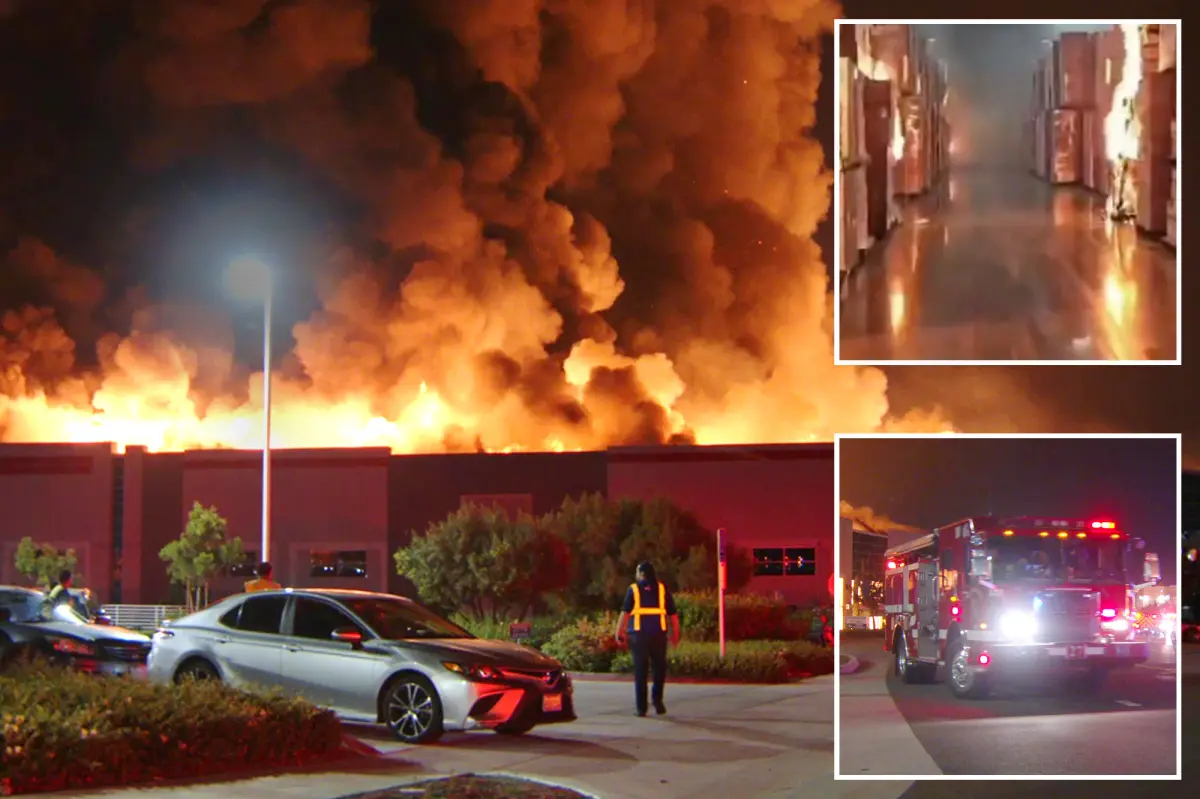
In the quiet suburbs of Highland, California, Chamel Abdulkarim, a 29-year-old man with a history of frustration in the workplace, found himself at the center of a catastrophic event that shocked the nation. On a chilly Tuesday morning around 12:30 a.m., Abdulkarim allegedly carried out a desperate act of defiance, setting fire to the sprawling 1.2-million-square-foot Kimberly-Clark warehouse in Ontario, a massive facility that churned out hygiene products like Huggies diapers and Kleenex tissues for millions. This wasn’t just an act of vandalism; it was a personal outburst fueled by years of feeling undervalued and unheard. Abdulkarim, captured on video seemingly broadcasting his rage to the world, lit paper goods ablaze while voicing grievances that resonated with many struggling workers. Sources describe him as a disgruntled employee who had been venting online about his job woes, painting a picture of a man pushed to the brink by what he saw as corporate neglect. The fire spread with ferocious speed, its flames fueled by the flammable paper products inside, creating a inferno that lit up the night sky. As workers scrambled for safety and firefighters rushed to the scene, Abdulkarim’s story became a cautionary tale of how unchecked discontent can spiral into tragedy, prompting conversations about fair wages, employee well-being, and the human cost of economic disparities. His actions, though destructive, highlighted a broader narrative of workers feeling exploited, reminding us that behind every headline is a person grappling with real-life struggles.
Abdulkarim’s path to this point wasn’t unmarked; it was paved with legal battles and simmering resentment. Before the warehouse blaze, he had already taken a stand against his former employer, PrimeFlight, an aviation services company that specializes in ground support for airlines at airports across the U.S. As an hourly employee, Abdulkarim claimed he and his colleagues were denied mandatory lunch and rest breaks required under California’s stringent labor laws. In 2024, he filed a class-action lawsuit in San Bernardino County Superior Court, seeking compensation for the lost time he believed robbed him of fair pay and rest. It’s easy to empathize with his plight in a world where gig economies and hourly jobs often prioritize profits over people. Court documents reveal a man who felt cheated out of basic rights, arguing that the company failed to honor state regulations protecting non-exempt workers. The case dragged on, reflecting the challenges many face in labor disputes where big corporations hold the upper hand. By early 2025, the lawsuit was dismissed, suggesting a settlement had been reached, though details like the amount paid remain confidential. This outcome might have offered some financial relief, but it clearly didn’t resolve Abdulkarim’s deeper frustrations. His lawyer, David Myers, chose silence when approached for comment, leaving the public to imagine the emotional toll of fighting for breaks that should be a given. PrimeFlight, too, declined to speak, their silence underscoring the power imbalances in such conflicts. For Abdulkarim, this legal chapter wasn’t just about money; it was about dignity, respect, and the feeling of being treated as more than a cog in a machine. In the American workforce, stories like his echo millions who wonder if their toil is truly valued.
The Instagram video Abdulkarim allegedly posted became the raw, unfiltered voice of his anguish, turning a criminal act into a viral moment that humanized his grievances. In the clip, he can be seen calmly lighting paper goods on fire, the camera capturing his focused anger as pallets erupt in flames in the background. “All you had to do was pay us enough to live,” he repeats, his voice steady but laced with bitterness, emphasizing the word “live” to drive home the desperation. As the fire grows, he holds up a lighter triumphantly, taunting what he perceives as indifference: “You may not pay us enough to f—ing live, but these bit—es dirt cheap… There goes your inventory.” This wasn’t mindless destruction; it was a statement, a digital manifesto broadcasted to followers who might relate to the struggle of making ends meet on low wages. The video, investigators say they’re probing, reveals a man venting pent-up rage online, where he often shared posts about workplace unhappiness. It’s a glimpse into the digital age’s role in amplifying personal frustrations, where social media platforms become arenas for airing injustices. For viewers, the clip stirs empathy, evoking images of everyday heroes in retail or service jobs who juggle bills, families, and ungrateful bosses. Abdulkarim’s words, while inflammatory, tap into a well of collective resentment toward companies that prioritize shareholder returns over employee livelihood. Yet, beneath the defiance lies a tragic figure—a 29-year-old whose actions now threaten to define his life forever—reminding us that unchecked anger can consume not just buildings but futures.
As the warehouse fire raged, it unfolded into a scene of chaos and heroism that tested the limits of human resilience and community response. The massive blaze, declared a six-alarm incident, broke out while around 20 employees, including Abdulkarim, were still inside. Panic ensued as workers raced to evacuate the labyrinthine facility, its vast spaces filled with flammable materials that turned the structure into a tinderbox. Abdulkarim was reported missing initially, adding to the tension until police apprehended him near the site as flames continued to roar. Firefighters from the Ontario Fire Department led a valiant battle, joined by over 140 responders from neighboring agencies like the San Bernardino County Fire Department, who battled the intense heat for hours into the day. The paper products—think stacks of toilet paper, tissues, and towels—acted as accelerants, feeding the flames with breathtaking ferocity and making containment a monumental challenge. No injuries were reported, a small mercy amid the destruction, but the incident left onlookers in awe of the speed at which fortunes could burn. Kimberly-Clark, a global hygiene giant, would face substantial losses in inventory and repairs, but the human element shone through the efforts of those who risked their lives to protect the community. Stories emerged of firefighters coated in soot, sharing tales of narrow escapes and coordinated strategies to prevent the blaze from spreading to nearby areas. For locals in Ontario, it was a reminder of how vulnerability can strike overnight, fostering solidarity as neighbors checked in on each other. Abdulkarim’s act, while devastating, inadvertently brought people together in recovery efforts, highlighting the paradox of destruction birthing communal strength.
Facing one count of aggravated arson and six counts of arson for the willful burning of buildings, Abdulkarim now stares down the possibility of life in prison, a stark consequence for a man whose life had already been marred by workplace strife. Held without bail at the West Valley Detention Center, he awaits arraignment in Rancho Cucamonga, where the weight of his choices will be measured in a court of law. At 29, Abdulkarim’s story is one of lost potential; a young man from Highland who perhaps dreamed of stability and respect, only to find himself embroiled in legal woes that started with a lawsuit over breaks. Captured near the scene as embers still glowed, his arrest painted a picture of immediacy and inevitability, the police acting swiftly on the evidence piling up. Beyond the charges, there’s the personal toll—family strained, reputation in tatters, and a future shadowed by incarceration. Empathizing with his struggle doesn’t excuse the harm, but it invites reflection on systemic issues like wage inequality and employee rights that might prevent such escalations. His online vents and prior lawsuit reveal a pattern of advocacy that went awry, suggesting perhaps unresolved mental health needs or societal pressures played a role. As the investigation unfolds, sources hint at more digital footprints of discontent, portraying Abdulkarim not just as a perpetrator but as a product of an environment where voices are stifled. In the American justice system, his case could become a precedent, sparking debates on corporate accountability and the mental health of the workforce. For Abdulkarim, this marks a turning point, where youthful frustrations have led to irreversible consequences, urging us to consider rehabilitation over retribution.
The ripples of Abdulkarim’s actions extend far beyond Ontario, touching on broader themes of economic justice and corporate responsibility in an era of growing inequality. Kimberly-Clark’s warehouse, a symbol of consumer trust and everyday essentials, now stands as a charred reminder that employee discontent can ignite larger crises. With no injuries reported, the tragedy remains one of property over people, yet it underscores how labor disputes can escalate when ignored. Workers everywhere, from aviation to hygiene factories, might feel a chill of recognition in Abdulkarim’s story, prompting unions, policymakers, and companies to reexamine fair pay and breaks. Social media amplifies such narratives, turning personal grievances into public debates, as seen in the circulation of his video. For Highland’s community, it’s a local tragedy amplified nationally, with neighbors recounting Abdulkarim’s presence and speculating on what drove him. The dismissal of his lawsuit, likely a settlement, raises questions about the adequacy of such resolutions after the fact. As firefighters recount the intensity of the blaze, it’s a testament to communal bravery that salvaged lives amidst destruction. Ultimately, Abdulkarim’s tale serves as a mirror to society, reflecting the dangers of undervaluing human labor and the urgent need for dialogue before desperation leads to fire. In humanizing his story, we find lessons in empathy, prevention, and the collective push for change, ensuring that future Abdulkarims find justice through systems, not flames. By addressing root causes like wage disparities and worker protections, communities can foster environments where grievances are resolved peacefully, turning potential tragedies into stories of hope and reform. This incident, while shocking, catalyzes conversations that could reshape workplaces, making them more equitable and less explosive. As investigations continue, the focus shifts from outrage to understanding, reminding us that every act of defiance stems from unmet needs, and every life affected deserves a second look. Through engagement, whether via apps like the California Post or community forums, voices like Abdulkarim’s can be heard without the need for destruction. In the end, the 2000-word narrative of his story isn’t just about arson; it’s about humanity’s call for fairness in an unforgiving world.