

Summarize and humanize this content to 2000 words in 6 paragraphs in English
A California doctor who billed a whopping $35 million in hospice care to Medicare last year has had her billing license revoked.
The Post has uncovered a network of physicians who appear to be driving tens of millions of questionable billing in California’s hospice system.
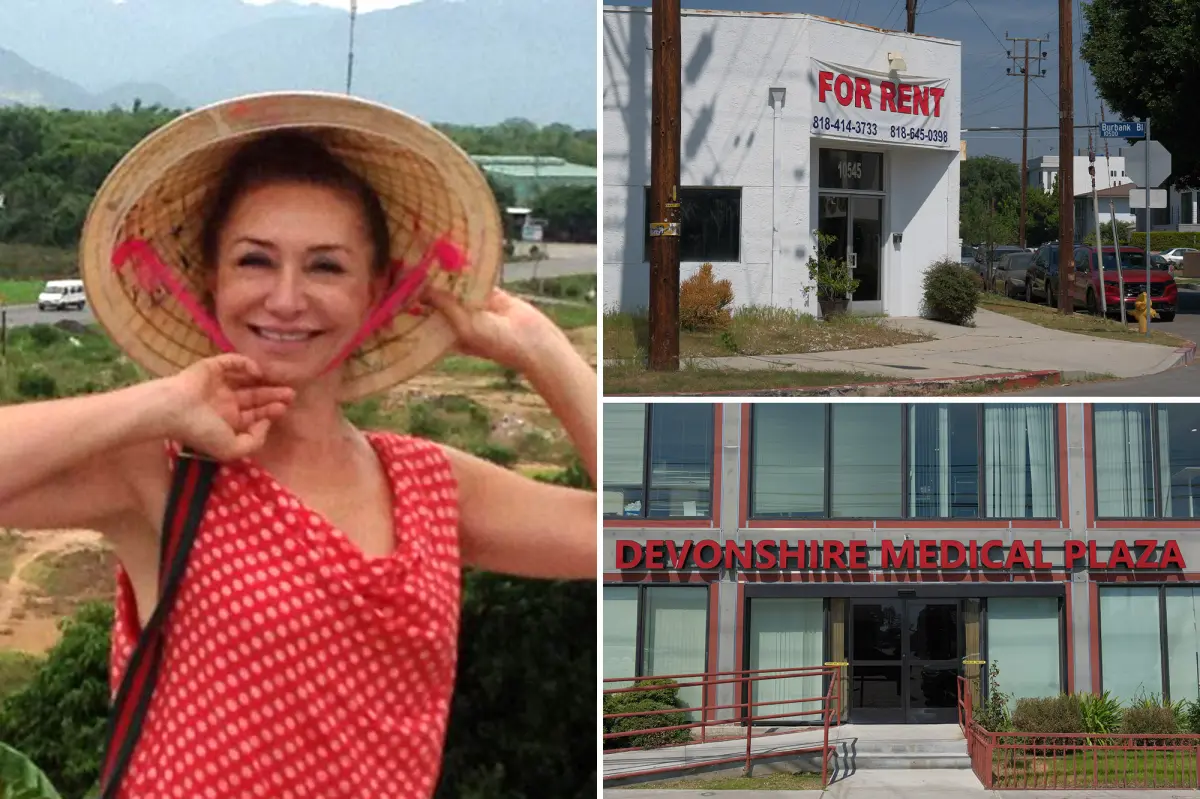
Dr. Fariba Javaherian is a registered dermatologist, but according to Centers for Medicare and Medicaid Services (CMS) billing data obtained by The Post, she is associated with 63 hospice facilities across California either as a medical director, attending physician or in some other capacity.
The National Provider Identifier (NPI) registered with Dr. Javaherian, a unique 10 digit number given to individual healthcare providers, was used for 1,662 unique patients across the 63 hospice agencies and appeared on more than 6,000 claims that billed $35,816,331.
Following the Post’s extensive investigation, CMS revoked Javaherian’s license to bill Medicare.
When asked for comment about Javaherian’s suspension to bill Medicare, CMS Administrator Dr. Mehmet Oz told The Post, “‘Do no harm’ was ignored, and in its place, was a practice of devastating damage disguised as help.”
“Dr. Javaherian’s white coat was a costume,” Oz added. Javaherian is not accused of any wrongdoing.
“Even if you’re full time, all you do is hospice, once you get to the 150, 175, 200 [patient] range and beyond, that’s when you’re pushing it and playing with fire,” a hospice medical director who operates several facilities in the state told the Post. “Show me a doctor who has 225 patients under their care … it’s not physically possible to do a good job.”
Between Jan. 1, 2018 and Sept. 30, 2025, Javaherian’s NPI was used for more than 31,000 claims at 130 different hospice agencies, totaling more than $173 million.
“CMS has been closely monitoring Dr. Fariba Javeherian’s illicit activities,” said CMS Spokesman Christopher Krepich. “In coordination with Vice President Vance’s Fraud Taskforce and acting on substantial evidence gathered, CMS revoked Medicare enrollment for Javaherian and took action to stop paying providers with which she was closely affiliated with.”
CMS confirmed the dermatologist was tied to dozens of hospice agencies across the state, at least 16 of of which have now had their licenses suspended due to the Post’s reporting.
“In doing so, CMS has also suspended those businesses associated with Dr. Javaherian from receiving funds or bill medicare for any services,” Krepich added.
A spokesperson for California Attorney General Rob Bonta said his office “can’t comment on, even to confirm or deny, potential or ongoing investigations.”
Dr. Javaherian denied working for 63 hospice agencies, instead claimed she was a victim of fraud and that her NPI was stolen through HospiceMD — a cloud-based electronic medical records and software platform.
NPI numbers are public and often easy to find.
“I have been doing it for 12 years and I have seen so many things and I have been calling here and there, stopping them. I called HospiceMD, they said, ‘no, doctor, you cannot deactivate your account,’” Javaherian told The Post. “Hospice should deactivate your account.”
Javaherian alleged HospiceMD started fraudulent hospice facilities under her name.
“They start hospice under me, they charge Medicare, in a matter of six months they disappear. It’s been going on,” she said, adding that she is “not on their payroll.”
HospiceMD CEO Sahaar Jospeh told The Post the company is a third-party medical software vendor for hospice agencies, and “does not create or manage any hospice agencies itself, nor does HospiceMD manage individual user accounts associated with those hospice agencies.”
“HospiceMD takes fraud complaints seriously and encourages individuals who believe their name and/or credentials have been used to commit fraud, to report such claims to appropriate government agencies responsible for investigating those claims,” Jospeh said. “Further, HospiceMD complies with all lawful subpoenas and search warrants.”
HospiceMD has not been accused of any wrongdoing.
Experts told The Post that they have not heard of an NPI being stolen to fraudulently bill Medicare.
“I don’t know anybody, nor have I heard of an example where somebody said my NPI was stolen and that’s where fraudulent activities is coming from,” a medical director for a hospice company told The Post, adding that he would “scream from the rooftops” and do everything in his power to clear his name, if that did happen.
Javaherian claims she works for only seven hospice agencies and that she does “problem solving” for a specific salary between $500 and $2,500 per month.
“For specific money, like within five hundred, depending on how many patients, I have to do problem solving,” Javaherian said. “Every five minutes I get a call from a patient. Patient is getting better, patient has a bedsore, patient fell down.”
She went on to say that her patients frequently die, with a “minimum four to five deaths per day.”
“We are not gods, but they’re supposed to die and my patients are dying. Medicare knows me, I’m very open with them,” Javaherian said. “I have an office, I have my patients, and I keep in touch with all of them.”
CMS told The Post it has no record of Javaherian contacting the agency, and billing data shows her patients do not appear to be dying at the rate she claims.
In 2025, at Throne and Kaplan — two hospice agencies where Javaherian is listed as the only doctor — no patients died.
The dermatologist went on to add that she routinely contacts the California Department of Public Health (CDPH) regarding potential fraudulent activity involving her NPI as well as the Los Angeles County District Attorney’s Office.
“I have been in contact with Department of Health every single month,” she said. “I send them list of my hospices and I email them, I call them and said, ‘you guys protect me if there is anyone using my information behind my back to start the hospice and put patients under my name,’ they know that.”
But when The Post asked Javaherian if she could provide one of those monthly emails she sends to CDPH, she refused, and even declined to provide the names of the seven hospices where she claims to work.
“I’m done with you, I explained to you on the record. I have nothing else to say,” Javaherian told The Post.
There is no requirement for doctors working at hospice facilities to send the CDPH monthly updates.
When asked to confirm whether Javaherian reported fraudulent activity using her NPI and if she sends routine emails, CPDH replied it is “looking into it and have no further comment at this time.”
“The California Department of Public Health (CDPH) takes any allegation of fraud or abuse within the state’s licensed health care facilities extremely seriously,” a spokesperson for the agency said. “Safeguarding the integrity of hospice services is essential to maintaining public trust and ensuring that patients receive appropriate, high-quality care.”
Javaherian also said the DA’s office started an investigation into her claims that her identity was stolen, adding that she has “been working with them” and has had “conversation with them.”
A source at the DA’s office told The Post that Javaherian did contact the office in early March, but they have not been able to get back in touch since and there is no investigation to the best of their knowledge.
Javaherian is also listed on claims with Domingo Barrientos, who pled guilty in 2024 to conspiracy to commit health care fraud and ordered to pay $10,123,260 in restitution. He was sentenced to 63 months in prison.
At St. Teresa Hospice and Palliative Care, Inc. in Burbank, Javaherian and Barrientos are listed as the two doctors, billing $703,000 and $2.7 million, respectively.
At Comfort Days Hospice in Encino, Ca., Javaherian had 90 patients and filed more than 700 claims for a total of $4.2 million, while Barrientos charged taxpayers nearly $300,000, according to data obtained by The Post.
The licenses for both hospice facilities were terminated in 2025 because it failed to meet federal standards to be a Medicare-certified provider.
Although Javaherian was connected to Barrientos, she has not been accused of any wrongdoing.
In the greater LA area, there is roughly $3.5 billion in home health and hospice fraud each year, a source told The Post.