


Bronx Building Showcased by Mayor Mamdani Reveals Troubling Housing Contradictions
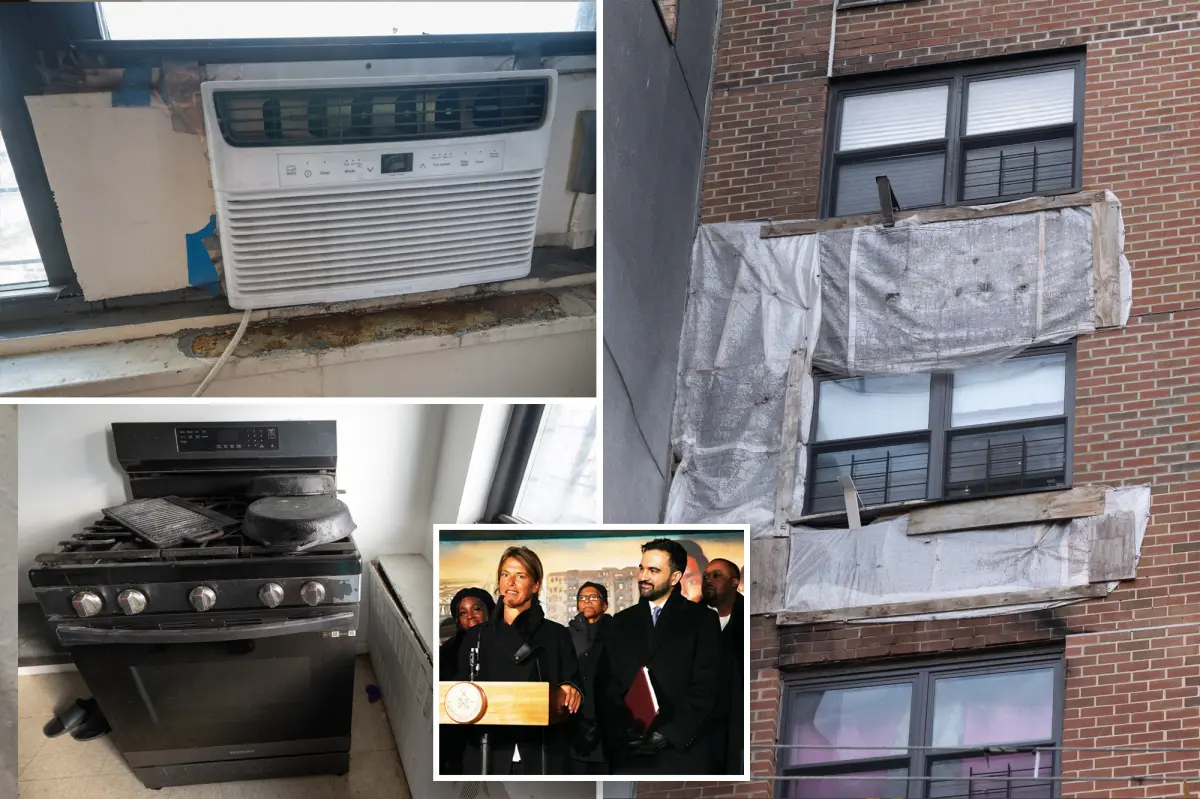
In an attempt to showcase his progressive housing agenda, Mayor Mamdani recently highlighted a Bronx apartment building at 1520 Sedgwick Avenue in Morris Heights as a success story during the introduction of his new Housing Preservation and Development (HPD) commissioner, Dina Levy. However, this supposed model of nonprofit housing management has accumulated nearly 200 unresolved violations since 2016, including 88 “Class C” violations classified as “immediately hazardous.” These serious issues include rat and roach infestations, broken doors and appliances, and mold problems that directly impact residents’ quality of life. The 102-unit building, historically significant as the birthplace of hip-hop, now stands as a contradictory symbol in the mayor’s campaign against private landlords, raising questions about whether nonprofit management truly delivers better outcomes for tenants in New York City’s challenging housing landscape.
The mayor’s January 4th visit to introduce Levy, a longtime tenants’ rights advocate who will earn $277,605 annually as HPD commissioner, emphasized her nonprofit credentials and role in facilitating the building’s transition from private ownership. In 2011, Levy helped broker a $5.6 million HPD loan that enabled nonprofit Workforce Housing Advisors to purchase and supposedly rehabilitate the complex, maintaining its affordable housing status. Mamdani proudly declared that “Dina will no longer be petitioning HPD from the outside. She will now be leading it from the inside, delivering the kind of change that can transform lives.” This narrative of transformation, however, appears at odds with the building’s current condition, which has deteriorated to a point where it now has more than double the dangerous “Class C” violations than a privately-owned complex in Brooklyn that the mayor had previously criticized just three days earlier as exemplifying everything wrong with the city’s housing stock.
The disconnect between political rhetoric and housing reality becomes even more apparent through the testimonies of longtime residents like Mordistine Alexander, who has lived in the building for over two decades. “I preferred it when it was under private management because they used to screen people in and out of the building,” Alexander told The Post. Her three-bedroom apartment regularly lacks heat and hot water, features crumbling bathroom and kitchen surfaces, and needs window replacements. After months of requesting maintenance for a kitchen light since October with no response, Alexander eventually took matters into her own hands to address a severe rodent problem because she “couldn’t wait any longer” for the nonprofit management to act. “Since [the nonprofit] took over, the building has deteriorated. They lack porters. No one is maintaining it, and the complaints fall on deaf ears – especially if you complain a lot,” she added, expressing regret that Levy had succeeded in transferring building management to the nonprofit sector.
Despite these troubling realities, Mayor Mamdani continues to advocate for expanding this model through legislation that would increase control over how private property is sold, facilitating more nonprofit oversight of rent-stabilized apartments. This approach has drawn criticism from elected officials like Councilwoman Joann Ariola, who called out the “hypocrisy” of the situation: “These nonprofits are proving themselves to be little more than taxpayer-funded slumlords, and this blatant double-standard is all part of the administration’s planned attack on private ownership in New York City.” The contradiction becomes more striking when considering that the Sedgwick Avenue building has more open HPD violations than approximately three-quarters of privately owned, rent-stabilized buildings in the city. Kenny Burgos, former Bronx assemblyman who now represents landlords of rent-stabilized units, argues that the mayor is “too focused” on abolishing private property while overlooking the practical failures of his preferred alternative.
Levy’s background adds another layer of complexity to this housing controversy. Despite her image as a champion for tenant rights, Levy comes from a privileged upbringing as the daughter of two high-powered DC lawyers who owned multiple properties, including a Georgetown townhouse worth $1.4 million. A Delaware University graduate, Levy has built her career as a “radical tenant advocate,” even spending time in jail for her activism. She once described her 1997 arrest for criminal trespassing at a run-down affordable-housing complex in Dallas as “cool,” adding “I got really hooked.” In a 2011 interview, she proudly acknowledged that her “rough, caustic style” irritates landlords, positioning herself as an antagonist to private property owners rather than a collaborative partner in solving the city’s housing challenges.
The HPD has defended Levy’s involvement in the Sedgwick Avenue building, with agency spokesman Matt Rauschenbach stating, “When the building was at risk of being purchased by a predatory buyer, Dina Levy organized alongside the tenants and kept the building affordable.” He also noted that the building is currently undergoing an “$8 million preservation renovation to improve conditions.” However, critics point out that nonprofit-managed housing consistently shows higher violation counts despite significant advantages over private landlords, including government-backed loans and potential property tax exemptions that should free up cash for maintenance and improvements. This raises fundamental questions about whether the administration’s ideological preference for nonprofit housing management is supported by evidence of better outcomes for the New Yorkers who actually live in these buildings. As the debate continues, residents like those at 1520 Sedgwick Avenue remain caught in the middle, living with the consequences of policy decisions that seem more focused on who owns buildings than on ensuring their livability.