


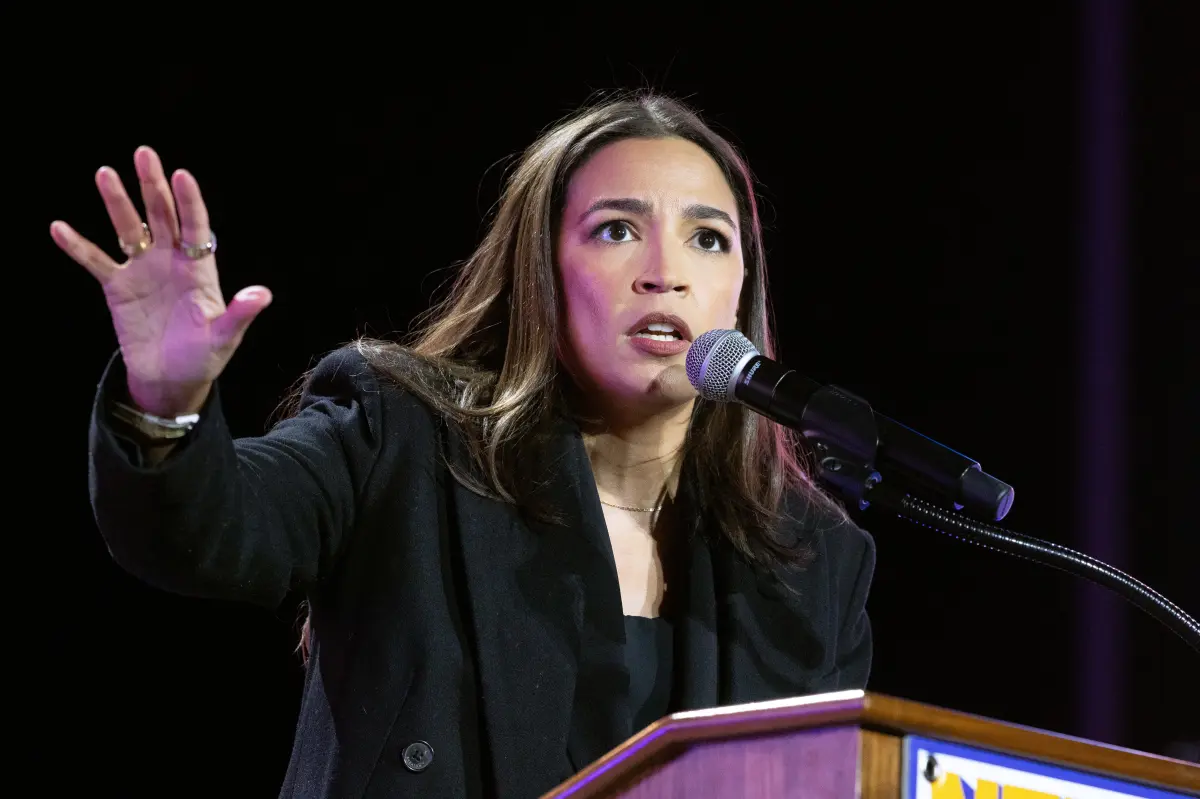
Alexandria Ocasio-Cortez, the fiery Democrat from the Bronx who burst onto the national scene in 2018 as a progressive powerhouse, has always carved out her identity as a relatable everyday hero—the “Bronx girl” fighting for the working class against corporate elites. But lately, stories have emerged that paint a different picture, one where glamour and high-end indulgences play a starring role. Imagine AOC, fresh from a brainstorming session in her crowded Queens office, feeling that familiar rush of excitement before a big rally. She’s not just the politician anymore; she’s a woman preparing to face cameras, crowds, and critics, her face flushed with a telltale blush as she steps into a world of glitter and glam. Yet, as details trickle out from her campaign’s spending records, it raises eyebrows: is this the same woman who champions “tax the rich” yet shells out thousands on makeup that could rival Hollywood stars? It’s a human story, really—one of balancing personal care amid the grind of politics, but also a tale of potential hypocrisy that sparks debates far beyond beauty routines. Picture her as a young woman navigating the male-dominated halls of Congress, where looking polished isn’t just vanity but a silent battle for respect. For AOC, makeup has never been about frivolity; it’s a tool, a shield, and perhaps a nod to the pressures women everywhere face. Still, when Federal Election Commission filings reveal she spent over $2,000 on luxury hair and makeup services last fall, it feels like a plot twist in her narrative. Funded by donations from everyday supporters hoping to elect a true populist, this expenditure clashes with her core message. People want to support leaders they see as one of them, not someone jetting off for top-tier pampering. It’s human to wonder: does slipping into that crimson lipstick help her channel the strength she displays on stage, or does it distract from the fight for economic justice? As allegations fly, it’s easy to get swept up in the drama, forgetting that beneath the headlines, there’s a real person juggling ideals, ambitions, and yes, the occasional desire to look fabulous while changing the world.
Diving deeper into the specifics, AOC’s campaign records paint a clear picture of her splurging on star-studded services. In November, reports showed payments totaling more than $2,000 to The Only Agency, a glamorous New York and Los Angeles-based firm that caters to celebrities like Bad Bunny and Bella Hadid—stars whose lives of red carpets and mega endorsements embody the very wealth gap AOC rails against. One charge was $670 for “campaign event makeup services,” followed quickly by another $693.08, and then $665 five days later for “campaign event hair and makeup services.” These aren’t bargain basement deals; the agency’s standard rates kick off at $600 for a single hair session and another $600 for makeup, putting her total in the range of elite treatment. For context, picture a typical political campaign’s spending on grooming—often capped at $100 to $200 for hair and makeup at local salons. A top-rated spot in Forest Hills, near where some of these events happened, charges around $100 for hair and $150 for makeup—even that’s a step up for most candidates who rely on volunteers or quick DIY fixes to keep costs down. But AOC, the one who built her brand on authenticity and anti-establishment fervor, chose otherwise. It’s intriguing to humanize this: perhaps in the heat of campaigning, with back-to-back events draining her energy, she thought of it as self-care—a necessary boost to perform at her peak. After all, politics is a visual game; imagine standing before thousands, microphone in hand, knowing your appearance could sway how seriously people take your words. Yet, this isn’t her first rodeo with pricey pampering; last quarter marked the launch of such expenditures in her filings, but the pattern hints at a deeper habit. Critics might see hypocrisy, but from her lens, it could be empowerment—owning her femininity in a world that often expects women leaders to downplay it. Still, as donations pour in from middle-class donors pinching pennies, it begs the question: is this an investment in her image, or a misalignment that undermines trust? The numbers don’t lie, but the motivations are ever so human, layered with ambition and perhaps a dash of rebellion against those who judge women’s choices.
One memorable occasion where AOC enlisted these high-end services was a get-out-the-vote rally for New York City mayoral candidate Maajid Mamdani in Queens on October 26, alongside her comrade Bernie Sanders. The event, dubbed the “New York is Not for Sale” rally at Forest Hills Stadium, drew massive crowds, and according to the makeup artist Jocelyn Biga, it was an “unforgettable moment” that she documented on Instagram. Biga gushed about “glamming AOC,” sharing photos of the congresswoman’s airbrushed perfection—smoky brown eyes, a subtle red lip, and immaculately groomed eyebrows that framed her passionate delivery. Watching her light up the stage, it’s easy to picture the transformation: from pre-event jitters to radiant confidence, as she spoke about New York City’s rich immigrant history—built by Irish fleeing famine, Italians escaping fascism, Jews seeking haven from the Holocaust, and African Americans running from Jim Crow laws. Her words resonated, drawing thunderous applause, and in that spotlight, the makeup wasn’t just cosmetic; it amplified her message, making her appear as the timeless warrior for justice. Humanizing this further, think of Jocelyn, likely buzzing with pride at transforming a public figure, contributing to a legacy moment. For AOC, it might have been invigorating—a reminder that progressives like her are in the fight, their vitality boosted by skilled hands. Sanders, ever the mentor figure, smiling from the sidelines as she commanded the crowd. Beyond the rally, it’s unclear what other spots benefited from these sessions, but possible candidates include the Eugene Debs award banquet for Sanders in Terre Haute, Indiana, on October 25, or Mayor Mamdani’s election night victory bash on November 4 at Brooklyn’s Paramount Theater. These events weren’t just political pit stops; they were emotional zeniths, where connections were forged and promises made. Yet, lurking beneath the excitement is that ever-present irony: a leader heralding social justice while indulging in luxuries that echo the lifestyles of those she critiques. It’s a relatable tension, really—wanting to shine without losing touch with reality.
As word of her spending spread, the backlash from the political right was swift and sharp, highlighting the stark contrast in her public persona. Republican National Committee National Press Secretary Kiersten Noles slammed it as evidence that AOC’s “class-warfare message is little more than political theater propped up by high-priced makeovers.” Her quip, “AOC’s favorite slogan is ‘tax the rich,’ but her campaign spending shows she’d rather live like the 1%,” stung, playing into broader narratives of liberal elites who preach austerity but practice expenditure. It’s not just partisanship; it’s a human indictment, tapping into frustrations of everyday Americans who fund campaigns with hard-earned dollars, dreaming of a system reset where leaders match words with actions. Imagine a working-class donor reading this, feeling a pang of betrayal—had their contribution gone to voter outreach instead of glossy glam? Comparisons abound: standard campaign hair and makeup lingers around $100-200, far below AOC’s figures, and even premium Forest Hills salons cap at $150 for makeup alone. This discrepancy fuels debates not just about finance but about authenticity in politics. Is AOC truly the people’s champion, or has fame softened her edges? Adding nuance, perhaps we’re all guilty of self-indulgence when pressure builds—grabbing that fancy coffee after a tough day—but for a congresswoman, it’s magnified. Her response, or lack thereof, since The Only Agency and her campaign declined comments, leaves room for speculation. Critics like Paul Kamenar from the National Legal and Policy Center, whose complaints triggered past ethics probes, call it “outrageous” misuse of funds. It’s a reminder that in the spotlight, every choice faces scrutiny, and while makeup might empower her, it also invites judgment from those who see it as emblematic of broader divides. Ultimately, this isn’t just about dollars; it’s about the trust we place in leaders to embody the values they espouse, a trust tested here in the most personal ways.
This isn’t the first time AOC’s love for high-end beauty has sparked controversy, drawing parallels to a 2021 incident that exposed even deeper entanglements. As a freshman lawmaker in 2019, she took to Instagram offering makeup tips, criticizing the patriarchy’s double standards—women spending hours grooming for respect, while men glide by with minimal effort. Her Vogue tutorial the next year, a step-by-step guide to her signature red lip, challenged notions of beauty as “frivolous,” placing her alongside icons like Kylie Jenner in a beauty secrets series. “There’s this really false idea that if you care about makeup or if your interests are in beauty and fashion, that that’s somehow frivolous,” she explained, her gold glittery eyeshadow catching the light as she demonstrated. It was empowering, a feminist statement wrapped in shimmer. Yet, flash forward to her infamous Met Gala attendance in 2021, where she accepted makeup for $344.85 and hair for $477.73—billed initially to Conde Nast, the gala’s organizers. The House Ethics Committee deemed it a violation of gift rules, forcing her to reimburse with personal funds after an Office of Congressional Conduct complaint. Humanizing this: picture AOC, starstruck amidst Vogue-level extravagance, perhaps justifying it as a rare treat in her hectic life. But Kamenar, the same critic, echoed his outrage, linking it to her latest spending. It’s a pattern that humanizes the political beast—she’s fallible, indulgent when the world’s watching, but also reflective, addressing societal pressures. Her past videos reveal a woman aware of the pitfalls: makeup as war paint against sexism, yet the ethics breaches show vulnerability. For fans, it might soften edges; detractors see inconsistency. In a world where women leaders are scrutinized for every strand of hair, these moments highlight ongoing battles—balancing power with personal expression, and the ethics of it all. It’s relatable: we’ve all bent rules for a little glam, but when you’re in office, the stakes rise. This history underscores that AOC isn’t just a politician; she’s a canvas for America’s evolving views on gender, power, and privilege.
Wrapping up this tale of glitter and grit, Alexandria Ocasio-Cortez embodies the complexities of modern leadership—a woman who rose frombartender to congressional icon by channeling raw emotion and populist zeal. Yet, her hefty investments in luxury hair and makeup services reveal a layer of contradiction, fueling conversations about authenticity and funding in politics. While her rallies <*> and tutorials celebrate makeup as a form of resistance against patriarchal norms, the high costs paid by campaign donors invite valid questions about alignment with her “tax the rich” ethos. Is it empowerment or excess? Perhaps it’s both, a human paradox where personal care meets public persona in an unforgiving arena. As she continues her journey, advocating for workers and immigrants, one can’t help but root for her to thrive authentically. There’s undeniable charm in her firebrand style, makeup or no, reminding us that leaders are people too—flawed, fabulous, and forever under the microscope. In the end, these stories aren’t just about spending; they’re about the delicate dance between aspiration and accountability, a reminder that even heroes need their glow-ups. If AOC can navigate these waters with grace, she might inspire more to embrace their full selves, makeup as metaphor for self-worth. But for now, the blush lingers, a symbol of the ongoing evolution in politics and personal identity.