






Katie Porter’s Fading Gubernatorial Campaign: The Personal and Political Challenges
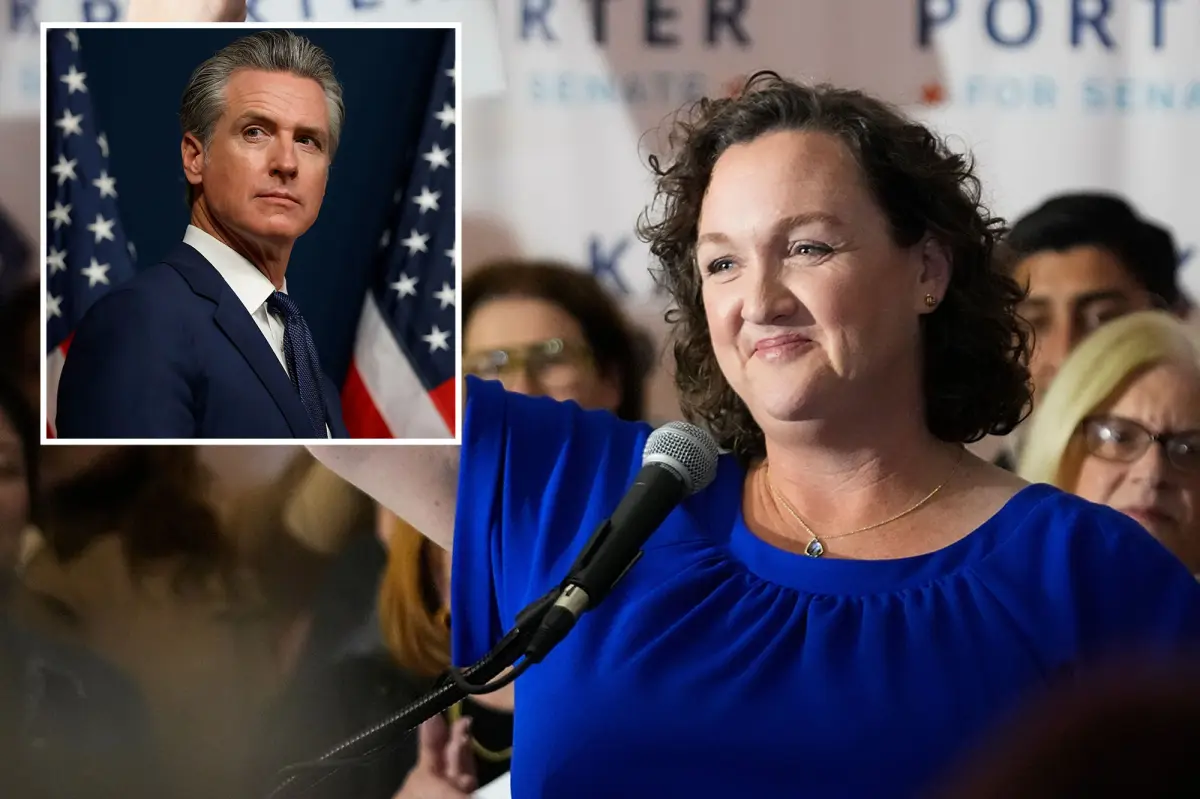
In a dramatic shift in California’s political landscape, former Representative Katie Porter’s campaign to become the state’s next governor is facing significant challenges as recent polling shows her support dwindling. According to a new Emerson College poll released Thursday, Porter’s numbers have slipped to just 11% of surveyed voters in the increasingly crowded race to replace Governor Gavin Newsom. This represents a notable decline for the former Orange County congresswoman, who had previously been leading in earlier surveys. The political environment has grown more competitive with the entrance of East Bay Representative Eric Swalwell and billionaire climate activist Tom Steyer, both of whom appear to be fragmenting Democratic voter support. Porter’s campaign troubles come at a time when she’s already battling negative perceptions stemming from workplace conduct allegations and a series of unflattering public moments that have called her temperament into question.
The polling data reveals a California electorate with increasingly divided loyalties. Spencer Kimball, Executive Director of Emerson College Polling, noted that “Swalwell splits the Democratic vote with Porter, 20% supporting Swalwell and 17% Porter,” while Republican voters are nearly evenly divided between their top candidates. Perhaps most telling is that a significant portion of independent voters—45%—remain undecided, suggesting an unsettled electorate still evaluating their options. Porter’s personal favorability ratings present additional concerns for her campaign, with more Californians viewing her unfavorably (34%) than favorably (30%), and over a third (37%) having no opinion at all. This lukewarm reception stands in stark contrast to Porter’s previous national reputation as a progressive champion known for her whiteboard presentations on issues like income inequality during congressional hearings.
Porter’s decline coincides with a series of public relations setbacks that have raised questions about her temperament and leadership style. A particularly damaging incident occurred when footage emerged of Porter losing her composure during a CBS News interview. When asked about Trump voters, a visibly irritated Porter became confrontational with reporter Julie Watts and threatened to end the interview while cameras continued to roll. This unflattering moment seemed to reinforce allegations from former staffers who have described a toxic work environment under Porter’s leadership. One ex-staffer went so far as to call her “downright mean,” while another video surfaced showing Porter berating an aide during a virtual conversation, angrily telling them to “Get out of my f—ing shot!” These episodes have painted a picture of a candidate struggling to maintain the composed public persona that helped build her national profile.
The evolving dynamics of the Democratic primary field further complicate Porter’s path forward. Swalwell now holds a slight edge at 12% among Democratic voters, while former Los Angeles Mayor Antonio Villaraigosa ranks third at 5%, followed by Steyer and former Health and Human Services Secretary Xavier Becerra, both polling at 4%. Perhaps most concerning for all candidates is that 31% of Democratic voters remain undecided, indicating that the race remains fluid and unpredictable. Porter’s campaign, which has been contacted for comment on these developments, faces the challenge of recapturing momentum in a crowded field where voters appear to be reconsidering their options in light of both new candidates and new information about existing ones.
The contrast between Porter’s current predicament and her previous political trajectory is striking. As a three-term representative, Porter had built a national reputation as a sharp-minded progressive who could effectively communicate complex economic issues to everyday Americans through her trademark whiteboard presentations. Her questioning of corporate executives and government officials during congressional hearings often went viral, establishing her as a rising star within progressive circles. Her decision to run for governor was initially met with enthusiasm from her base, but the combination of a competitive field and personal controversies has significantly complicated her campaign narrative, forcing her to contend with questions about her character and leadership capabilities alongside policy positions.
As the gubernatorial race continues to evolve, Porter faces the formidable task of rehabilitating her image while articulating a compelling vision for California’s future. The significant percentage of undecided voters across the political spectrum suggests that the race remains winnable for candidates who can effectively connect with the electorate. However, Porter must overcome both the crowded Democratic field and the negative perceptions that have emerged from her past behavior. Whether she can successfully pivot back to the policy-focused, sharp-witted persona that initially won her national attention—while addressing concerns about her temperament—will likely determine if her gubernatorial aspirations can be revived. With several months remaining before the primary, the former congresswoman has time to adjust her approach, but the latest polling data suggests an increasingly uphill battle in her quest to become California’s next governor.