



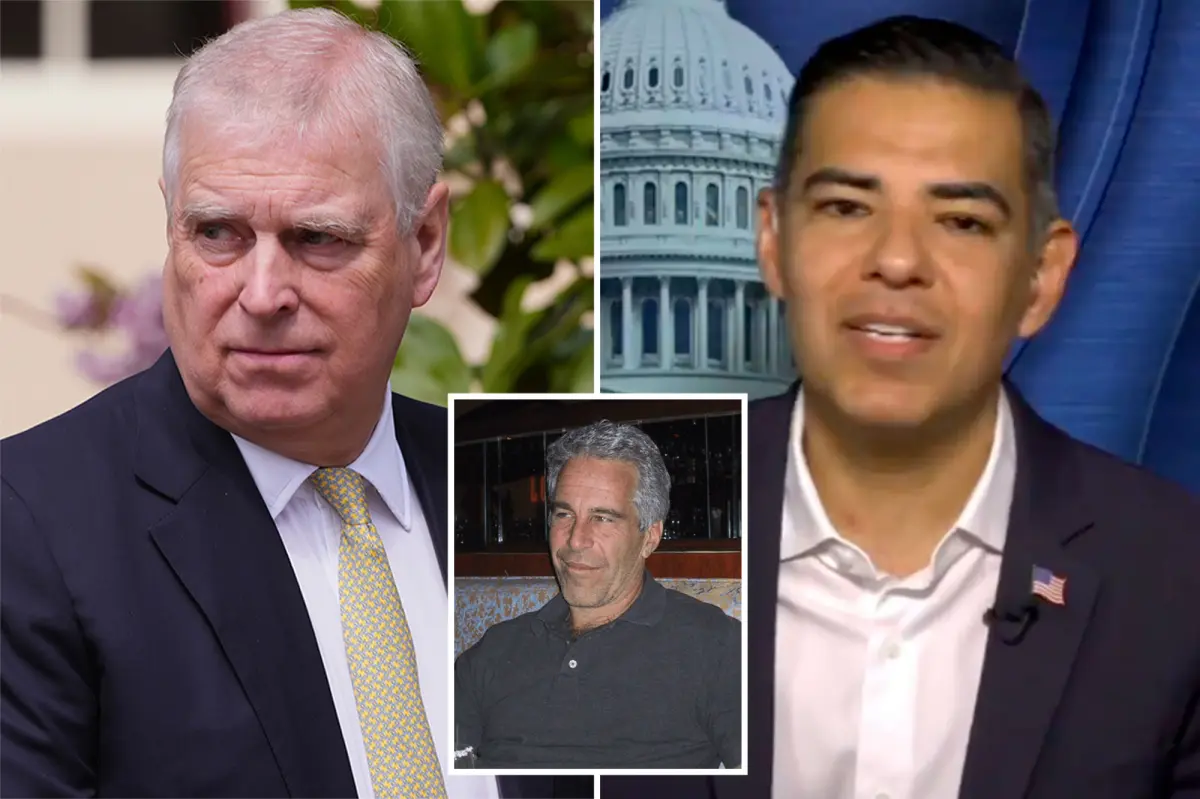
In the shadow of Buckingham Palace, Prince Andrew, once the dashing Duke of York and a symbol of royal glamour, now finds himself a ghost in his own scandal—a man stripped of titles and teetering on the edge of public scorn after his ties to the infamous Jeffrey Epstein came under the unforgiving spotlight. Born into privilege as the second in line to the British throne, Andrew’s world crumbled when accusations of impropriety linked him to Epstein, the convicted sex offender. House Oversight Committee Democrats, led by Ranking Member Robert Garcia from California, have been reaching out to him since last year, sending letters and subpoenas in their probe, but silence has been Andrew’s only response. It’s a stark picture: a royal frozen out, avoiding accountability while the committee digs into Epstein’s web of influence. Garcia, in a candid interview on CBS News’ “Face the Nation,” highlighted the irony—America watching the UK as a beacon, while Andrew himself remains unreachable. This human drama unfolds like a tragic opera, where a prince’s fall exposes not just personal failings, but the fragility of power and the pain it can inflict on victims.
Garcia, a forthright Democrat with a sense of justice that resonates beyond party lines, praises Britain’s handling of the Epstein aftermath as a powerful lesson for the U.S. “What’s happening now over in the UK is pretty stunning, and it’s actually a show of what happens when the government listens to the public,” he noted, his voice dripping with admiration. Over there, Epstein’s accomplices are facing consequences, a reckoning that Garcia sees as a model for demanding truth here at home. It’s easy to imagine the frustration bubbling under Garcia’s composed exterior—representing hardworking Californians who ache for transparency, he embodies the ordinary American’s yearning for systems that protect the vulnerable. Yet, amid this praise, the committee’s own efforts stall at Andrew’s doorstep. They’ve written multiple letters, expressing a clear desire to interview him, but the prince’s stonewalling feels personal, like a slap in the face to those seeking closure. Garcia’s words echo a broader heartache: why is America lagging in unveiling the full, ugly truth? It’s a call to action, drawing on the UK’s example to inspire change, reminding us that accountability isn’t just political—it’s deeply human, a balm for the country’s wounds.
Diving deeper into Andrew’s turbulent history paints a picture of betrayal and lost innocence. Once thriving as a trade envoy for Queen Elizabeth II, his role as Special Representative for International Trade and Investment from 2001 to 2011 now seems tainted by whispers of wrongdoing. Virginia Giuffre, Epstein’s courageous whistleblower who tragically took her own life last April, alleged over a decade ago that she was trafficked to Andrew by Epstein and his associate Ghislaine Maxwell. Photos from the early 2000s capture them together, Andrew’s arm around her, a snapshot of a bond that now feels tainted. Despite Andrew’s denials of wrongdoing, he settled with Giuffre in 2022 for an undisclosed but substantial sum, a financial admission that whispers volumes. For Giuffre’s family and countless others survivor, this settlement is a hollow victory—a quiet nod to exploitation without full justice. Humanizing this, we see not just a prince, but a man who, in trying to evade the storm, has inadvertently prolonged the suffering of real people. Giuffre’s story is one of resilience turned to despair, her suicide a heartbreaking testament to the scars left by predators like Epstein. Andrew’s silence in the face of these accusations feels cold, almost devoid of empathy, urging us to reflect on how privilege can insulate the powerful while the vulnerable pay the price.
Just when it seems the revelations couldn’t get more damning, British police last week announced they’re assessing new allegations: that Andrew shared confidential trade reports with Epstein during his envoy years. Materials from leaked Epstein files reveal emails where Andrew forwarded key reports on trips to Vietnam and Singapore in 2010, blurring the lines between royal duty and personal indulgence. It’s a detail that hits hard, imagining Andrew, perhaps naive or complicit, entrusting state secrets to a known criminal. Another email pops up, post-Epstein’s 2009 jail release for sex offenses, where Andrew invites him for a “private weekend jaunt” at his Paris apartment—an invitation that raises eyebrows and questions about judgment. These leaks humanize the betrayal, showing glimpses of a man who might have trusted too easily, or worse, prioritized connections over caution. For investigators and the public, each document peels back layers, revealing not just deeds, but a web of influence that ensnared royalty. It’s a reminder of how even the elite aren’t immune to poor choices, and how one man’s fall affects international trust. Police assessing these claims could unearth more, keeping hope alive for those who’ve been wronged.
The Epstein files don’t stop there—they include a disturbing photo that adds a layer of creepy humanity to Andrew’s downfall. Released recently, it shows him crouched on all fours over an unknown woman, her face redacted for privacy, evoking a sense of unease that lingers. Captions and contexts around these images paint a portrait of escapades that feel worlds away from royal protocol, drawing empathy for the woman obscured and contempt for Andrew’s apparent disregard. These revelations aren’t just salacious; they’re snapshots of vulnerability and power imbalance, where Epstein’s circle used connections like Andrew’s to normalize the abnormal. Humanizing the royal, we might ponder if he was a victim of manipulation or an active participant, but the files lean toward the latter, showing a prince who, in his hubris, ignored red flags. Survivors reading this photo see their own stories reflected, fueling calls for justice. It’s a stark contrast to Andrew’s once-glittering life, now defined by shadows, reminding us that fame and titles offer no shield against moral reckoning.
Amid this turmoil, the Department of Justice (DOJ) adds to the narrative with a letter from Attorney General Pam Bondi and Deputy Attorney General Todd Blanche, assuring top lawmakers in the House and Senate Judiciary Committees that they’ve released all requisite Epstein files. Dated Saturday, it claims full transparency under the Epstein Transparency Act, yet Garcia counters this firmly, arguing the Trump administration—and by extension, the current DOJ—hasn’t met its obligations to the Oversight Committee. The panel has been probing for months, but Garcia insists more documents lurk behind excuses like attorney-client privilege or interagency protections. “Release all the files today,” he urges, noting that while such privileges might hold under the Act, they don’t apply to the subcommittee subpoenas issued last July and August. It’s a push for unequivocal disclosure, humanizing Garcia’s role as an advocate driven by frustration for constituents and victims. Imagine him poring over incomplete files, knowing fuller pictures could expose deeper complicity. The formal request for Andrew’s testimony last year hangs unanswered, a symbol of evaded responsibility. In this dance of power, the human cost is clear: victims wait, families grieve, and trust in institutions erodes. Garcia’s plea is a beacon, urging America to mirror the UK’s resolve, transforming gossip into action for a more accountable world. As Andrew hides, the call grows louder—history won’t forgive silence.