


In the bustling heart of Columbus, Ohio, where the crimson and gray of Ohio State University (OSU) banners flutter proudly against the skyline, a scandal unfolded that shook the pillars of academia and public trust to its core. Imagine Ted Carter, the once-revered 66-year-old president who had steered the prestigious university through storms of controversy, enjoying a reputation built on years of leadership and a seemingly unbreakable family life with his wife Lynda, married for nearly 45 years. Yet, behind the polished exterior of Carter’s tenure, whispers grew into roars about an “inappropriate relationship” with Krisanthe Vlachos, the charismatic host of “The Callout Podcast,” a show dedicated to veterans’ stories that blended gritty real talk with heartfelt testimonies. Vlachos, with her leather-clad persona and sharp wit, portrayed her podcast as a beacon for those who’ve served, but now, it seemed entangled in a web of favors and secrets that could unravel respect for one of America’s largest public universities. Picture the scene: late-night podcast recordings where Carter, a frequent guest since 2024, shared wisdom and laughter, perhaps forging bonds that went beyond professional camaraderie. As news of Carter’s Monday resignation reverberated, it wasn’t just a fall from grace; it was a human drama of alliances forged in shadows, where power met allure, and boundaries blurred in the glow of campus lights. OSU, under Carter’s watch, had grown into a powerhouse, drawing top talent and innovations, but this revelation hinted at how personal connections might have skewed the delicate balance of integrity and opportunity. Vlachos, described affectionately by Carter in epithets like “dear friend and mentor,” embodied a modern narrative of resilience, having turned her platform into a voice for veterans, yet now, it raised questions about the unspoken perks that come with rubbing elbows in high places. In a city where football games united throngs and research labs churned out breakthroughs, this story painted a more intimate, messy portrait of ambition, loyalty, and the temptations that dance around positions of influence. Was it mentorship that bloomed into something deeper, or was there manipulation wrapped in camaraderie? As families like the Carters navigated the emotional wreckage—Lynda’s quiet strength juxtaposed against Carter’s public facade—the ripple effects touched countless lives: students dreaming of futures shaped by ethical leaders, alumni mourning a fallen icon, and veterans who tuned in for inspiration, only to find their advocate at the center of a maelstrom. This wasn’t just a news cycle; it was a reminder that even the mightiest figures are stitched from the same fragile human thread, capable of both greatness and grave missteps that echo far beyond the ivory tower.
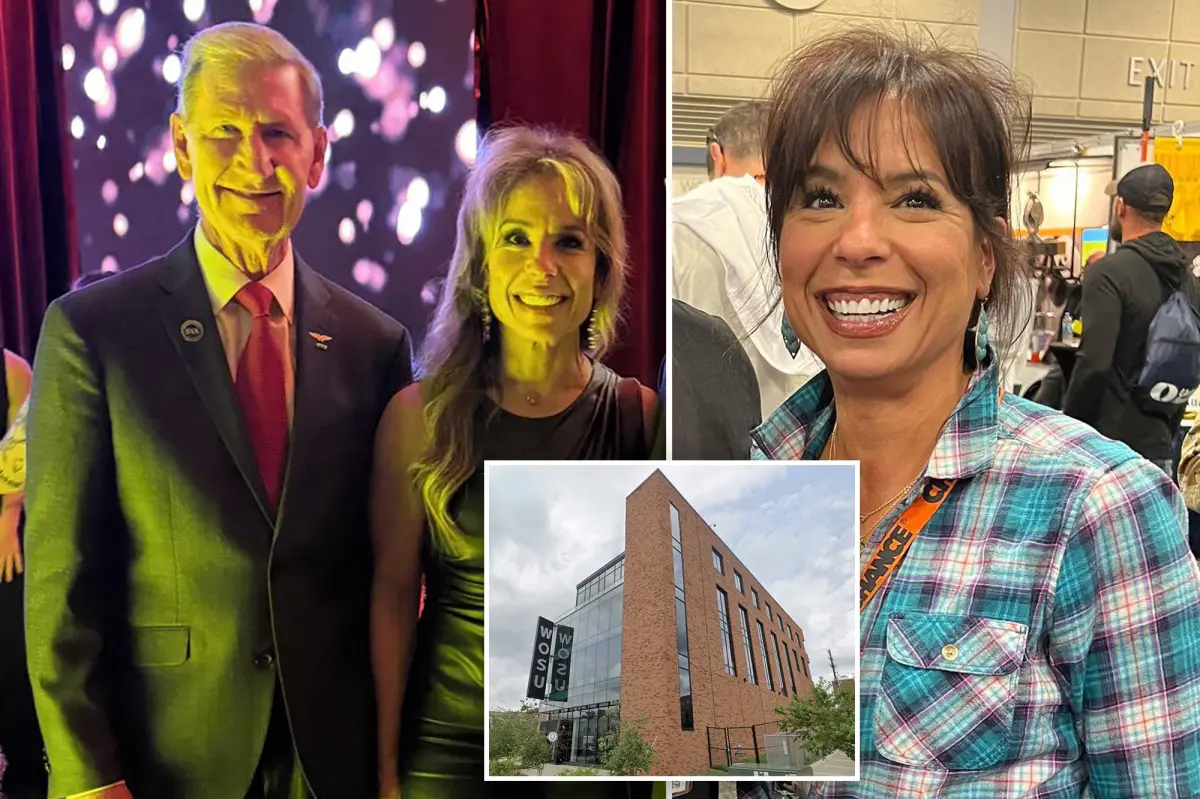
Delving deeper into the perks that allegedly sweetened this bond, speculation swirled around complimentary office space on the very campus Carter once lorded over, transforming a university investigation into a tale of access and privilege. At the center stood Vet Earn USA LLC, an enigmatic business entity registered to Vlachos at a Columbus address shared with WOSU Public Media headquarters—a sprawling 53,000-square-foot edifice that opened in 2021 as a gleaming symbol of media innovation. With its “state-of-the-art” TV and radio studios, content production zones, a media learning lab, and collaborative workspaces, the building hummed with creative energy, owned reportedly by the university itself. One can almost envision Vlachos navigating its corridors, her footsteps echoing against sleek floors as she set up her LLC, perhaps dreaming of expanding her podcast empire or forging ventures that honored veterans. What business did she conduct there amidst the bustle of public broadcasting? WOSU, nestled as a subdivision of OSU, remained silent on inquiries, leaving imaginations to fill the gaps—was it a hub for veteran advocacy meetings, networking events, or something more personal that blurred lines between public and private? For Carter, providing such access wasn’t just a gesture; it was a mixing of worlds where his influence as president could open doors not available to others. In human terms, this felt like a father figure extending a hand to a protégé, or perhaps a mentor stepping beyond boundaries in ways that prioritize connection over protocol. Traumatic events in Vlachos’ life, hinted at in her podcasts and leather-clad public appearances—like challenges she’s overcome—might have drawn Carter in, creating a bond rooted in shared vulnerabilities. Social media glimmers revealed them together at events, Carter traveling to support and sponsor Vlachos’ gatherings, his presence lending star power to causes close to her heart. This wasn’t mere corruption; it was a narrative of human interdependence, where leaders like Carter, once seen as infallible, revealed their susceptibility to emotional pulls. As alumni and staff processed the implications, questions arose: How many others had received such favors, and what did it cost the university’s ethos of fairness? The building, a beacon of progress, now symbolized potential exploitation, turning what should have been a sanctuary for learning into a stage for personal dramas that eroded public faith.
Confirming the intrigue, OSU’s Chief Spokesman Benjamin Johnson stepped forward Tuesday with a pivotal revelation, lighting the fuse on a full-scale investigation into these entanglements of public resources. In a statement to The Post, Johnson declared the Vet Earn USA LLC business filing as integral to the probe, underscoring how Carter’s actions—admitting to helping Vlachos with her business and granting “inappropriate access” to university leadership—had crossed irrevocable lines. Imagine the gravity: a man who had dedicated decades to OSU’s mission, guiding it through expansions and crises, now at the heart of scrutiny that could tarnish his legacy. Johnson’s words, straight and unyielding, hinted at the emotional toll on all involved—the weight of betrayal for a community that revered Carter as a steady hand. For Vlachos, this wasn’t just professional fallout; it was a personal reckoning, her podcast a fusion of her identity and passions, now under the microscope. What drove this alliance? Was it admiration, where Carter saw in Vlachos a spark of the drive he once possessed, or something more tangled in the complexities of male-female dynamics in power structures? Veterans who followed “The Callout” felt a sting, their stories now interwoven with scandal, questioning if their voices were leveraged for private gains. Johnson, embodying the university’s voice, remained composed, but beneath the corporate speak, one could sense the turmoil—a once-united front fracturing. This wasn’t about one man or one woman; it was about institutional integrity, where even leaders grapple with the lure of influence. As the investigation unfolded, advocates hoped for transparency, envisioning reforms that might heal wounds, while others grieved the loss of a mentor figure. In the grand tapestry of Ohio State history, this chapter summoned empathy for those caught in the crossfire, reminding us that behind policies and probes lie people with frailties and hearts.
Just hours after Carter’s abrupt resignation hit the headlines Monday, the scandal gained momentum when JobsOhio, a key sponsor of “The Callout Podcast,” issued a statement that directly pointed to the Vlachos-Carter connection as “possibly connected” to his exit. This economic development group, vital in fueling Ohio’s growth, expressed wariness: “JobsOhio is aware Ted Carter resigned this morning as President of The Ohio State University and that this situation is possibly connected to a relationship between him and the host of a podcast for veterans, which we sponsored.” Picture the fallout—a sponsor pulling back, its alliance with the podcast now a liability, prompting reflections on the intertwining of public figures and private sponsors who shape narratives. For Carter, a self-described “frequent flyer” on Vlachos’ show, frequent appearances morphed from promotional boosts to teetering junctures. Social media and commemorative photos captured him traveling to her events, his sponsorship adding prestige, yet now it painted a picture of closeness that defied office decorum. Wives like Lynda Carter, holding fort through nearly five decades of marriage, might have felt the sting of rumors, their shared history—perhaps filled with quiet dinners, family milestones—now overshadowed by tabloid-esque speculation. Vlachos, in her leather ensemble at events, radiated confidence, calling Carter her “mentor”; he, in turn, appeared supportive, their bond forged in podcast studios where veterans’ tales wove threads of mutual respect. JobsOhio’s stance added fuel, signaling how such scandals bleed into economic realms, affecting funding and reputations. At a human level, this was about vulnerabilities: Carter’s mid-life reflections, Vlachos’ journey as a creator, and how their paths converged. Advocates for veterans worried about the podcast’s future, seeing their platform precariously balanced. In Columbus, where OSU is a cultural linchpin, this revelation stirred community soul-searching, urging dialogues on ethics in a digital age where relationships blur swiftly.
Peeling back the layers of their relationship, intimate details emerged that humanized this tale of mentorship and alleged impropriety, revealing a connection laced with affection and public displays. Carter, married for 45 years, traversed the nation as a “frequent flyer” on Vlachos’ veterans-focused podcast, his appearances not just talk shows but extensions of camaraderie. Social media snapshots show them together, smiling at events he sponsored and attended, where Vlachos, adorned in an all-black leather get-up, leaned into his “dear friend and mentor” tag. One can imagine the banter in green rooms, Carter offering life lessons drawn from his academic ascent, Vlachos sharing battle-honed perspectives from her audience. Was this bond platonic—two souls connecting over service and leadership—or did it evolve into something forbidden, fueled by the heady mix of admiration and late-night confessions? For Carter, steeped in university traditions, it might have been a respite from administrative pressures, a chance to mentor without the boardroom’s weight. Vlachos, crafting her podcast as a lifeline for veterans, perhaps found in Carter a guiding light amid personal hurdles, her leather-clad vibe a armor against vulnerabilities. Their tour of events painted lyrical scenes of shared stages, applause, and mutual validation, yet beneath lay the quiet strains on Carter’s marriage, a partnership tested by rumors of infidelity. Speculation swirled not just about perks like office space, but about emotional entanglements that challenge vows taken long ago. Alumni memories of Carter as a transformative leader now mingled with sympathy for his humanity, questioning how personal lapses taint legacies. Vlachos’ own narrative, as a podcaster amplifying forgotten voices, added layers of resilience, inviting pity and praise. In this drama, the podcast itself became a character—its episodes resonating with authenticity—now at risk of being overshadowed by scandal. Families affected by such affairs felt the broader ache, where trust erodes, reminding us of the delicate dance between private desires and public roles.
Amid the silence that cloaked their responses, the unfolding drama left both Carter and Vlachos in a limbo of unspoken truths, sparking wider reflections on accountability, redemption, and the unpredictable tides of human connections in the spotlight. Neither had publicly addressed the allegations, leaving a vacuum filled with media echoes and community whispers. For Carter, resignation marked a poignant closure to four decades of marriage and institutional stewardship, his mid-60s perhaps a time for introspection on choices that blended mentorship with missteps. Picture him in quiet moments, grappling with the fallout—family dinners strained, legacy questioned, yet amid turmoil, potential for growth in facing truths. Vlachos, vibrant in her podcast world, might reflect on the costs of alliances, her mentor now a source of controversy, her platform’s integrity on the line. Veterans relying on her show expressed mixed sentiments: support for her creations tempered by disillusionment. OSU, investigating further, aimed for transparency, but the pain lingered—students yearning for ethical exemplars, staff navigating uncertainty. In a city pulsing with university spirit, this incident humanized the fallibility of icons, urging empathy over judgment. Was this a cautionary tale of power’s pitfalls, or an opportunity for healing dialogues on boundaries? Communities rallied, some defending the individuals, others demanding change. Ultimately, this wasn’t just about scandal; it was a mirror to our shared imperfections, where “inappropriate” relationships expose the fragile seams of trust, inviting hope for reconciliation and wiser paths ahead. As probes continued, futures hinged on responses, blending sorrow with resolve in the human quest for understanding.