



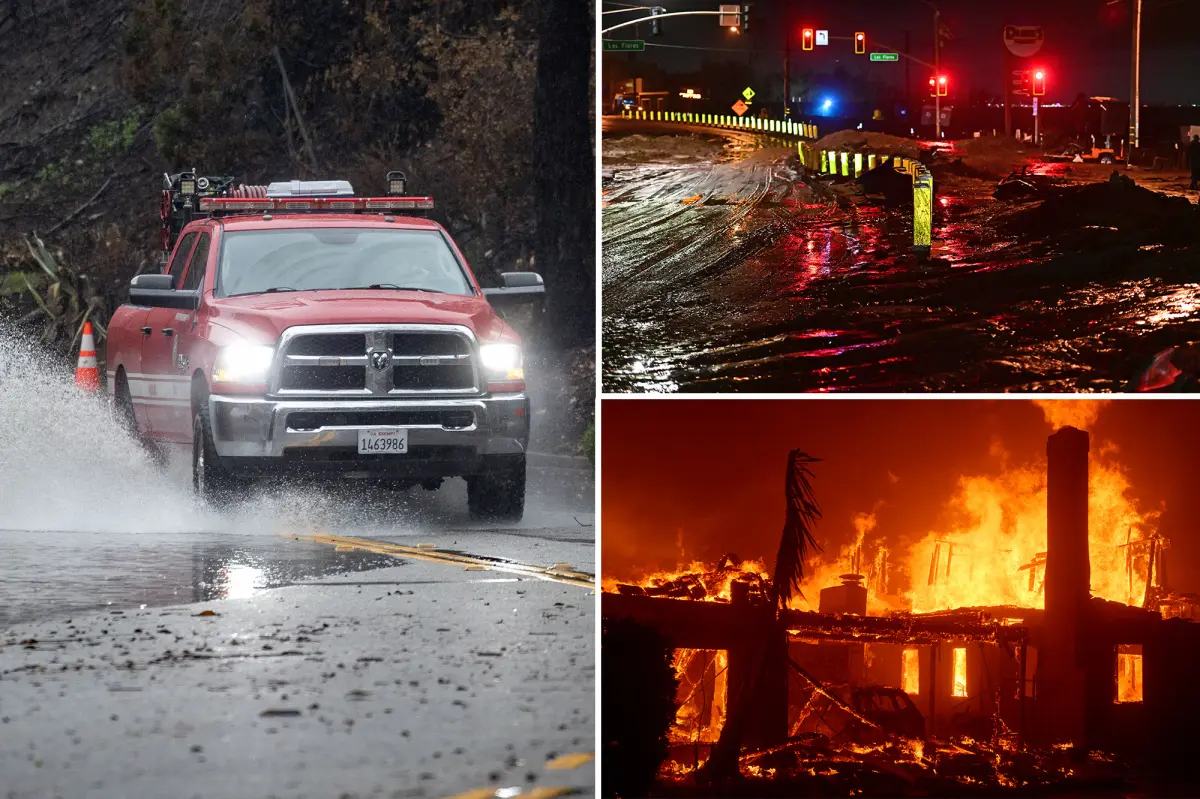
As the winter storm looms over Southern California, Los Angeles officials are sounding the alarm for residents in areas scarred by recent wildfires, urging them to take evacuation seriously ahead of expected heavy rains and potential mudslides. Picture this: it’s just another weekend, but for families in the Palisades and Eaton Fire burn zones, the calm belies an impending threat. Late Saturday, the Los Angeles Fire Department (LAFD) issued a stark bulletin, warning of extreme danger from debris flows and mudslides in regions ravaged by devastating blazes. These fires didn’t just burn homes and landscapes; they stripped away the protective layers of vegetation and soil that anchor the ground, turning gentle slopes into ticking time bombs ready to unleash torrents of mud and debris with the first downpour. The message is clear: don’t wait until the skies open—gather your loved ones, pets, and essential supplies right now. If you’re someone who needs extra time to pack up, think of it as packing for a family road trip with a twist of urgency; the LAFD’s note reads, “Gather loved ones, pets and supplies. Those who need more time evacuating should consider leaving now. More at ALERTLA.ORG.” It’s not just about property—it’s about lives. Think of the elderly neighbor down the street who’ve poured their hearts into that hillside home, or the young parents juggling kids and furry family members. The bulletin emphasizes the potential threat to life and property, pushing people with animals and those who might need assistance to evacuate immediately. Staying put feels safer in the moment, like cozying up with a cup of coffee, but these warnings are born from hard-learned lessons in past disasters where complacency turned tragic. Living in LA’s sunny paradise, it’s easy to forget how quickly weather can turn, but this storm could wash away the false sense of security, reminding us that nature’s fury respects no boundaries. Residents are being asked to tune into ALERTLA.ORG for real-time updates, where the site serves as a digital lifeline, offering tips on monitoring the storm’s path and sharing personal stories from those who’ve navigated similar evacuations before. For those in designated zones, it’s like a neighborhood watch on steroids—everyone’s eyes on the skies and streams. The human side shines through in these bulletins: looped in are real people who know the land, firefighters who’ve battled embers and now brace for water’s wrath. It’s a call to action that’s intimate yet citywide, urging folks to check the interactive countywide map that highlights evacuation zones, complete with preparedness resources. From Pacific Palisades to the shadowed groves of the Eaton Fire areas, the map isn’t just lines on a screen—it’s a guidebook for survival, mapping out where the ground could give way. Imagine scrolling through it on your phone, zooming into your block and feeling that pang of recognition. The LAFD has made it a point to include everyone, from tech-savvy millennials to those who rely on community networks for alerts. This isn’t bureaucratic jargon; it’s a empathetic plea, acknowledging the stress of uprooting, the worry for pet food left behind, or the unplugged fridge humming in an empty home. Local TV stations like KTLA amplified the message, turning it into a shared conversation over morning coffee or during commutes, where drivers share nods of concern. It’s a reminder that in LA’s sprawling patchwork, communities band together, sharing rides or helping those without wheelchairs navigate the evacuations. The bulletin didn’t emerge from a vacuum; it’s informed by meteorologists tracking atmospheric rivers, those invisible highways of moisture barreling toward the coast. Forecasters warn of not just rain but high winds rattling palm trees and shingles alike, creating a symphony of unrest. For displaced families from the Eaton Fire, who’d already picked through ashes, this second punch feels unfair, yet the warnings honor their resilience. Psychologists might say it’s about control in chaos—preparing gives a semblance of power. So, as Sunday approaches, LA’s residents are urged to envision the what-ifs, weighing the discomfort of temporary shelter against the nightmare of isolation in a flooded zone. The LAFD’s outreach extends to free dry runs for evacuation routes, turning drill days into neighborhood gatherings where laughter mixes with seriousness. It’s humanizing the process, stripping away fear’s anonymity by connecting it to familiar faces and routines. In essence, this bulletin is a communal breath, a collective exhale before the storm, reminding Angelenos that preparation is love—love for neighbors, pets, and the city’s storied hills that have witnessed too many tragedies. As the clock ticks toward the midnight toll of the warning’s start, it’s a testament to LA’s spirit: adaptable, aware, and unwaveringly hopeful despite the gathering clouds.
Diving deeper into the reasons behind the alarm, it’s crucial to understand how these wildfires set the stage for devastation, transforming natural landscapes into hazardous zones prone to catastrophic mudslides. When those ferocious flames roared through Southern California not long ago, they didn’t merely scorch the earth—they incinerated the vital networks of roots and plants that hold soil in place, leaving behind barren, unstable terrains ripe for collapse. Imagine the ground as a sponge, soaking up water and then releasing it all at once; wildfires turn that sponge into a brittle, fragmented mess, where even a few inches of rain can trigger rapid debris flows—churning masses of mud, rocks, and uprooted trees cascading downhill at breakneck speeds. Scientists call this the “degloving” effect, and it’s a brutal fact of post-fire life, as evidenced by past events where unsuspecting homes were buried under walls of sludge. For residents who’ve watched their neighborhoods recover from blazes, this explanation hits home, bringing back memories of the smoky skies and displaced friends who lost everything to the flames, only to face this watery sequel. The LAFD’s bulletin pulls no punches in spelling this out, highlighting how pure vegetation acts as nature’s armor, absorbing rainfall and stabilizing slopes, but once gone, it invites chaos. Think of it from a homeowner’s perspective: you’ve just replanted your garden after the Palisades Fire, watching delicate shoots push through the ash, and now a storm threatens to undo it all. Experts from the U.S. Geological Survey back this up with data showing that burn scars amplify rainfall’s destructive power, increasing flash flood risks by factors of up to ten in affected areas. People share stories online, like one mom whose kids scavenged for toys amid the rubble, now worried about another twist of fate. This isn’t abstract science; it’s lived reality for those who’ve hiked the exposed trails or camped in the once-lush canyons now marred by skeletal trees. Forest rangers recount tales of wildlife scrambling for higher ground, mirroring human unease, as animals sense the impending shift just as instinctively. The LAFD encourages residents to recall the late 1990s storms that followed the Whittier Narrows earthquake scars, where mudslides claimed lives, underscoring that history repeats when vigilance wanes. By humanizing these dynamics, the warnings foster empathy; it’s like a doctor explaining a diagnosis, breaking down the “why” so no one feels blindsided. Communities are holding informational sessions in local parks, where firefighters in soot-stained gear demystify the jargon, drawing diagrams in the dirt to illustrate how water channels carve new paths through weakened earth. For immigrants who’ve fled harsher climates elsewhere, this evokes old traumas, yet they appreciate the city’s preparedness culture. In a way, these burn scars are like open wounds on the landscape, vulnerable to infection from weather, and the evacuation is the bandage, allowing healing time. As forecasters eyeball satellite images showing pregnant clouds over the Pacific, the urgency builds—it’s not about fear-mongering but empowering LA’s diverse populace, from ambitious startups in tech hubs to beacon-driven surfers, to anticipate and adapt. The LAFD’s proactive stance reflects a city that learns, turning potential catastrophe into a teachable moment, where understanding the wildfire’s legacy strengthens communal bonds, reminding everyone that resilience starts with knowledge and action before the first drop falls.
The specifics of the evacuation warning aren’t lost in generality— they kick in at a precise moment, painting a timeline that demands immediate attention. Effective from 9 p.m. on Sunday, February 15, through 9 a.m. on Tuesday, February 17, the order targets vulnerable zones, giving residents a clear window to depart as the storm’s leading edge approaches. KTLA’s coverage amplified this, bringing the details into living rooms across LA, where families paused dinner to discuss plans. Imagine the clock striking nine, windows rattling from building gusts, and you realizing it’s time to move—it’s not arbitrary; meteorologists have plotted the storm’s trajectory, predicting soaking rains that could peak by Monday, leaving no room for hesitation. For those in the spotlights, like the Palisades Fire burn scars, the zones are meticulously listed: LFD-1081, 1083, 1085, 1087, 1089, 1091, 1092, 1093, 1095, 1096, 1097, and 0891—all coded reminders of specific canyons and ridges reshaped by flames. Similarly, the Hurst Fire hit LFD-0001-B, the Sunset Fire LFD-0835, and the Eaton Fire zones like SMD-E016, E019, E013, E015, E005, E002, E010, E007, E001, E014, E004, E006, E012, E011, E003, E008, and E009, each representing neighborhoods where families stroll dogs or barbecue on weekends. This listing isn’t bureaucratic; it’s a lifeline, like a map in a treasure hunt where the prize is safety, accessed via a user-friendly interactive countywide map on the LAFD’s site. Zoom in, enter your address, and the screen lights up red if you’re in peril, blue for calm—it’s technology serving humanity, pairing GPS with real-world stakes. Residents who’ve queried the map describe the surreal clarity: “That’s my street,” they say, leading to personal checklists of packing precious mementos like wedding photos or heirloom quilts. For businesses, it’s a call to shutter early; think of the café owners in Malibu slopes securing menus in drawers as panic sets in. The 48-hour span feels generous yet precarious, accounting for delays like traffic jams or frail relatives needing aide. Community leaders organize carpools, transforming evacuation into a group effort, where singles link up with families, sharing the ride to designated shelters decked with cots and hot meals. Stories emerge of past evacuees who regretted lingering, their homes mud-locked, versus those who heeded the call, returning to unscathed abodes. The LAFD emphasizes adaptability; if the storm shifts, the timeline might flex, prompted by live updates via apps that buzz like friendly alerts. For tourists or newcomers, this provides a crash course in LA weather’s duality—sunshine and surprise deluges. Schools have even woven it into lessons, turning maps into educational tools for kids drawing evacuation routes. It’s a structured yet compassionate mandate, acknowledging the human grit needed to uproot, whether it’s loading a van under starlight or bidding farewell to childhood homes built on dreams. As Sunday evening draws near, the warning embodies precaution, bridging scientific prediction with pragmatic empathy, ensuring that no life is left to chance amidst the storm’s brewing fury.
Preparedness isn’t just a suggestion—it’s a lifeline woven into the very fabric of the LAFD’s response, offering tools to turn vulnerability into strength. Right at the heart of their strategy is the provision of free ready-to-fill sandbags at all neighborhood fire stations across LA, a generous gesture that puts tangible defense in residents’ hands. To locate one, officials point to an easy-to-navigate map on the county’s website, where blue dots pop up against familiar streets—imagine popping into a firehouse, chatting with uniformed pros who’ve seen it all, and loading up bags to stack against doors, like building a miniature wall of safety. It’s a community touch, free and approachable, stripping away barriers for those budgeting tight. These stations aren’t just depots; they’re hubs of knowledge, where firefighters share insights on placement, advising layers like brickwork for maximum barrier. For widows like Mrs. Ramirez, who piles sandbags solo with arthritic hands, it’s a reminder of LA’s interconnected spirit—neighbors often pitch in, turning it into a block party of protection. Beyond sandbags, the emphasis is on gathering essentials: flashlights for power outages, canned goods for uncertain meals, waterproof boots for trudging through puddles, and chargers to keep phones alive for updates. It’s like curating a survival capsule, prioritized into must-haves—medications first, then kids’ comfort items to stave off meltdowns. Review evacuation plans isn’t a dry exercise; it’s a family huddle around the dinner table, role-playing exits, assigning tasks like grabbing the pet leash or securing the family keepsake. “Stay alert for updates” means checking apps obsessively, like awaiting a lover’s text, ensuring families aren’t caught off-guard. For those with mobility issues, the LAFD partners with agencies for assisted evacuations, humanizing the process with ramps and trained escorts. Pets get their spotlight too—evacuations aren’t just human affairs; think of Fluffy the cat or Max the dog, whose carriers fill shelters with meows and barks, creating oddly comforting chaos. Stories abound of owners who’ve customized bags for anxious animals, tucking in favorite toys, turning preparation into bonding. Schools distribute checklists, empowering kids to lead in packing, fostering a sense of agency amid uncertainty. Veteran residents recount the 2018 Woolsey Fire winters, where sandbags saved driveways, inspiring gratitude. Volunteers man booths at markets, demoing portable generators and waterproofing tricks, all while sharing laughs about “storm-proof” recipes like no-bake goodies. It’s not fear-based; it’s empowering, reminding LA’s eclectic mix—from artists in Venice to executives in Century City—of the simple joys in preparedness, like a stocked pantry easing anxieties. As the storm inches closer, these steps build confidence, transforming potential panic into proactive peace, where every resident becomes a guardian of their own story in this coastal crucible of resilience.
In the string of resources offered, ALERTLA.ORG stands out as a digital sanctuary, a go-to hub bursting with actionable advice and live alerts that bridge the gap between warning and action. Dive into the site, and you’ll find a wealth of preparation guides, from step-by-step evacuation checklists to estimator tools predicting flood depths in your vicinity—it’s like having a personal meteorologist at your fingertips, tailored to your address with no jargon overload. Imagine scrolling through forums where users post real-time experiences, like a dad describing his family’s sprint from a Hurst Fire zone, fostering a sense of shared camaraderie that combats isolation. The interactive countywide map is a cornerstone, color-coded for clarity—green for safety, red for risk—allowing users to plug in their zip code and get instant feedback, alleviating worries for those peering out rain-streaked windows. For tech-challenged elders, community centers offer in-person tutorials, turning the digital divide into inclusive dialogues, where laughter breaks tension over mouse-clicking mishaps. Preparedness resources extend to emergency kits templates, complete with checklists for medicines, documents, and cash, humanized by anecdotes: a teacher who packed her students’ favorite books turned evacuations into adventures. Ways to be ready include securing loose objects like patio furniture that could become projectiles in winds, or trimming trees to prevent fallen branches sparking new hazards. Environmental advocates use this as a teach-in on post-fire erosion, urging natives to plant quick-growing grasses for future storms. Mental health tips creep in too, normalizing anxiety with breathing exercises, recognizing that storms churn emotional tides as much as physical ones. For businesses, guidelines cover boarding windows and backing up data, like restaurateurs safeguarding menus against watery ruin. Travelers in hotels are looped in via concierges posting notices, merging tourism with caution. It’s a holistic approach, blending tech with touch: hotlines staffed by empathetic voices ready to guide you through uncertainties. One resident’s tale of lost power led to a site-recommended lantern, sparking gratitude. In workshops at libraries, participants build kits together, brewing coffee and sharing evacuation nightmares-turned-laughter. ALERTLA.ORG isn’t static; it’s evolving, with user feedback shaping new sections on pet-friendly shelters or senior lifeline programs. As Southern California’s sky darkens, this resource network empowers, turning scattered warnings into a unified tapestry of readiness, where every click or call reinforces the human tapestry of LA’s spirit—vigilant, connected, and unyieldingly prepared.
Looking ahead, the forecast paints a sobering picture of the storm set to unfurl Sunday through the early week, heralding several inches of rain coupled with howling winds that could lash communities already frayed from wildfires. Meteorologists from the National Weather Service outline a system born over the Pacific, a atmospheric river dumping relentless precipitation, potentially flooding low-lying areas and amplifying erosion in burn-scarred regions. For folks who’ve weathered past barrages, like the torrential downpours of 2023, this echoes familiar fears, but with heightened stakes due to exposed soils. High winds aren’t mere gusts—they’re capable of uprooting trees and pummeling hillsides, turning calm overlooks into perilous zones. LA’s coastal location exacerbates this, where ocean moisture feeds the fury, creating a watery artillery that could inundate culverts and plunge roads into chaos. Residents in the Palisades might recall serene beaches transforming into wind-whipped spectacles, now layered with mudflow risks, prompting reflections on nature’s impartiality. From Pacific Palisades to inner-city enclaves, umbrellas become battleships, and boarded windows nod to Hurricane Katrina’s distant lessons adapted to wildfires’ aftermath. Forecasters stress variability: some zones could see monsoon-like deluges, others scattered showers, urging adaptive planning rather than fixed expectations. For outdoor enthusiasts, trails morph into no-go zones, with fallen limbs posing hidden dangers amid muddy quagmires. Elderly tenants in aging apartments hunker down with nostalgia for drier eras, while young families innovate, turning indoor time into craft sessions amidst thunder rumbles. The storm’s timeline aligns eerily with the evacuation window, creating a choreography of departure—leaving as clouds converge, returning to inspect the toll. It’s a reminder of LA’s duality, where balmy days give way to tempests, testing the city’s infrastructure and spirit. Ecologists warn of runoff carrying pollutants into oceans, impacting surfers and marine life, broadening the human impact. Yet, amidst the gloom, there’s a silver lining in community rallies: potlucks in shelters, stories swapped by flashlight light, forging bonds that endure beyond the rains. Officials encourage stocking chill medications for soaked chills, blending medical savvy with warm blankets. As Monday dawns storm-tossed, the outlook demands humility, acknowledging that while science predicts, human adaptability prevails. Residents gird with resolve, their stories weaving together like threads in a storm-soaked quilt, emerging stronger from the deluge, united in the face of nature’s unpredictable symphony. This forecasted onslaught isn’t just weather data; it’s a call to embrace vulnerability as strength, turning potential peril into a narrative of endurance for LA’s indomitable populace. As the skies threaten, every resident stands ready, not in dread, but in the quiet courage of collective fellowship.