


European Leaders Debate Using Frozen Russian Assets to Finance Ukraine’s Defense
By James Mitchell, Senior European Affairs Correspondent
Critical Funding Decision Looms as European Council Meets in Brussels
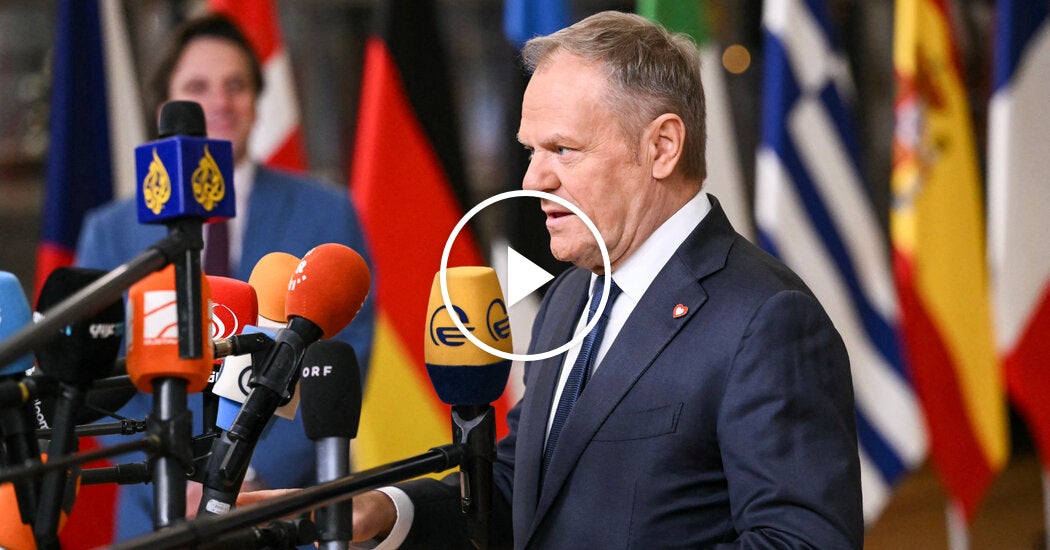
In a high-stakes summit that could reshape the financial landscape of the Russia-Ukraine conflict, European leaders gathered in Brussels to tackle one of the most contentious proposals in recent diplomatic history: whether to use frozen Russian assets to fund Ukraine’s government and military efforts. The European Council meeting, characterized by sharp divisions and urgent appeals, highlighted the complex intersection of international finance, geopolitical strategy, and legal precedent that European policymakers now face as the war continues with no end in sight.
“Either money today or blood tomorrow,” declared one European leader during the tense discussions, encapsulating the gravity of the situation. “And I am not talking about Ukraine only, I’m talking about Europe. I think all European leaders have to finally rise to this occasion.” This stark framing of the choice facing Europe underscores the growing recognition among many officials that Ukraine’s ability to defend itself has implications far beyond its borders, potentially affecting the security architecture of the entire continent. The sense of urgency was palpable as representatives from across the European Union debated not just the mechanics of such funding but also the broader principles at stake in appropriating frozen sovereign assets for wartime support.
The Financial Mechanics and Legal Complexities Behind Asset Seizure
At the heart of the debate lies approximately €300 billion in Russian central bank assets that were frozen shortly after Moscow launched its full-scale invasion of Ukraine. These assets, primarily held in European financial institutions, represent one of the most significant economic sanctions imposed on Russia. Now, nearly two years into the conflict, with Ukraine facing mounting economic pressures and military challenges, European leaders are considering whether to move beyond merely freezing these assets to actively repurposing them for Ukraine’s benefit.
The technical and legal challenges involved in such a move are substantial. International law generally prohibits the seizure of sovereign assets, even during conflicts, and some legal experts have warned that creating an exception could set a dangerous precedent. Financial institutions also worry about potential market implications and future confidence in European financial systems if sovereign assets can be seized under certain circumstances. Despite these concerns, proponents argue that Russia’s violation of international law through its invasion creates exceptional circumstances that justify exceptional measures. The European Commission has been exploring mechanisms that would allow for the use of interest generated by the frozen assets rather than the principal amounts themselves, potentially offering a compromise position that might address some legal concerns while still providing meaningful financial support to Ukraine.
Diplomatic Divisions Emerge Among European Member States
The Brussels summit revealed significant rifts among European member states regarding the proposal. While some leaders expressed unequivocal support for immediate action, others voiced serious reservations. “We have to find a solution today,” insisted one prominent European leader during the discussions. “The president of the council said, and I support him with that, ‘We will not leave the European Council without a solution for the funding for Ukraine for the next two years.'” This determination to secure a definitive financial commitment reflects growing concern among Ukraine’s strongest European backers that delays in support could prove catastrophic on the battlefield.
However, this perspective was sharply contested by skeptics of the asset seizure plan. “The whole idea is a stupid one,” objected one dissenting voice during the summit. “To take away the money of somebody — there are two countries which are in war, yes? It’s not European Union. Russia and Ukraine. And somebody, European Union, would like to take away the money of one of the warring parties, and then to give it to another one. It’s a marching into the war.” This fundamental disagreement over whether repurposing Russian assets constitutes a direct entry into the conflict itself demonstrates the profoundly different strategic assessments among European leaders about their proper role in the Russia-Ukraine war. Countries with stronger traditional ties to Moscow or those particularly dependent on Russian energy have generally shown more reluctance to take steps that might be perceived as an escalation, while nations geographically closer to Ukraine or with historical experiences of Russian domination have typically advocated for more assertive measures.
Strategic Implications for Ukraine’s War Effort and European Security
The outcome of this financial deliberation carries enormous strategic significance for Ukraine’s ability to sustain its defense efforts. Military analysts estimate that Ukraine requires approximately €50 billion annually to maintain its current operations, a figure that far exceeds what individual European nations or even the collective EU has provided thus far. Without substantial financial support, Ukrainian forces may face critical shortages in ammunition, equipment maintenance, and the basic government services necessary to maintain civilian morale during wartime. The potential windfall from repurposed Russian assets could dramatically alter this equation, providing Ukraine with a financial lifeline at a critical juncture in the conflict.
For European security more broadly, the decision represents a pivotal moment in the continent’s response to Russian aggression. Defense experts have increasingly warned that Europe’s security framework faces its greatest challenge since the Cold War, with conventional warfare returning to the continent at a scale previously considered unthinkable in the 21st century. How European leaders ultimately resolve the question of frozen Russian assets will signal much about their collective determination to impose meaningful costs on military aggression and their willingness to take unprecedented economic measures to uphold the territorial integrity of neighboring states. It also raises fundamental questions about how Europe envisions its security relationship with Russia in the decades to come, potentially marking either a temporary response to an immediate crisis or a more fundamental restructuring of economic and security relationships across the continent.
The Path Forward: Balancing Urgency with Long-term Consequences
As the European Council deliberations continue, policymakers face the challenging task of balancing immediate humanitarian and military needs in Ukraine with careful consideration of long-term legal, economic, and diplomatic consequences. Financial experts have proposed various compromise solutions, including using only the interest generated by frozen assets, creating special financial instruments backed by the frozen assets but not directly spending them, or establishing international trust funds with strict governance mechanisms to ensure transparency in how the funds are utilized. Each approach carries different implications for international financial norms, relations with Russia, and the message sent to other potential aggressors watching how Europe responds to this crisis.
The decision ultimately transcends mere financial policy, touching on Europe’s fundamental values and its vision of the international order. As one European diplomat not authorized to speak publicly remarked on the sidelines of the Brussels meeting, “This isn’t just about money for Ukraine – it’s about whether we believe in a rules-based international system where borders cannot be changed by force, and whether we’re willing to take extraordinary measures to defend that principle.” With Russian forces continuing offensive operations in eastern Ukraine and Ukrainian civilian infrastructure facing relentless attacks, the European Council’s decision on frozen Russian assets may prove to be one of the most consequential financial and strategic choices of the post-Cold War era. Whatever path Europe chooses will reverberate not only through the battlefields of Ukraine but also through the global financial system and international relations for decades to come.