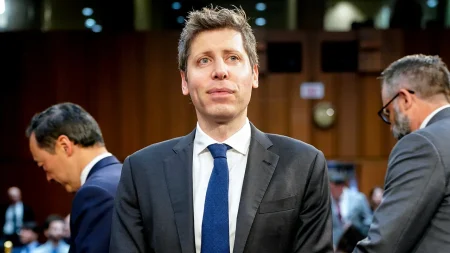
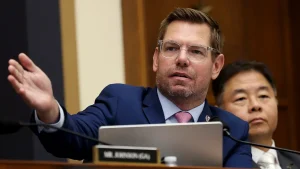






The House Homeland Security Committee hearing on Tuesday was charged with emotion and political tension, as Rep. Eric Swalwell, a determined Democrat from California, confronted ICE Acting Director Todd Lyons in a moment that had everyone in the room on edge. Swalwell, known for his fiery style and passion for immigration reform, stood up to forcefully challenge Lyons, questioning his leadership and the agency’s actions. With the weight of recent controversies hanging in the air, Swalwell didn’t mince words, painting a picture of an agency that he believed had lost its way. Lyons, the man holding the reins of Immigration and Customs Enforcement (ICE), sat there, maintaining a composed demeanor but clearly under pressure. The exchange was more than just policy debate; it was a human drama unfolding live, highlighting the deep divides in America’s approach to immigration, refugees, and public safety. As Swalwell raised his voice, the room felt smaller, the air thicker, with onlookers sensing the personal stakes involved—not just for the officials, but for the families affected by these decisions. Swalwell, eyeing a run for California governor, used the platform to showcase his stance as a protector of the vulnerable, drawing on stories that underscored the human cost of strict enforcement. Lyons, a seasoned official with a track record of service, defended his position, refusing to back down. This wasn’t about bureaucracy; it was about real people, real pain, and the moral lines being drawn in a heated political landscape.
Swalwell’s challenge began with a stark ultimatum, as he held up a photo of a young child, 5-year-old Liam Conejo Ramos, whose story had become a symbol of what Swalwell saw as ICE’s callous disregard for innocence. The congressman recounted how the boy was taken into custody after his father fled from federal arrest in Minnesota, framing it as an abandonment of responsibility. “Considering your honorable service in the past and the dishonorable acts that those who have worked for you have conducted—and the disgraceful statements that the leadership above you have said—you now have a decision,” Swalwell declared, his voice steady but laced with urgency. He implored Lyons to choose sides: stand with the children ICE is supposed to protect, or align with those he called “killers bringing terror to our streets.” The photo, a simple snapshot of a boy with wide eyes and a innocent expression, spoke volumes in that moment, humanizing the abstract debates into something visceral. Swalwell wasn’t just arguing policy; he was invoking empathy, reminding everyone that behind the statistics are faces, fears, and futures altered by ICE’s reach. As a father himself, perhaps, this hit home for him, turning the hearing into a plea for compassion over enforcement. Lyons listened intently, but his response came swiftly: “No, sir, I won’t,” he said, firmness in his tone, refusing to resign despite the pressure.
Swalwell pressed further, asking why Lyons wouldn’t step aside, and that’s when the acting director offered his perspective, turning the narrative around to explain the circumstances behind the child’s photo. Pointing directly at the image, Lyons said, “Because, sir, that child that you’re showing right there, the men and women of ICE took care of him when his father abandoned him and ran from law enforcement.” To him, ICE had acted as guardians in a chaotic situation, stepping in where family hadn’t. The official account painted a picture of a father from Colombia, an illegal immigrant, who left the boy in a car during an arrest attempt in Columbia Heights. Agents tried to reunite the child with relatives at home, knocking and waiting, but no one answered the door. With no immediate safe option, they took Liam into custody alongside his father. It was a scene of desperation, not cruelty—ICE portraying themselves as protectors rather than predators. Later, a judge allowed the father and son to be released pending their asylum claims, but the government now fought to deport the family, shutting down their case. This back-and-forth highlighted the clash of viewpoints: Swalwell saw abandonment and excess force, while Lyons saw necessary intervention. For the families watching or reading about Liam, this was a reminder of how one impulsive action could shatter lives, turning an ordinary day into a separation with federal consequences.
But Swalwell didn’t stop there; he broadened the critique, invoking other haunting cases to underscore his point, making the exchange feel even more personal and urgent. He referenced the tragic killings of Alex Pretti and Renee Good in Minneapolis, victims in a series of events where ICE officers faced accusations of wrongdoing. “It’s a decision to stay on at this point,” Swalwell said pointedly, implying Lyons’ continued tenure supported a culture that allowed such horrors. The Alameda congressman, with his trademark intensity, was weaving these stories into a tapestry of systemic failures, from a child’s fear to senseless violence. Pretti and Good had been caught in the crossfire, their deaths sparking outrage and probes into ICE’s conduct. By tying their fates to Liam’s, Swalwell humanized the issue: these weren’t isolated incidents but symptoms of an agency gone off-track. He praised Lyons’ “decorated” track record, acknowledging his past contributions, but urged him to walk away, calling him an “otherwise employable” person—a jab at Lyons’ loyalty versus ethics. This wasn’t just politics; it was a call for accountability, forcing Lyons to confront the emotional weight of his leadership. The deaths in Minneapolis weren’t just headlines; they were personal losses for communities, leaving families grieving and questioning who really protects whom.
Inevitably, Swalwell turned to atonement, asking if Lyons would apologize to the families of Good or Pretti, especially given inflammatory remarks from the Trump administration that labeled them “domestic terrorists.” Lyons, ever the bureaucrat, declined to comment on active investigations, saying investigations must be impartial. He also defended presidential opinions, noting that elected leaders like the president have the right to speak their minds. This refusal added to the tension, leaving unspoken apologies hanging in the air—a missed opportunity for healing. The exchange cut off abruptly as Swalwell’s allotted time ran out, but the undercurrents lingered. Reporters in the room could feel the frustration bubbling over; here was a leader challenged to reckon with human failings, yet bound by protocol. For Lyons, it must have been a defensive stand, his explanations rooted in duty and facts, but for critics like Swalwell, it was insufficient amid cries for empathy. The hearing exposed fractures in trust, where power meets vulnerability, and apologies might be the bridge needed to mend relations. As the moment ended, the families’ pain remained unaddressed, a stark reminder of why these debates matter deeply.
In the broader context, Swalwell’s push wasn’t out of nowhere; it reflected his ongoing crusade against what he perceives as ICE’s overreach. As co-author of the “ICE OUT Act” alongside Rep. Daniel Goldman of New York, Swalwell had championed legislation to strip qualified immunity from federal immigration agents, aiming to hold them accountable for abuses. This bill, a product of bipartisan effort, sought to peel away legal protections that he believed enabled misconduct. Lyons’ refusal to resign only amplified calls for such reforms, sparking discussions on whether agencies need checks to ensure they serve people, not just enforce borders.різ For individuals affected, like Liam’s family facing deportation, or grieving relatives of the Minneapolis victims, these exchanges represent hope for change amid fear. Swalwell, positioning himself as a voice for the voiceless, used the hearing to amplify their stories, turning a procedural session into a platform for justice. Lyons, resolute in his role, embodied the agency’s defense, prioritizing operations over public relations. Ultimately, this clash underscored America’s struggle with immigration: balancing security, compassion, and rights. As the echoes of the hearing faded, the real test lay in translating words into actions that protect the most vulnerable—the children, the families, the future generations caught in the fray. For all involved, the human cost was undeniable, urging a path toward understanding rather than division.