





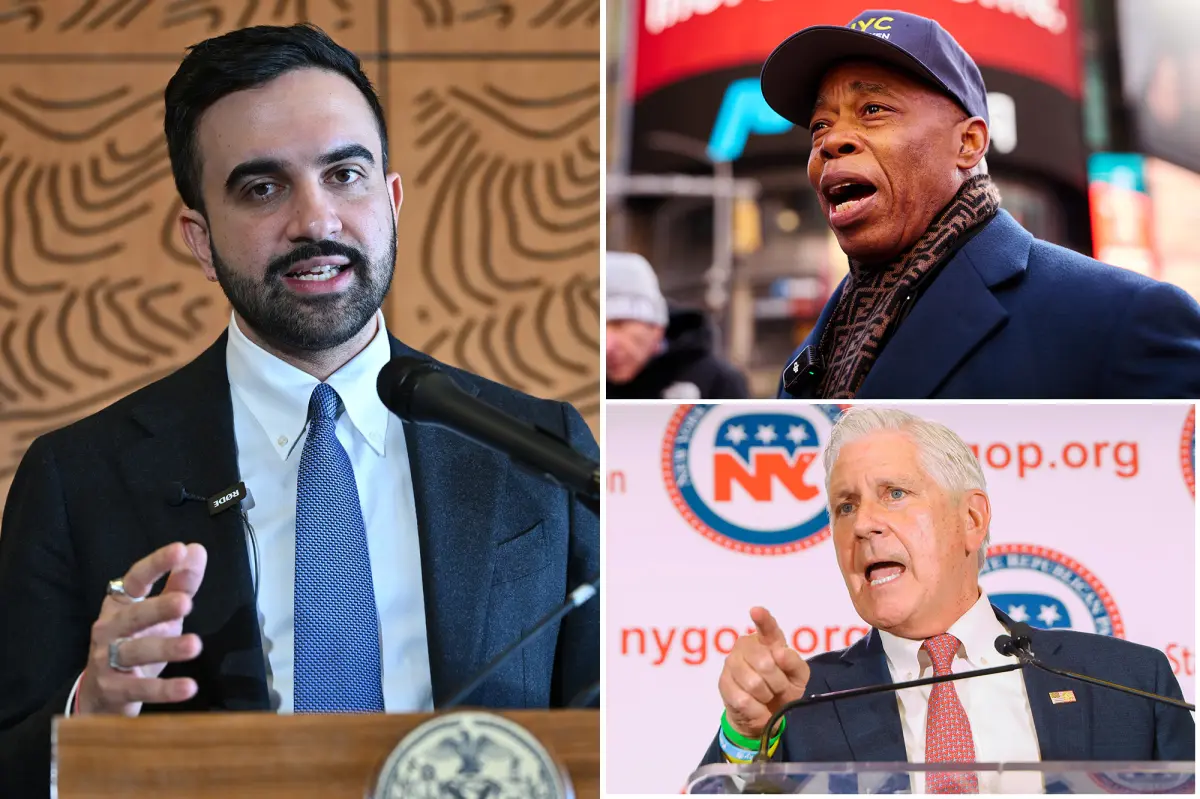
Former New York City mayor Eric Adams isn’t one to hold back, especially when it comes to what he sees as a clear misunderstanding of global threats. Just picture this: a seasoned leader who once navigated the chaos of the Big Apple now calling out his socialist successor, Zohran Mamdani, for labeling the recent US and Israeli airstrikes on Iran as “illegal.” To Adams, this wasn’t just political chatter; it felt like Mamdani was turning a blind eye to the decades of terror sponsored by Iran’s regime. Adams, speaking out in a bold statement to The Post on Sunday, zeroed in on what he calls a “dangerous oversimplification.” He argued that focusing solely on the strikes ignores Iran’s dark history of backing groups like Hezbollah and Hamas, fueling attacks on American forces, pushing nuclear ambitions, and brutally suppressing protesters. For Adams, a man who prides himself on tough, real-talk leadership during his time in office, this felt personal—almost like watching someone erase half the story while the ink was still wet. Words, he emphasized, aren’t just words; they’re tools that shape perceptions worldwide, and as mayor of the nation’s largest city, Mamdani’s remarks carried heavy weight. Yet Adams wondered aloud if this was leadership or just short-sightedness, blurring the line between necessary defense and reckless escalation.
Diving deeper, Adams painted a vivid picture of Iran’s track record, one that’s haunted international relations for years. He recalled how the regime has poured resources into arming terrorist proxies, destabilizing allies, and advancing capabilities that threaten global stability. From funding militia assaults to refining long-range missiles, Iran’s actions read like a playbook for chaos. By not acknowledging this, Adams argued, Mamdani was essentially excusing a government that’s spent generations sowing violence and oppression. Imagine the frustration in Adams’ voice as he chided, “You can advocate for diplomacy. You can call for restraint. But you cannot pretend that Iran’s leadership is a passive actor.” For anyone who’s followed international affairs, this isn’t just rhetoric; it’s a reminder of real threats that have cost lives and upended communities. Adams, ever the pragmatist shaped by 9/11 and countless crises, saw Mamdani’s stance as more than a policy disagreement—it was a failure to grasp the nuances of deterrence versus aggression. On a human level, it must sting to see someone in his old shoes potentially alarming New Yorkers and allies alike, potentially emboldening adversaries by downplaying their aggression.
But Adams didn’t stop there; he humanized the issue by spotlighting the Iranian-American community right in New York City. With over 7,500 New Yorkers born in Iran, many of whom fled the regime’s grip, their stories stand as silent testimonials to the oppression Mamdani seemed to minimize. These aren’t abstract numbers; they’re families who escaped violence, families that settled in the city seeking safety and opportunity, only to hear their new mayor waving off the regime’s dangers. Adams put it poignantly: “They did not escape oppression to hear their mayor minimize the threat posed by the very government that terrorized their families.” You can almost feel the empathy in his words, thinking of mothers and fathers who’ve shared harrowing tales of loss—of relatives killed in protests or friends entangled in the regime’s web of control. For these immigrants, living in the melting pot of New York, Mamdani’s comments must feel like a gut punch, a betrayal of the solidarity they expected. It’s a reminder that politics isn’t just about policies; it’s about people, and how leaders’ words can either heal old wounds or reopen them painfully.
On the other side of this heated exchange, Mamdani’s original post on X painted a starkly different picture of the strikes, which targeted key figures in Iran’s leadership, including Ayatollah Ali Khamenei. He called them a “catastrophic escalation in an illegal war of aggression,” decrying the bombing of cities, civilian casualties, and the opening of yet another war zone. To Mamdani, this wasn’t defense—it was aggression, and he spoke for what he believed Americans truly wanted: no more wars chasing regime change, relief from economic woes, and genuine peace. His tone was urgent, almost pleading, echoing the frustrations of many who question endless military entanglements. In a city like New York, where progressive voices often rally against foreign interventions, Mamdani’s stance resonated with those weary of imperial overreach. Yet, for critics like Adams, it overlooked the Iranian regime’s initiation of hostilities, from proxy wars to nuclear pursuits. Through Mamdani’s lens, you see the humanitarian cost—the fear of a wider conflict spiraling out of control, leaving innocents in the crossfire far from American shores.
The backlash didn’t end with Adams; Republican gubernatorial hopeful Bruce Blakeman piled on, sharpening the political knives as November’s elections loom. As Nassau County executive eyeing Kathy Hochul’s seat, Blakeman saw Mamdani’s comments as proof of divided loyalties. He accused the mayor of siding with Iran’s “brutal terrorist regime” over America, especially while US troops are in danger. Blakeman’s words were fiery, branding Mamdani’s loyalty as anything but American. Striking further, he lambasted Hochul for her conspicuous silence, painting the governor and mayor as cozy allies—”two peas in a pod”—dutifully criticized for not distancing themselves from such views. In the charged atmosphere of New York’s political scene, where endorsements and affiliations can make or break campaigns, Blakeman’s attack felt like a calculated jab. It humanized the divide, making you wonder about the personal toll on families of service members or the anxieties of voters weighing peace against security. For Blakeman, a fiscal conservative with a law-and-order bent, Mamdani’s stance wasn’t just misguided policy; it was a betrayal of shared values in an era of global uncertainty.
Weaving through this tangle of perspectives, it’s clear the debate extends beyond personalities to fundamental questions about leadership, perception, and reconciliation. Adams emerges as a guardian of clarity, warning against oversights that could undermine alliances and embolden foes. Mamdani, conversely, champions restraint, fearing a slide into unnecessary carnage. Blakeman adds fuel to the fire, turning policy into a referendum on allegiance amid electoral stakes. At its core, this clash reflects broader societal rifts—progressives pushing for dialogue versus hawks advocating firm response, all while immigrants and warriors bear the emotional weight. In a diverse metropolis like New York, where cultures converge and histories intertwine, such debates aren’t just political theater; they’re heart-to-heart conversations about protecting freedoms at home and abroad. Ultimately, as tensions simmer, one hopes for leaders who listen first to the lived experiences of those affected, bridging divides rather than deepening them. Because in the end, true leadership isn’t about winning arguments—it’s about ensuring everyone’s story, from escapees of tyranny to frontline defenders, gets heard and honored. As the world watches, New York’s voices could set a tone for healing or hardening, a reminder that even in disagreement, empathy might be the quiet hero we all need.