







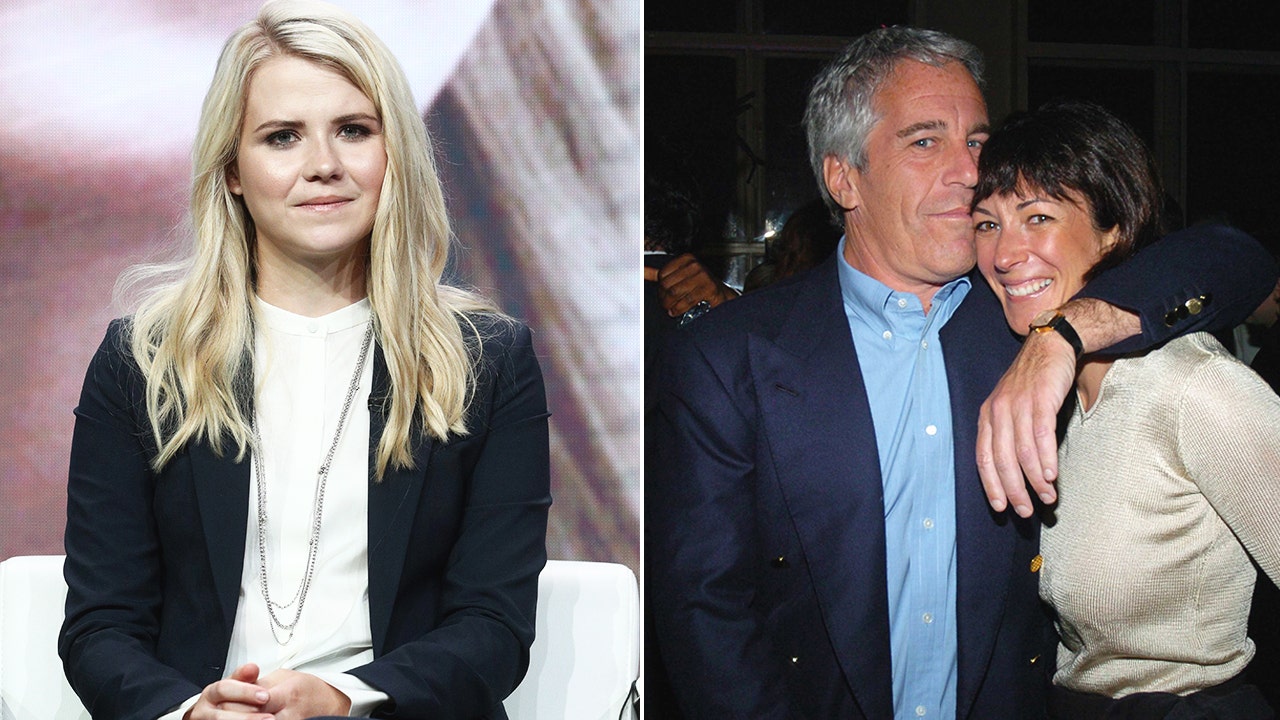
Elizabeth Smart Condemns Ghislaine Maxwell’s Prison Treatment, Draws Parallels to Her Own Abuse
Elizabeth Smart, who became a prominent child safety advocate after surviving her own horrific kidnapping, has expressed outrage over reports that Ghislaine Maxwell is receiving preferential treatment in prison. Smart, now 38 and the author of “Detours: Hope & Growth After Life’s Hardest Truths,” recently shared her disgust at hearing about Maxwell’s conditions at Federal Prison Camp Bryan in Texas, describing it as “the country club of prisons.” The comparison between Maxwell’s case and her own experience struck Smart deeply, particularly the betrayal by a woman who facilitated abuse. “When I hear that Ghislaine’s in the country club of prisons, it just makes me sick to my stomach,” Smart told Fox News Digital. “How could she betray other women like that? How could she stand aside and watch young girls be abused—and be OK with it? Not just be OK with it, but encourage it? It’s disgusting.”
The reports about Maxwell’s treatment at the minimum-security facility have raised concerns about inequality in the justice system. According to Sam Mangel, a federal prison consultant whose clients have included high-profile figures like Sam Bankman-Fried and Steve Bannon, Maxwell appears to be treated “more like a guest in a hotel” than an inmate. In one notable instance, the entire prison was reportedly locked down so Maxwell could receive visitors privately in the chapel, with special arrangements made to conceal the identities of her guests. Mangel claims this is highly unusual and suggests that “strings were absolutely pulled at the highest possible levels” to have Maxwell transferred to Bryan, which he describes as the most desirable women’s prison for white-collar offenders. Other inmates have allegedly been warned against discussing Maxwell’s case with reporters, with one woman who spoke to The Wall Street Journal subsequently being transferred to a higher-security facility.
Smart draws powerful parallels between Maxwell and Wanda Barzee, the woman who, along with her husband Brian David Mitchell, kidnapped Smart at age 14 and held her captive for nine months. During this traumatic period, Smart was drugged, tied to a tree, and raped multiple times daily. The betrayal by a fellow woman remains particularly painful for Smart. “One of the things that really haunts me is that she played a major role in the abuse these young women suffered,” Smart said of Maxwell. “That was the same as my captor. Not only did she stand aside and let me be hurt, but she also encouraged it and watched it happen. She never once protected me or stood in the way of him raping me. I felt like the Epstein case echoed that.” Smart elaborated on this sense of betrayal, saying, “To me, I’ve always felt there’s a sisterhood between women. One woman should never betray another. A grown woman should never hurt or help facilitate the abuse of young girls.”
Maxwell is currently serving a 20-year sentence for procuring girls for Jeffrey Epstein, the disgraced financier who died in a New York City jail in 2019 before facing trial. Despite her conviction, Maxwell has recently asked a federal judge to vacate her sex-trafficking conviction, claiming “substantial new evidence” shows constitutional violations during her trial. She is not eligible for release until 2037. Smart’s comments come in the wake of the death of Virginia Roberts Giuffre, one of Epstein’s most vocal accusers, who passed away in April at age 41. Within weeks of her posthumous memoir’s release in October, King Charles III stripped Prince Andrew—whom Giuffre had accused of sexual exploitation—of his titles and royal residence.
Smart emphasizes how predators like Epstein and Maxwell target vulnerability, drawing another parallel to her own experience. “Predators look for vulnerability—and that’s exactly what these girls and women were,” Smart explained. “Predators like Epstein and Maxwell exploit that vulnerability until these women and girls feel they have no other option but to do what they’re told. It’s easy to look at victims and say, ‘You had a phone,’ or ‘You could have run away.’ But unless you’ve experienced it firsthand, you’ll never understand the forces that lead to trafficking.” She points out society’s reluctance to address sexual abuse, particularly involving children, which contributes to inadequate prevention and education. “Most people don’t want to think about anyone being sexually abused—especially children,” Smart said. “Because you never think it will happen to you, many never take the time to have these important conversations.”
If given the opportunity to speak directly with Epstein’s victims, Smart would offer words of comfort and empowerment. “I would want them to know this was not their fault,” she said. “They have no guilt in this situation. The blame lies solely on the perpetrators. No one can take away your value. You were born with it, and it never leaves you. You are every bit as worthy of love and joy as anyone else in the world—and you still deserve everything any person would want.” Smart’s own journey from victim to advocate exemplifies the possibility of reclaiming one’s life after trauma. Since her rescue in 2003, facilitated in part by an “America’s Most Wanted” episode that led to her recognition, Smart has dedicated herself to speaking on behalf of missing and exploited children. While her abductor Mitchell received a life sentence in 2011, Barzee was released in 2018 with conditions including mental health treatment and a prohibition against contacting Smart or her family. Through her advocacy and new book, Smart continues to offer hope to survivors navigating life after experiencing devastating trauma.