






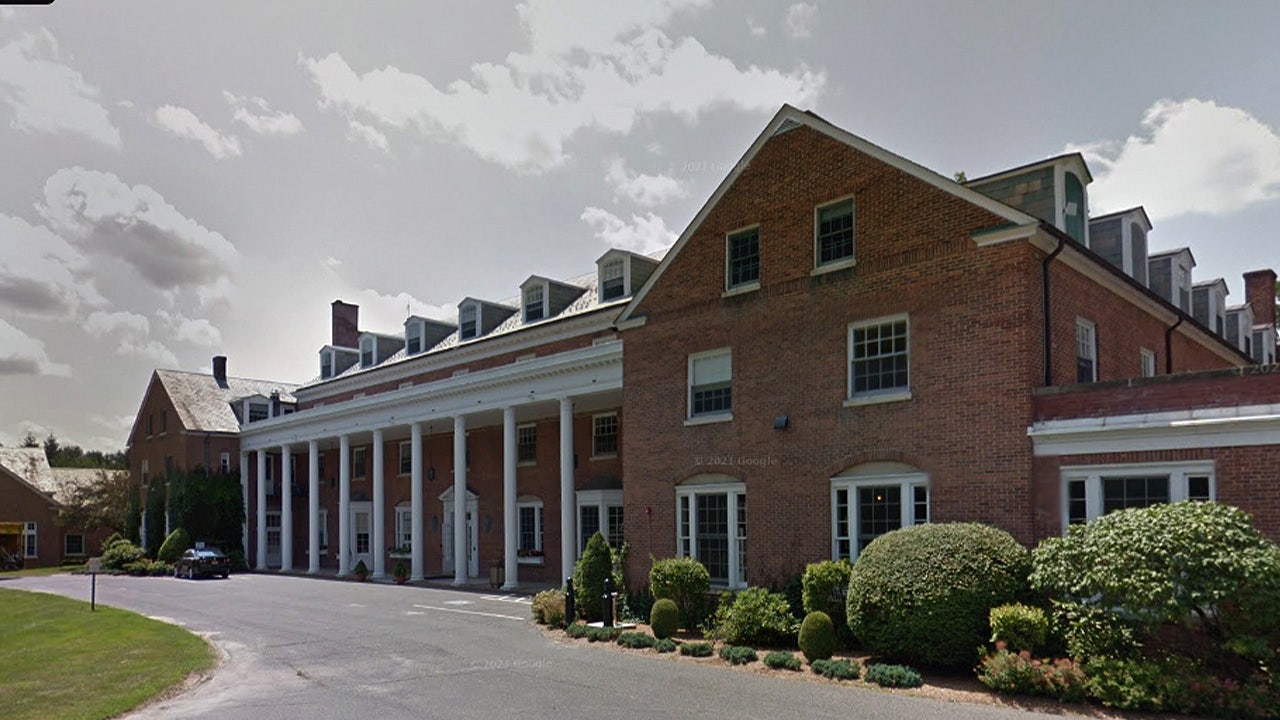
Elite Boarding School Faces Decades of Sexual Misconduct Revelations
In a disturbing revelation that has shaken the prestigious Miss Hall’s School community in Massachusetts, an independent investigation has uncovered a pattern of sexual misconduct spanning from the 1940s through the 2010s. The elite all-girls boarding school, where families pay up to $79,000 annually for tuition and room and board, now faces a reckoning as the 60-page Aleta Law report details eight substantiated cases of sexual misconduct by former employees. At the center of the investigation is former history teacher Matthew Rutledge, who taught at the Pittsfield campus for over three decades. According to the report, Rutledge engaged in systematic grooming, sexualized behavior, and sexual assault of students beginning in the 1990s, with five former students coming forward with firsthand accounts. The allegations against Rutledge paint a picture of a predatory relationship dynamic, where what began as special attention gradually escalated to inappropriate physical contact and sexual intercourse with students, despite the significant age difference.
Perhaps most troubling is the revelation that school administrators, including senior leadership and at least one former head of school, received multiple reports or warnings about Rutledge’s behavior over the years but failed to take decisive action. The Aleta Law report concludes that the school’s leadership “failed to adequately investigate and respond” to concerns, allowing alleged predators to remain in the classroom. A Vanity Fair investigation corroborates this institutional failure, noting that school officials were alerted to Rutledge’s concerning behavior as early as 2005. Despite instructing him to cease contact with a former student, administrators allowed him to continue teaching, prioritizing institutional protection over student safety. This pattern of institutional neglect has prompted two former students, Hilary Simon and Melissa Fares, to sue the school for negligence and emotional and physical harm.
The report describes a school culture in the 1990s and 2000s that inadvertently enabled inappropriate relationships. Teachers regularly spent time alone with students, invited them into faculty apartments, gave personal gifts, and blurred emotional and physical boundaries. This environment created confusion about appropriate teacher-student relationships and made it difficult for students to recognize when boundaries were being crossed. Several employees admitted they suspected inappropriate relationships involving Rutledge but remained silent out of fear of retaliation or belief that leadership “would not listen.” More distressingly, students who raised concerns about other teachers in past decades reported being ignored, discouraged, or even punished for speaking up, creating a culture where victims felt silenced rather than protected.
The legal response to these revelations highlights what some advocates describe as a significant gap in Massachusetts law. Despite the profound nature of the allegations, the Berkshire District Attorney’s Office concluded in October 2024 that under Massachusetts General Law, no criminal conduct occurred because the age of consent in the state is 16. Wendy Murphy, a Massachusetts-based attorney and national advocate for sexual assault survivors, told Fox News Digital, “The law treats these students as if they’re capable of consenting, but consent isn’t real when the perpetrator is in a position of authority over you.” This legal gap has allowed alleged predators like Rutledge to avoid criminal charges despite behavior that would be clearly illegal in many other states, where laws specifically prohibit sexual relationships between teachers and students regardless of age.
The investigation has prompted soul-searching within the Miss Hall’s community, with current Head of School Julia Heaton acknowledging in a letter that “the investigation revealed horrible truths about a community we hold dear.” Murphy points to a troubling pattern in how educational institutions respond to sexual misconduct allegations involving female students, noting, “It’s very common for schools to get rid of the noisemaker—the victim who won’t shut up. The message becomes: if you complain, you’ll be punished.” She further observed that while schools might respond swiftly to discrimination based on race or religion, “when the victim is a girl, schools often treat the abuse as less serious. Girls keep getting second-class treatment.” This gender-based disparity in institutional response adds another troubling dimension to the scandal.
In response to the investigation’s findings, Miss Hall’s School has begun implementing extensive reforms aimed at preventing future misconduct and supporting survivors. These measures include a new employee code of conduct, strengthened reporting protocols, shared faculty office spaces to reduce opportunities for inappropriate private interactions, 24/7 multilingual counseling access for students, survivor-centered listening sessions, and the creation of a Survivor Therapy Fund. The school has publicly apologized to its community and acknowledged “past failures” in safeguarding students, stating it is now committed to “ensuring every student is seen, safe, cared for, and able to thrive.” While these reforms represent important steps forward, the legacy of institutional failure and the profound impact on survivors will continue to reverberate through the school community. As Simon and Fares continue their legal battle and advocate for stronger protections for students before the Massachusetts legislature, their courage highlights both the personal toll of such abuse and the critical importance of institutional accountability in educational settings.