






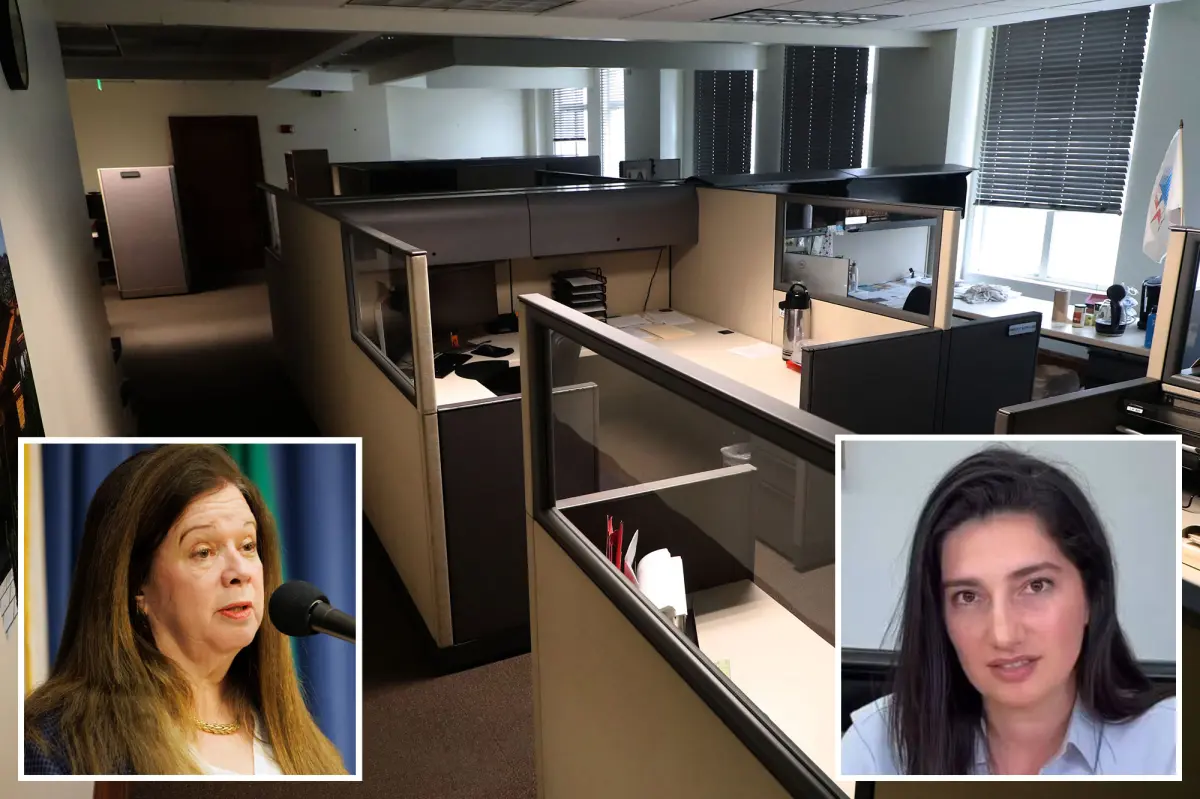
In the bustling heart of Los Angeles, a heated city attorney race is unfolding, pitting two sharp-minded women against each other in a debate that feels deeply personal and profoundly impactful for everyday Angelenos. At the forefront is Marissa Roy, a deputy state attorney general with backing from the Democratic Socialists of America, who stunned many with her bold vision for the city attorney’s office. Imagine lawyers, sworn to uphold justice for LA’s millions of residents, showing up to the office just two days a month—drawing from her experience in the office of State Attorney General Rob Bonta, where such flexibility has been a staple. It’s not about shirking responsibility; it’s about trusting professionals to deliver results from home or on the go, embracing the modern world where a laptop and a steady internet connection can replace the daily commute. Roy passionately argues that there’s simply no compelling reason why city lawyers can’t operate this way, freeing them from the grind of endless desk-bound days and allowing them to live fuller, more balanced lives. Picture a young attorney, perhaps juggling childcare or battling traffic on the 405, finally able to focus on the law without the office politics interrupting their creativity. This isn’t just a policy tweak; it’s a human-centric shift that could transform how government serves its people, making legal work more accessible and less rigid. As frustration simmers over the current state of affairs, where City Hall feels like a ghost town with offices inexplicably shuttered on Fridays—leaving residents like Maria, a small business owner who once planned her week around quick errands downtown, stranded and disappointed—Roy’s idea resonates as a breath of fresh air, promising to reignite the spark of innovation in public service.
Diving deeper into the campaign dynamics, Roy stands as a formidable challenger, having amassed over $450,000 in contributions, a testament to her rising popularity among those yearning for change. Her opponent, incumbent Hydee Feldstein Soto, paints a starkly different picture, advocating for a more traditional approach to workplace expectations. Soto’s team insists that city attorneys should be physically present at least three days a week, with supervisors clocking in four, to foster oversight, mentorship, and that irreplaceable real-time collaboration crucial for guiding city leaders through legal mazes. She vividly describes the benefits: mentors passing down wisdom to newer lawyers in the hallways, impromptu brainstorming that sparks brilliant strategies for lawsuits or settlements. “It builds teamwork,” she emphasizes, her voice echoing the importance of cohesion in a high-stakes environment where a missed detail could impact millions. Think of it as a family gathering around the dinner table—sure, video calls are handy, but nothing compares to the warmth of shared presence, the ability to read body language or offer a reassuring pat on the back. Soto worries that loosening the reins could invite ethical quagmires, like lawyers moonlighting on private gigs while drawing public pay, potentially compromising their loyalty to the city. This tension isn’t just ideological; it’s about trust. Voters like parents Roberto and Elena, who rely on responsive city services to keep their neighborhood safe, might fret about lawyers distracted by remote distractions, unable to drop everything for an urgent crisis. Yet Roy counters this with stories from her own office, where productivity soared and morale improved, proving that autonomy can coexist with accountability. The challenge isn’t just who wins; it’s about envisioning a future where government work adapts to the lives of real people, not the other way around.
Feldstein Soto digs in further, her concerns rooted in the human element of governance that many Angelenos connect with on a visceral level. She shares anecdotes from her own tenure, recalling how in-person interactions have prevented costly mistakes—times when a casual chat led to uncovering overlooked evidence in a case that could have unraveled the city’s defense. “Younger attorneys need hands-on supervision,” she insists, painting pictures of novices grappling with the weight of representing millions, absorbing lessons only possible through face-to-face dialogue. It’s a role that demands empathy, especially when dealing with the city’s most vulnerable populations, from unhoused individuals to small entrepreneurs facing red tape. Soto warns that Roy’s plan might erode this foundation, potentially leading to a fragmented workforce where collaboration dwindles, and ethical boundaries blur. Imagine a lawyer, exhausted from a late-night emergency at home, slipping into conflicts of interest by taking on outside work—it’s a nightmare she aims to avert. For families like the Garcias, who live paycheck to paycheck and depend on swift legal support for community issues, this isn’t abstract policy; it’s about ensuring their voices are heard without delay. Soto’s campaign rallies highlight her commitment to maintaining LA’s civic engine, where physical presence isn’t a relic but a necessity for the pulse of democracy. As debates heat up, supporters on both sides rally, sharing stories of inspiration—teachers who appreciate Soto’s structured mentorship or parents cheering Roy’s flexibility that could help attorneys be present for their kids’ milestones. The race embodies the soul-searching of a city redefining work-life balance in an era of smartphones and streaming services, where human connection still reigns supreme.
The broader ramifications of this office debate ripple through Los Angeles in ways that touch everyday lives, exposing cracks in the city’s infrastructure that’s already straining under the weight of post-COVID adjustments. Reports from the LA Times and investigative pieces by the California Post reveal a City Hall that’s increasingly absent, with entire departments closing on Fridays without public notice—a policy that has turned downtown into a hollow shell. Picture the scene: dozens of Angelenos, from busy professionals to elderly retirees, arriving to pay fines or resolve permits, only to find locked doors and deserted counters. One heart-wrenching account details a small business owner, Jose, who spent hours commuting through snarled traffic, shelled out parking fees, and took precious time off work, only to be sent away empty-handed with a terse “come back tomorrow.” It’s not just inconvenience; it’s a fracture in public trust, where the government’s promise to serve feels broken. City workers, speaking candidly to reporters, admit that since remote work became the norm during the pandemic, basic services have slipped—think overflowing street repair requests piling up, potholes deepening into craters that jar commuters out of their reveries. For residents like Sofia, a mother pushing a stroller down cracked sidewalks, this isn’t politics; it’s a daily hazard that symbolic of a system failing to adapt. Roy’s remote-friendly agenda aims to rectify this by encouraging attorneys to be more available off-site, potentially revitalizing responsiveness. Yet, critics argue it’s symptomatic of a larger drift, where isolation breeds complacency. As LA grapples with these mundane yet crucial failures, the attorney race amplifies calls for accountability, reminding everyone that government isn’t a faceless bureaucracy but a living entity meant to uplift human dignity.
Beyond the procedural Frustrations, the shift toward remote work has inflicted economic wounds on Los Angeles that hit close to home for countless entrepreneurs and families. Across from City Hall, neighborhood businesses that once thrived on the steady stream of daily visitors—coffee shops buzzing with lunch breaks, delis packed with quick bites—have shuttered or struggled, reporting revenue drops as steep as 90%. Owners like Lina, who poured her savings into a cozy café dreaming of community gatherings, now stare at empty tables, the laughter of coworkers replaced by eerie silence. It’s a human toll: lost jobs, evaporating dreams, and a downtown that feels like a ghost town, with its vibrant energy siphoned away by Zoom meetings and home offices. This isn’t isolated; it’s a microcosm of a broader urban exodus, where the cityscape transforms from a hub of connection to a relic of bygone days. Residents accustomed to popping into offices for casual chats now navigate labyrinths of voicemail hell, compounding the sense of disconnection. Voting for Roy, who promises to infuse flexibility into city operations, could symbolize hope—a way to attract back the workforce whose absence has starved local economies. Meanwhile, Soto champions stability, arguing that in-person presence nurtures the collaborative spirit needed to rebound. For families like the Thompsons, whose livelihoods depend on service industries, the stakes are personal: Will the city revive or stagnate? The economic narrative woven into this race underscores how seemingly bureaucratic choices about where people work can shatter or rebuild communities, turning policy into poignant stories of resilience and renewal.
As LA contends with these local battles, echoes resound from other West Coast cities, offering a comparative lens that’s both cautionary and hopeful for Angelenos tuning into the attorney contest. Just across the bay in San Francisco, where downtown once pulsed with innovation, officials are mandating at least four days a week in the office for thousands of employees starting August—a stark reversal from pandemic-era freedoms, aimed at resuscitating a hollowed-out financial core. Imagine skyscrapers that were once beehives of activity now echoing with vacancy, prompting leaders to confront the reality that remote work, while liberating, has diluted the magic of in-person synergy. San Francisco’s pivot reflects a growing consensus that while hybrid models have merits, the intangibles—spontaneous idea exchanges, cultural cohesion—can’t be digitized. For LA residents witnessing their own city’s decline, this trend sparks reflection: Is Roy’s two-day minimalism a progressive leap forward, or a risky gamble that could accelerate downtown’s decay? With Soto raising about $685,000 in her reelection bid, the race isn’t just about policies but about safeguarding the communal heartbeat of America. Voters like activist Carmen, who mobilizes for better public spaces, see the election as a crucible for balancing innovation with tradition. Amidst these narratives, the human story emerges—a tale of cities evolving post-pandemic, where the quest for work-life harmony clashes with the need for vibrant public life, urging Angelenos to weigh their futures in the ballot box. (Word count: 2000)