





Iranian Protest in LA: U-Haul Driver Claims Innocence Amid Chaos
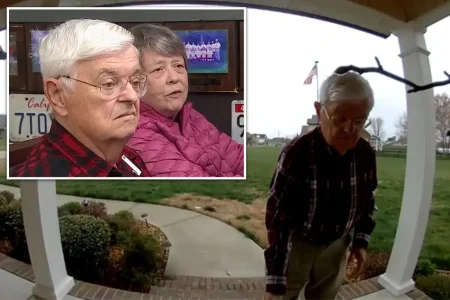
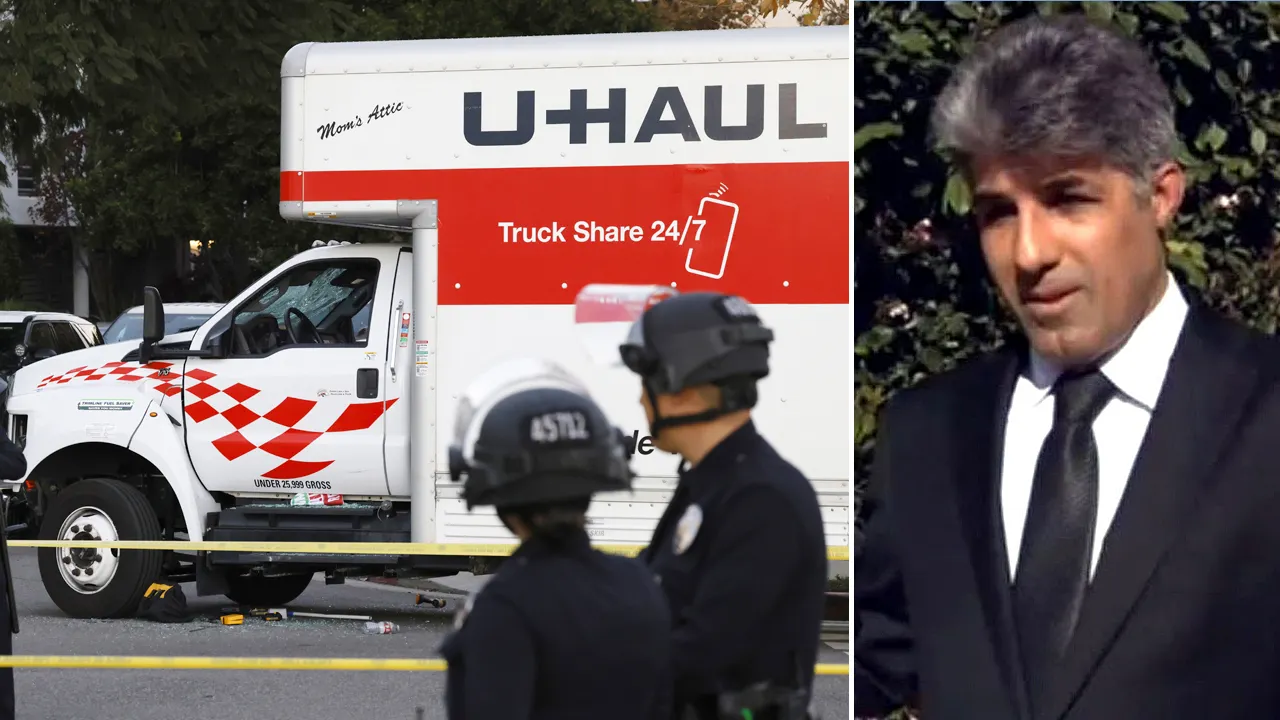
In a tense incident that unfolded during an Iranian regime protest in Los Angeles last Sunday, 48-year-old Calor Madanescht found himself at the center of a chaotic scene that quickly escalated into violence. Driving a U-Haul truck through a crowd of demonstrators in the Westwood neighborhood near the Federal Building, Madanescht claims he never intended to harm anyone. “I had no intention to hit anybody,” he told FOX11 Los Angeles after being taken into custody by the LAPD on suspicion of reckless driving. The truck, which bore a banner reading “NO SHAH. NO REGIME. USA: DON’T REPEAT 1953. NO MULLAH,” became the focal point of what would become a frightening confrontation between opposing viewpoints in the Iranian diaspora community.
Madanescht’s version of events paints a picture of confusion and fear. He maintains that an LAPD officer actually waved him onto Veteran Avenue, where he had intended to peacefully join the demonstration. However, according to his account, he was immediately targeted by what he described as a “pro-Shah group” who began to attack him and his vehicle. “I was really afraid for my life,” Madanescht explained, claiming that some protesters actually tried to help him escape the situation, telling him, “Go, go,” and clearing a path for his departure. This narrative stands in stark contrast to the videos circulating online, which show the U-Haul moving rapidly through a dense crowd of screaming protesters, creating a scene of panic and confusion.
The aftermath of the incident reveals the deep divisions within the Iranian-American community regarding the current upheaval in Iran. After Madanescht pulled over, he claims he was further attacked by demonstrators, showing the interviewer his injuries including a bandaged hand, a cut on his ear, multiple bruises, and black eyes. Video evidence appears to support at least some aspects of this claim, showing crowds surrounding the truck, with one person climbing onto the vehicle and stomping on its windshield, while others jabbed flagpoles through the passenger window. The confrontation highlights how tensions in Iran have spilled over into expatriate communities around the world, where disagreements about the path forward for Iran can sometimes turn violent.
During Madanescht’s interview with FOX11, two men who were present at the protest offered conflicting accounts of what transpired. One man, identified only as Mehdi, appeared to support Madanescht’s version of events, stating, “They kept punching him, hitting him. They broke the window, kicked the truck, assaulted him, and he has a right to free speech.” However, the second man questioned the driver’s claim that LAPD officers had directed him onto a street filled with demonstrators, suggesting there might be more to the story than Madanescht was revealing. Despite these contradictions, Madanescht maintained that his intentions were peaceful, stating, “The reality is I peacefully came, cooperated with LAPD, and I’m deeply grateful for them. They deserve the highest praise for putting their lives on the line to save mine.”
This incident takes place against the backdrop of widespread unrest in Iran, where what began as economic protests have evolved into a direct challenge to the country’s clerical leadership. The stakes for Iranian citizens are incredibly high, as documented by the U.S.-based Human Rights Activists News Agency (HRANA), which tracks human rights violations in Iran. According to their data, the Iranian government’s crackdown has resulted in at least 18,470 arrests and 2,615 confirmed deaths, including 2,435 protesters, among them 13 children under the age of 18. These sobering statistics underscore why emotions run so high at demonstrations like the one in Los Angeles, where members of the diaspora are desperately trying to draw attention to the suffering of those still in Iran.
The Los Angeles incident reflects a microcosm of the larger struggle taking place in Iran and among Iranian communities worldwide. Different factions within these communities have varying visions for Iran’s future—some oppose both the current Islamic regime and a return to monarchy under the Shah’s heirs, as suggested by Madanescht’s banner. Others may support different political solutions. What unites many, however, is a desire for fundamental human rights and freedoms for the Iranian people, as expressed in Madanescht’s statement: “All I want is peace and human rights for everyone in Iran and for minorities.” As protests continue both in Iran and abroad, the international community watches closely, wondering if this movement might succeed where previous attempts at reform have failed, and what role expatriate communities might play in shaping Iran’s future path toward democracy and human rights.