


The Unsettling Incident in Charlotte
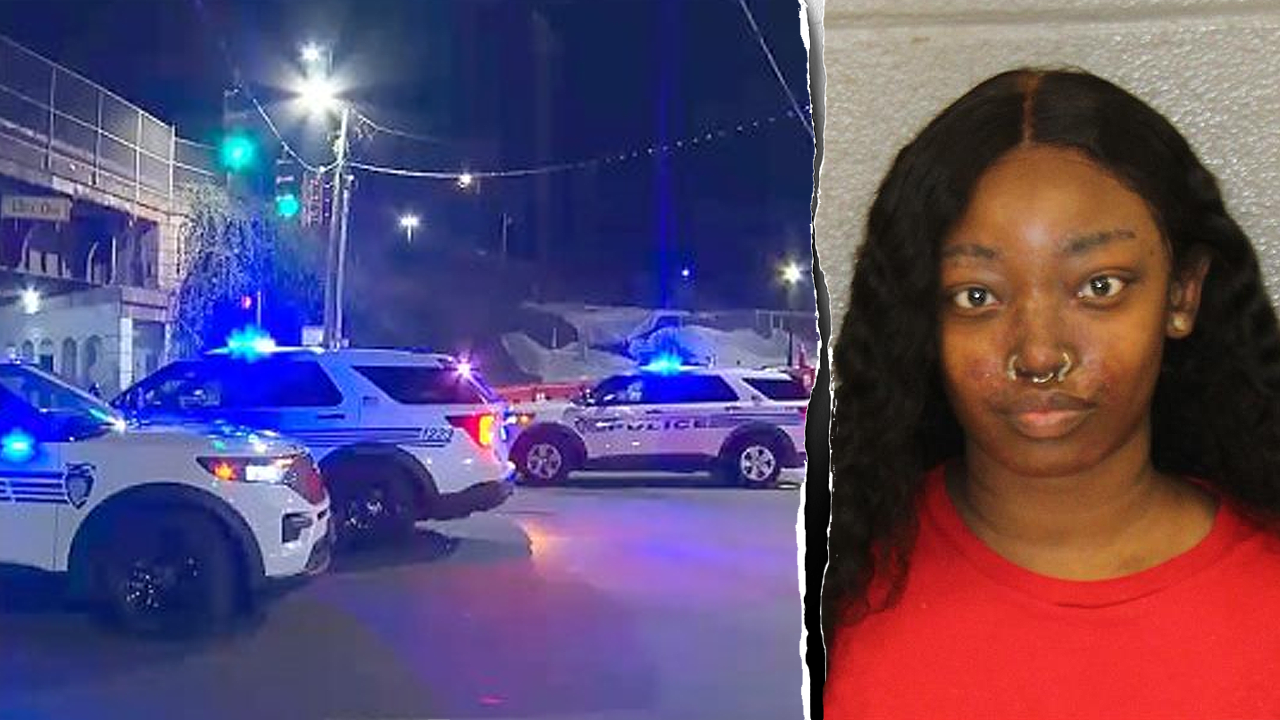
In the quiet hours before dawn on a Sunday morning in northwest Charlotte, North Carolina, a routine police call turned into a shocking confrontation that has left a community grappling with fear and frustration. It started around 3:25 a.m. when reports flooded in about vehicles performing donuts—wild, spinning maneuvers—in a commercial parking lot, transforming a simple street scene into what police later described as a chaotic street takeover. Officers arrived to disperse the crowd, trying to restore order amid the thrill-seeking chaos. Among them was a uniformed officer who approached a black Kia Optima as it attempted to flee the scene. The driver, Tanaezah Michelle Austin, a 25-year-old woman, initially came to a stop as the officer positioned himself in front of the vehicle, clearly visible in his uniform. He was issuing verbal commands to halt, his voice cutting through the night air. But in an instant, the situation escalated: Austin accelerated rapidly, striking the officer and sending him tumbling over the hood of the car.
To the officer, this wasn’t just an accident—it was a deliberate act that could have ended in tragedy. Transported to a hospital for treatment of minor injuries, he must have felt a mix of shock and relief; his life had been threatened in the line of duty, performing what should have been a routine intervention. Viral videos of the incident quickly spread online, capturing the moment in grainy footage that showed the car accelerating towards the officer. Viewers watched in horror, sharing clips on social media with captions like “What is happening in Charlotte?” It painted a picture of a city where daytime order gives way to nighttime disorder, where young people chasing adrenaline endanger not just themselves but the very officials sworn to protect them. The altercation highlighted the human element: an officer doing his job to de-escalate a risky situation, only to be directly targeted, leaving him bruised and bewildered. For the community, it underscored a growing unease about safety, where such events feel increasingly common and increasingly unpredictable.
The Arrest and Swift Release
Austin was swiftly arrested on the morning of March 2, charged with the serious felony of assault with a deadly weapon on a government official—a charge that carries significant weight in the eyes of the law, reflecting the danger she posed by using a vehicle as a weapon. The affidavit detailed her attempts to flee, painting her as someone who prioritized escape over compliance. Yet, just hours after her arrest, she was released on a $3,000 secured bond, a move that baffled many and raised questions about justice’s perceived priorities. Probable cause hearings are set for later in the month, but that early release meant she walked out facing only the long road of legal proceedings, while the injured officer dealt with the physical and emotional aftermath.
Court records revealed that Austin wasn’t entirely a stranger to the system; she had faced prior misdemeanor charges for marijuana possession and paraphernalia, though those were later dismissed. This background added layers to her story, suggesting she might be someone navigating personal struggles—perhaps economic hardship, substance issues, or the influence of peer pressure—but details like this only fueled the outrage. For her, posting bond might have required scraping together just a fraction—potentially as little as $300 in cash—allowing her to return home as if nothing had happened. But for the officer and his family, the decision felt like a slap in the face, a reminder that the scales of justice aren’t always balanced.
Law Enforcement’s Outrage
The bond decision ignited a firestorm among Charlotte’s law enforcement community, with leaders expressing deep frustration over what they see as leniency in cases involving assaults on police. Dan Redford, president of the Charlotte Fraternal Order of Police, described the incident as “one of the worst of the worst” that officers endure in the city. In his words, the $3,000 bond for someone who clearly intended to flee was “pathetic,” especially without regard for her criminal history. Redford spoke passionately about the toll on officers’ morale, painting a picture of exhausted men and women in uniform who risk their lives daily, only to see assailants released back into society quickly. “It’s very frustrating,” he added, evoking the emotional weight of feeling unsupported by the system meant to protect them. He worried aloud about how such actions make officers question their safety and the value of their sacrifices, turning routine shifts into potential battles where lives hang in the balance.
Redford’s remarks humanized the officers as fathers, mothers, and community members grappling with the fear that their jobs—protecting the public—might one day cost them everything. He pointed out that laws exist to shield police from such “heinous attacks,” yet this incident made it seem like they weren’t enough. For Redford, this wasn’t just policy; it was personal—a betrayal by a justice system that should stand united with those on the front lines.
Voices from Advocates and Officials
The criticism extended beyond local ranks, drawing in broader voices who decried the bond as emblematic of systemic failures. Randy Sutton, a retired police lieutenant and founder of The Wounded Blue—an organization dedicated to supporting injured officers—called the decision “boggling,” emphasizing that a $3,000 bond for running over a police officer on video felt unjust. He described street takeovers as “mob situations” ripe for tragedy, where one wrong move can turn fun gone wrong into deadly encounters. Sutton spoke from experience, his words tinged with the wisdom of someone who has seen too many close calls: “This wasn’t an accident. She saw him, he was communicating, and she just gunned the car. This could have been fatal.” He underscored that using a vehicle against an officer equates to deadly force, justifying lethal responses in self-defense.
From outside Charlotte, U.S. Rep. Mark Harris, R-N.C., added his condemnation, labeling such acts “the highest level of evil” and a “slap in the face” to brave officers. His statement resonated with human emotion, urging action to break the “crime cycle” and demanding that magistrates keep dangerous individuals off the streets. Republican U.S. Senate candidate Michael Whatley echoed these sentiments, blaming “soft-on-crime policies” for threatening officer safety. Yet, the Mecklenburg County District Attorney’s Office remained silent, bound by ethical rules against out-of-court comments on pending cases. These responses collectively painted a landscape where elected officials and advocates feel powerless, their pleas highlighting a disconnect between public outcry and judicial decisions.
The Broader Picture of Street Takeovers
Street takeovers, as Sutton described them, are more than isolated events; they embody a troubling trend where groups congregate for high-risk fun, often ignoring the risks to bystanders and authorities. In this incident, donuts in a parking lot escalated into a confrontation, but it wasn’t unique—similar scenes play out across cities, fueled by social media virality and a culture of defiance. Officers arriving on this scene couldn’t have known the turn it would take; they were there to prevent chaos, to protect a community from harm. The video evidence—grainy but undeniable—showed the officer’s clear commands and visibility, making Austin’s actions feel calculated, not mistaken.
For participants in such takeovers, what starts as exhilaration can quickly spiral, impacting innocent lives. The officer’s injuries, though minor, served as a stark warning of how easily things go wrong. Families at home watching the news surely felt the chill: if a uniformed figure isn’t safe, who is? Sutton and others warned that without stricter consequences, these events will continue, eroding trust in policing and emboldening those who see officers as obstacles rather than protectors.
Calls for Change and Reflection
As Charlotte reels from this incident, voices like Harris and Whatley call for an end to perceived leniency, advocating for reforms to ensure that crimes against law enforcement carry real consequences. “Enough is enough,” Harris declared, channeling the public’s weariness. Whatley pledged unwavering support for police, positioning it as a campaign promise. Yet, the story of Tanaezah Michelle Austin lingers, a symbol of individual choices rippling into broader debates on justice, safety, and community healing. While prosecutors prepare for her hearing on March 24, the emotional scars—on the officer, his colleagues, and the city—may take longer to fade, prompting reflections on what it truly means to keep everyone safe in an increasingly divided world.