




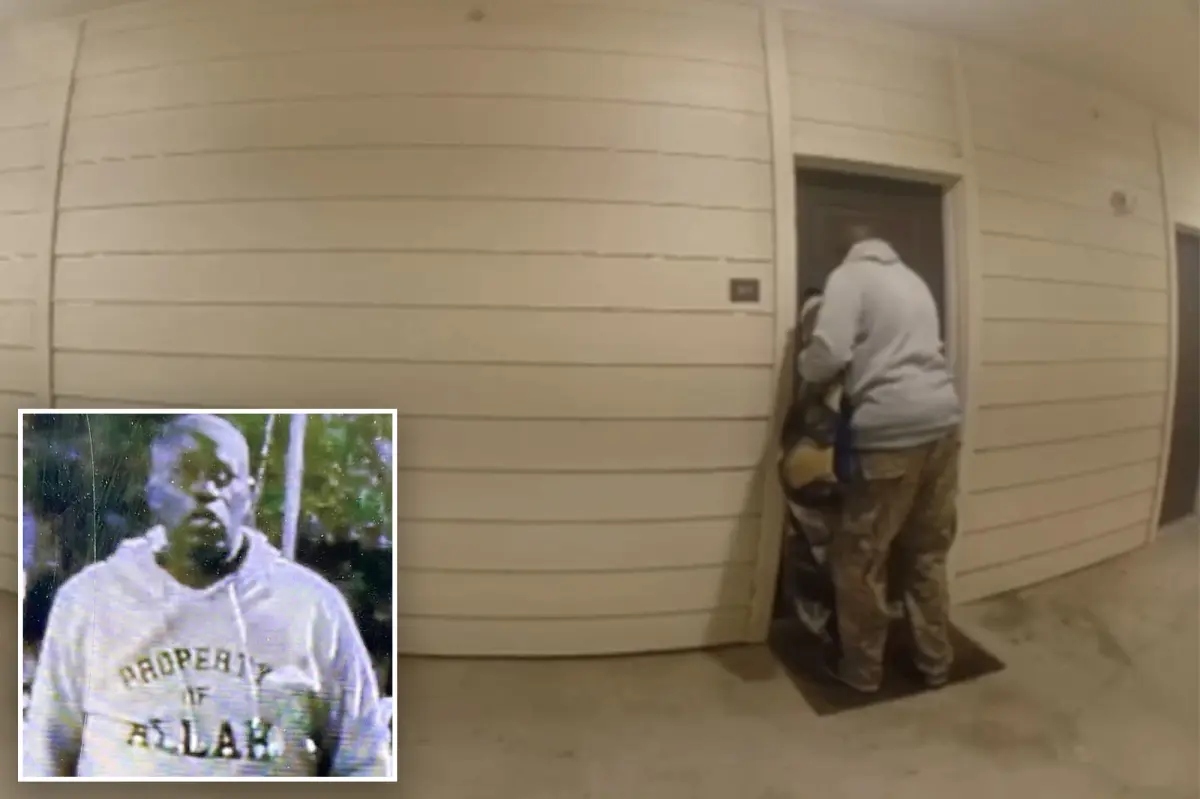
Imagine waking up one crisp February morning in a quiet suburban neighborhood in Del Valle, Texas, where life rolls along with the routine hum of everyday chores and neighborly waves. But for one resident, hidden behind the lens of a doorbell camera, an innocuous clip was about to cast a long shadow over a seemingly ordinary day. It was February 28, just 24 hours before chaos would erupt in downtown Austin, turning a vibrant Tuesday evening into a nightmare. In this video, obtained exclusively by Fox 7, we catch a glimpse of Ndiaga Diagne, a 53-year-old man who, unbeknownst to his neighbors, was on the cusp of infamy. He steps out of his apartment, perhaps carrying groceries or lost in thought, his movements unhurried and unremarkable—like anyone else heading out for errands. The timestamp seals the eerie fate of that footage: it captures the suspect mere moments before he would unleash terror on unsuspecting bar patrons and pedestrians. For the person who owns that camera, reviewing it later must have stirred a mix of disbelief and dread, wondering how such quiet footage could prelude such horror. One can almost hear the quiet suburban soundtrack interrupted by sirens and shouts that would come later, as investigators pieced together Diagne’s path from this ordinary doorstep to the blood-soaked streets of Austin. The video isn’t just a clue; it’s a haunting reminder of how thin the veil between normalcy and calamity can be in our interconnected lives. Neighbors nearby, who might have exchanged pleasantries with him over hedge trimmings or shared elevator rides, now grapple with the chilling realization that monsters don’t always wear masks—they might live next door, blending into the fabric of community until the threads unravel. This clip humanizes the tragedy, pulling us into the intimate pockets of someone’s life, reminding us that evil often festers in the mundane. As you watch Diagne fade into the distance on the screen, there’s a palpable sense of foreboding, like a storybook hero stepping into a fog-shrouded forest, unaware of the beasts waiting beyond. In communities like Eastridge Apartments, trust is shattered when such revelations surface, leaving residents questioning every shadow and every unfamiliar face. The video also subtly captures the environment—faded paint on doorframes, a flickering streetlight—painting a picture of a place where dreams and distractions coexist with hidden dangers. Reflecting on this footage, one can’t help but ponder the personal histories etched into Diagne’s face: a man born in Senegal, naturalized as an American, living in Pflugerville, perhaps seeking the promise of a new life that twisted into something dark and destructive. The doorbell camera, a simple tool for security, becomes a reluctant narrator in this unfolding drama, forcing us to confront the fragility of peace in our neighborhoods. For the homeowner who shared it, it might have been a cathartic act—to unearth a piece of history before the authorities swooped in, hiding the evidence under black tape. In the aftermath, as investigators comb through such mundane artifacts, we see how a single piece of digital tape can unravel lives, bridging the gap between personal quietude and public mayhem. The doorbell footage isn’t just evidence; it’s a stark memento of how proximity to violence can shatter illusions of safety, leaving us all a little more vigilant, a little more wary of the strangers in our midst.
The scene shifts dramatically to the morning of March 2, just days after that innocuous doorbell clip, when federal agents descended on the same Eastridge Apartments complex like a storm front rolling in unannounced. Residents, sipping their morning coffee or rushing kids to school, were jolted awake by the spectacle of law enforcement swarming unit 813, the very spot Diagne had exited in the video. One resident’s doorbell camera caught the chilling prelude: FBI agents meticulously covering their camera with tape, an act of deliberate erasure that hinted at the gravity of what lay ahead. It’s a moment that captures the raw intrusion of authority into personal space, transforming a peaceful residential block into a war zone. Around 11:30 a.m., waves of federal agents, clad in tactical gear and clutching rifles, encircled the apartment building, their presence a stark contrast to the soft morning light filtering through budding trees. They weren’t just there; they were a formidable wall, isolating the unit with precision and urgency. An agent, amplified by a loudspeaker, barked commands for anyone inside to step away from windows, their voice echoing like a harbinger of doom, stripping away any illusion of normalcy for the witnesses below. One anonymous resident, still rattled by the memory, recounted how the air filled with tension—cars screeching to a halt, agents poised with weapons drawn, the crackle of radios cutting through the stillness. Then came the sounds that would haunt those who heard them: a series of noises, unmistakable yet surreal, described as gunfire followed by something heavier, like a grenade exploding. “It was just a lot of cars and the FBI with their guns drawn,” the resident said, their words painting a vivid portrait of terror unfolding in real-time. Another neighbor, Alex Sky, returned home to find armed agents everywhere, the gate a barricade, K-9 units snarling in anticipation, rifles glinting in the sunlight. Peeking through a restroom window, Sky saw the agents storming Diagne’s home, a car carelessly parked on the grass, symbols of chaos invading his peace. The raid wasn’t just an operation; it was a visceral disruption, where the thud of doors being breached mingled with the lives it uprooted. For these residents, the event was disorienting, a blur of adrenaline and fear, as they hunkered down behind locked doors, hearts pounding, wondering if the violence would spill over. The FBI’s cover-up of the cameras added a layer of mystery, suggesting sensitive secrets within, perhaps evidence of Diagne’s preparations that needed to be shielded from curious eyes. In humanizing this moment, we glimpse the ripple effects: a mother comforting a frightened child, a retiree questioning the safety of their home, all thrust into a narrative they never asked to join. The grenade-like explosion reverberates not just in the apartment but in the psyches of those who heard it, a reminder of how quickly authority’s shadow can engulf the innocent. This wasn’t a distant news story; it was a lived nightmare, etching itself into the community’s memory, fostering a newfound caution against the unknowns lurking in shared walls. As the dust settled, voices from the crowd emerged, each bearing witness to the invasion, transforming the mundane act of living next door into a saga of unexpected peril. The raid, tied to a search warrant, unearthed clues about a man whose life had veered into radicalism, leaving neighbors to reflect on missed signs and silent undercurrents. In the end, this orchestrated takedown, with its explosions and drawn guns, highlights the human toll of pursuit, blending bravery with trauma for all involved.
Then, fast-forward to the evening of February 29, when the echoes from Eastridge found their dreadful crescendo in the heart of Austin’s vibrant downtown, a place known for its breweries and live music, now stained by violence. The suspect, Ndiaga Diagne, embodied the face of ordinary dread, a 53-year-old man born in Senegal and naturalized as an American, residing in the seemingly stable suburb of Pflugerville. According to Police Chief Lisa Davis, he approached the scene with chilling calculation, pulling up to a popular bar, his vehicle announcing his presence with flashing lights as he rolled down windows. Without a word or provocation, he unleashed a barrage from his pistol, targeting patrons lounging on the patio and those gathered outside, bullets piercing the twilight air like unwelcome fireworks. The victims—friends enjoying a casual end-of-day drink—fell in confusion and agony, the cheerful ambiance shattered into screams and panic. Witness accounts paint a grim tableau: ear-piercing cracks of gunfire, bodies crumpling, the acrid scent of gunpowder mixing with spilled beers. Diagne didn’t linger; he floored the accelerator, speeding westbound along Sixth Street toward Wood Street, where he parked abruptly and emerged on foot, now clutching a rifle. His rampage escalated as he fired at pedestrians, a lone figure sowing terror with methodical precision, his shots ricocheting off storefronts and scattering crowds into desperate flight. No words, no demands—just relentless violence in a city that prided itself on camaraderie and casual strolls. For those on the ground, time warped; seconds stretched into eternities as bullets grazed or tore through flesh, bystanders becoming heroes by dragging the wounded to safety, their hands slick with blood and fear. Diagne’s path carved a scar through Austin’s soul, transforming an open, welcoming street into a battlefield. People ducked behind vehicles, clutched loved ones, or ran blindly, the city’s fabric ripping under the assault. Key details emerge from survivors: the way he favored a pistol at first, cool and detached, then escalated to a rifle for closer-range devastation. His targeted choice of outdoor patrons suggests a premeditated strike, perhaps fueled by grievances buried deep. In humanizing this horror, envision the patrons’ faces—young professionals unwinding after work, couples celebrating anniversaries, all abruptly thrust into survival mode. One bar-goer might have been sharing laughs moments before, now cradling a wound, whispering reassurances or last words. The pedestrians on Wood Street, minds on dinner plans, faced death unexpectedly, their paths diverging into chaos. Diagne’s actions stripped away humanity, turning strangers into statistics, but for the affected, they are indelible stories of loss and resilience. His decision to park and exit, rifle in hand, adds a personal layer of premeditation, a man’s descent into madness that spared no one. Police arrived in a whirlwind of sirens, confronting the gunman who, in a final standoff, was shot and killed on the scene. This closure for the perpetrator did little to heal the wounds inflicted, leaving a city to mourn victims whose lives were forever altered by one man’s fury.
Delving deeper into Ndiaga Diagne’s world reveals a man whose trajectory from immigrant hope to accused terrorist might have been seeded long before that fateful evening. Born in Senegal, he immigrated to the United States, earning citizenship and settling in Pflugerville, a suburb boasting good schools and green spaces, where new Americans often build lives free from the struggles of their homelands. His 53 years might have included jobs, family ties, routine commutes, and perhaps quiet reflections on the American dream that twisted into something darker. Neighbors recall him as unobtrusive, a figure blending into the tapestry without fanfare, offering no hints of the storm brewing inside. What drove a man of this background to such extreme acts? Speculation swirls, but facts suggest he harbored motives potentially tied to extremist ideologies, a nexus to terrorism that investigators are unraveling. His vehicle, inspected post-shooting, allegedly contained indicators pointing toward radical views—perhaps literature, notes, or symbols that whispered of deep-seated grievances. In his apartment, raided in the explosive aftermath, agents likely found more clues: weapons caches, manifestos, or digital footprints tracing his ideological spiral. This isn’t to excuse but to understand; Diagne’s story humanizes the tragedy by highlighting how personal narratives can fracture, turning assimilation into alienation. Imagine him alone in his apartment, poring over screens or texts that radicalized him, his American dream morphing into a mission fueled by resentment or misplaced purpose. For his community, it’s a sobering lesson in vigilance—the quiet neighbor might be grappling with invisible torments. His actions on February 29, shooting from his car with a pistol then escalating to rifle fire on foot, suggest a pathway of escalating rage, perhaps born from isolation or unjust perceptions. Victims’ families now wrestle with this unknown force, piecing together how Diagne’s life intersected with theirs in violence. Survivors describe the gunman’s demeanor as detached, a automaton of destruction, stripping him of humanity in memory. Yet, beneath that, there’s a life story—family back in Senegal perhaps sending letters of encouragement, or moments of kindness in Pflugerville that clashed with internal demons. The police’s final act of shooting him dead concludes his arc brutally, but it opens wounds for all. Diagne’s naturalization, a badge of belonging, now feels ironic, underscoring how integration can mask discontent. In broader strokes, his case echoes stories of homegrown extremism, where promises of opportunity clash with reality, driving individuals toward horrific outlets. For Austin, it prompts soul-searching: are we neighbors aware of each other’s burdens? His rifle, wielded on Wood Street, becomes a symbol of personal failure, a man choosing death over dialogue. Reflecting on his age—53—evokes lost potential, a life of contributions forfeited to folly. Communities near Del Valle now mirror Austin’s grief, their shared proximity to Diagne binding them in collective shock. His legacy isn’t glory but caution, a reminder that radicalism can fester in familiar faces, urging empathy before enmity boils over.
As the dust from the shooting settled, the FBI took center stage, classifying the Austin mass shooting as a possible act of terrorism, a designation that elevated the investigation from a local crime to a global threat. Alex Doran, acting special agent in charge of the FBI’s San Antonio Field Office, addressed the press on Sunday, his tone measured but grave, emphasizing that while it’s “way too early in the process to determine an exact motivation,” indicators on the suspect and in his vehicle pointed to a “potential nexus to terrorism.” Such words carry weight, signaling that Diagne’s rampage wasn’t merely random but possibly ideologically driven, perhaps rooted in extremist beliefs that propelled him from Pflugerville’s suburbs to Austin’s streets. The deployment of the FBI’s Joint Terrorism Task Force underscores the gravity; teams of specialists, drawing from law enforcement and intelligence, are combing through digital trails, interrogating associates, and analyzing forensic evidence to uncover ties to larger networks. This isn’t a quick closure but a methodical dissection, where every email, search history, and acquaintance is scrutinized. Doran reiterated the collaboration with the Austin Police Department, highlighting how such partnerships bridge local impacts with national security concerns. For residents and victims, this terrorism angle injects fear into the recovery, wondering if Diagne acted alone or as part of a shadowy group, and whether more threats loom. Humanizing this phase, envision the agents as weary guardians, sifting through paperwork late into nights, grappling with the human cost—families torn apart by unanswered questions. The press conference itself was a stark ritual, cameras flashing as families sought assurance in Doran’s cautions against rushing to judgment. “We’re just at this point prepared to say that it was potentially an act of terrorism,” he stated, words that echo in hospital rooms where survivors lie in convalescence. Task force members, often seasoned veterans, might share personal tales over coffee—battling terrorism abroad, now confronting it at home—adding layers of dedication to the hunt. For Austinites, the label shifts perceptions: from a mass shooting to a terror event, amplifying emotions of betrayal and vulnerability. Diagne’s classification as a suspect underscores how ordinary citizens can become vessels for hate, urging vigilance in our digital age. The FBI’s involvement humanizes the bureaucracy, turning agents into community protectors, their badges symbols of resolve amid chaos. As investigations deepen, clues emerge—perhaps online radicalization routes or inflammatory rhetoric—that reveal Diagne’s descent. Victims’ families, clutching hope, depend on these findings for closure, their grief interwoven with gratitude for the protection machine activating. This potential terrorism nexus isn’t just factual; it’s emotional fuel for unity, rallying a city to heal and prevent. In the end, Doran’s words plant seeds of resilience, framing the horror as a chapter in America’s ongoing story of safeguarding freedoms against unseen enemies.
Amid the investigation’s unfolding, the human cost of Diagne’s actions lingers like an unhealed wound, with at least two additional victims remaining in critical condition, their lives hanging in the balance as doctors and families wage quiet battles in hospital halls. These souls, struck down amidst casual outings, represent the enduring trauma of unpredictable violence, their stories fleshing out the stark statistics of loss. One can picture intensive care units humming with machines, nurses whispering encouragements, loved ones holding vigil through sleepless nights, grappling with “what ifs” and prayers for recovery. For families, the ordeal transforms routines into heartbreak; a spouse absent from a shared bed, a parent missing milestones, all under the shadow of a man’s inexplicable rage. Survivors describe haunting memories—the crack of gunfire juxtaposed with laughter from moments before—now etched into their psyche, prompting therapy sessions and support groups where strangers bond over shared pain. The city’s collective mourning mirrors this individual suffering, with vigils and memorials drawing crowds to honor the fallen and the fighting, fostering a community spirit resilient yet scarred. Authorities, piecing together motives, offer condolences while pursuing justice, their public statements a balm for raw emotions. Diagne’s death at police hands provides no solace to those he orphaned in grief; instead, it fuels advocacy for gun reform and mental health awareness. In critical care, medical teams like quiet warriors fight infection and injury, their expertise a testament to humanity’s tenacious hope. Victims, many young and vivacious, now navigate life with physical scars—prosthetics, surgeries—or invisible ones like PTSD, their futures uncertain. Families share anecdotes of weekend plans derailed, revealing vibrant lives abruptly interrupted, humanizing victims beyond headlines. Austin’s recovery hums with solidarity: fundraisers, counseling sessions, all weaving threads of compassion. Yet, critical conditions mean uncertainty prevails, turning each day into a gamble with fate. Reflection on Diagne’s story amidst this healing underscores themes of redemption and prevention, urging societal introspection. For those in hospitals, every beep of a monitor is a reminder of fragility, motivating broader discussions on extremism’s roots. In essence, these critical cases epitomize the tragedy’s ripple—personal stories merging into a narrative of tragedy and triumph, where love and support strive to mend what violence sought to destroy.