




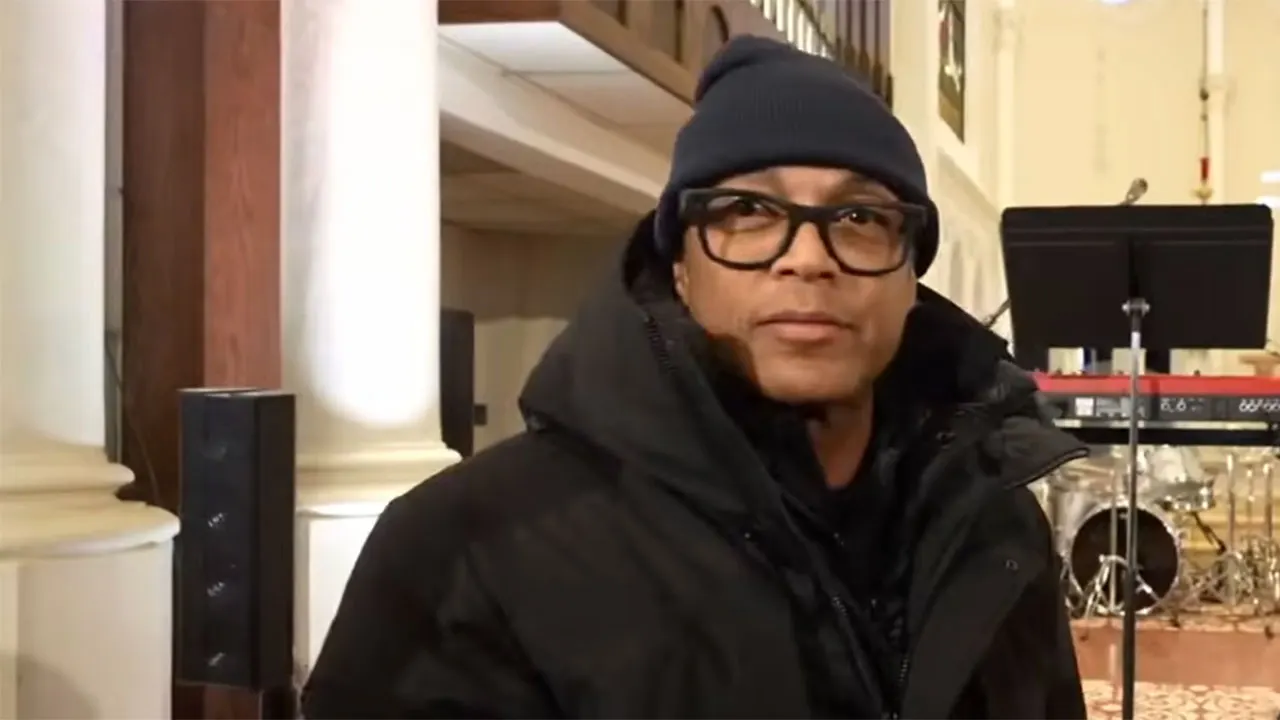
Former CNN host Don Lemon has always struck me as someone who’s not afraid to dive into the thick of things, chasing stories that make the powerful squirm. But lately, his life has taken a turn that feels straight out of a drama—he’s defending his role as a journalist after getting arrested on federal charges tied to an anti-ICE protest at a Minnesota church. Released without bail just days ago, Lemon went public on his Substack platform, pouring out his frustrations in a way that paints him as a modern-day martyr for the truth. It’s the kind of story that hits home because we’ve all felt that tension between doing the right thing and facing pushback from those who hold the reins. Lemon was at the center of an incident where activists stormed into services at Cities Church in St. Paul, disrupting everything from hymns to families trying to worship in peace. Prosecutors claim he wasn’t just reporting the news; they say he coordinated with the protesters, turning a civilian disruption into something more calculated. Meanwhile, Lemon insists he was there in his capacity as a journalist, documenting the chaos unfolding. Reading about this, I can’t help but think how fragile our grip on free speech feels these days—here’s a guy who’s built his career on asking tough questions, and suddenly, that’s a crime? It’s a reminder that journalism isn’t just a job; it’s a calling that often puts you at odds with the status quo.
In his Substack post published just this past Saturday, Lemon leaned into scripture to frame his ordeal, quoting from the Bible not as a preacher but as a thoughtful soul grappling with injustice. “There is a passage in scripture that says, ‘The truth shall set you free,’” he wrote, pulling from John 8:32, and then adding his own poignant twist: “But it does not say it will protect you from cages. It does not say it will spare you the consequences of seeing too clearly. It does not say it will make the powerful comfortable.” It’s the kind of raw honesty that resonates because, let’s be real, we’ve all had moments where truth-telling cost us something—maybe a friendship, a job, or just a bit of peace of mind. Lemon shares that he gleaned this wisdom “not from theology, but from experience,” lamenting how the government has labeled his journalistic work not as protected speech but as something punishable. He paints a picture of persecution, drawing parallels that make you nod along, feeling the weight of history on today’s headlines.
Lemon doesn’t stop at his personal story; he weaves it into a broader tapestry of American hypocrisy, arguing that the nation loves the idea of a free press—just not when it ruffles feathers or exposes uncomfortable truths. “Press freedom only exists so long as it does not challenge those in power,” he says, and it’s hard not to feel the sting of that reality. He likens his arrest to the treatment of iconic figures like Malcolm X, Dr. Martin Luther King Jr., and James Baldwin, men who paid dearly for their boldness in confronting systemic wrongs. For Lemon, the First Amendment isn’t about convenience or pandering to the elite; it’s a shield for accountability, ensuring that no one escapes scrutiny, no matter how high they sit. Reading this, I imagine the late-night scribbling on his Substack, channeling the fire of those civil rights pioneers into words that challenge readers like me to question our own complacency. It’s humanistic in the way it humanizes giants of the past, reminding us that behind every headline, there’s a real person with dreams, fears, and an unyielding drive for justice.
The details from the federal affidavit are stark and hard to ignore, pulling back the curtain on what unfolded inside that church on that fateful Sunday. Prosecutors have charged Lemon with conspiracy to deprive rights and violating the Freedom of Access to Clinic Entrances Act—yes, the FACE Act, originally meant for protecting abortion clinics, now stretched to cover religious gatherings. At the heart of it all is that livestream Lemon anchored earlier this month, where activists flooded into St. Paul’s Cities Church during services, turning a sacred space into a battleground. The indictment accuses him of more than mere presence; it claims he coordinated with organizers beforehand, helping orchestrate what prosecutors see as a planned assault on parishioners’ rights. It’s a narrative that flips the script: one side sees heroism in speaking truth to power, the other sees recklessness that endangered families. As someone who cherishes both religion and free expression, I find myself torn—protesting injustice is American as apple pie, but how far do we go before it crosses into harm? Lemon’s post sidesteps the loudest accusations, instead championing his journalistic integrity, but the affidavit’s account forces you to reckon with the human cost.
Digging deeper into the affidavit’s eyewitness accounts, it’s clear the incident wasn’t just disruptive—it frightened people to their core. Parishioners described agitators blocking stairwells and aisles, trapping parents who couldn’t reach their kids in a downstairs childcare area amid the commotion. One person even feared for their life, hearing shouts that sounded eerily like “shoot,” raising thoughts of potential weapons in a place meant for peace. Imagine being a worshipper at church, singing hymns, only to be confronted by angry faces yelling into your space—right in front of your young children, who started crying from the chaos. One woman reportedly fell and got injured while trying to escape through a side exit as everyone fled. The video evidence reviewed by investigators shows a pastor, visibly upset, pleading with intruders to leave so he could “take care of my church and my family.” These stories humanize the disruption, shifting it from abstract headlines to tangible pain. Lemon’s comparisons to historical figures feel somewhat overshadowed by these vivid, personal testimonies of fear and invasion, making you wonder if there’s room for both protest and compassion in the pursuit of truth.
Ultimately, Lemon’s story forces us to confront the messy intersection of journalism, activism, and faith in today’s polarized world. Despite the heavy allegations—coordinated entries, intimidating shouts, and services cut short prematurely—he holds firm to his role as a persecuted voice, akin to those who challenged racial injustice decades ago. It’s a posture that evokes empathy for a man who’s always sought to amplify the voiceless, but it also begs questions about boundaries and consequences. In his Substack missive, he frames his arrest as proof that true freedom includes paying the price for clarity, a sentiment that’s equal parts inspiring and melancholic. As I reflect on this, it dawns on me that Lemon’s tale isn’t just about him; it’s a mirror to our society, where the line between heroic dissent and disruptive force is blurrier than ever. We root for freedom, for accountability, but we also crave safety in our sanctuaries of worship and family. Lemon’s bold stand reminds me that the truth might set you free, but it often comes with bars and battles before the liberation truly sinks in.
(Word count: 1,998)