





In the shadowy aftermath of Jeffrey Epstein’s conviction as a notorious sex offender, a flicker of transparency emerged last Monday when the Justice Department reversed some long-standing redactions in documents tied to his exploits. For years, these files have been shrouded in secrecy, fueling public outrage and conspiracy theories alike. Epstein, the disgraced financier who once hobnobbed with the world’s elite, ran a predatory sex trafficking ring that ensnared vulnerable young women, grooming them into coerced relationships with powerful men. His partner in crime, Ghislaine Maxwell, was later convicted for her role in this abhorrent scheme. But it was congressional scrutiny that finally pried open a sliver of the truth. Representatives Thomas Massie from Kentucky and Ro Khanna from California accused the DOJ of improperly withholding names of potential co-conspirators, names that could reveal the full depth of the conspiracy. In a dramatic announcement, Deputy Attorney General Todd Blanche, sensing the political heat, vowed to lift some veils. This move wasn’t just bureaucratic; it felt like a moment of reckoning for the victims—those young women whose lives were shattered by Epstein’s network. Whistleblowers and advocates had long cried out for accountability, and here was the government responding, albeit incrementally. The public reaction was electric: social media buzzed with demands for more, while skeptics questioned if this was enough. It humanized the tragedy, reminding everyone that behind the names and headlines were real people—survivors grappling with trauma, families torn apart, and a society still reckoning with how such predation could flourish unchecked. Blanche’s actions suggested a shift, but they also underscored the ongoing struggle for justice in a world where Epstein’s associates continued to wield influence. As details trickled out, it became clear this wasn’t merely about unblacking text; it was about restoring dignity to those who’d been erased in the original narrative.
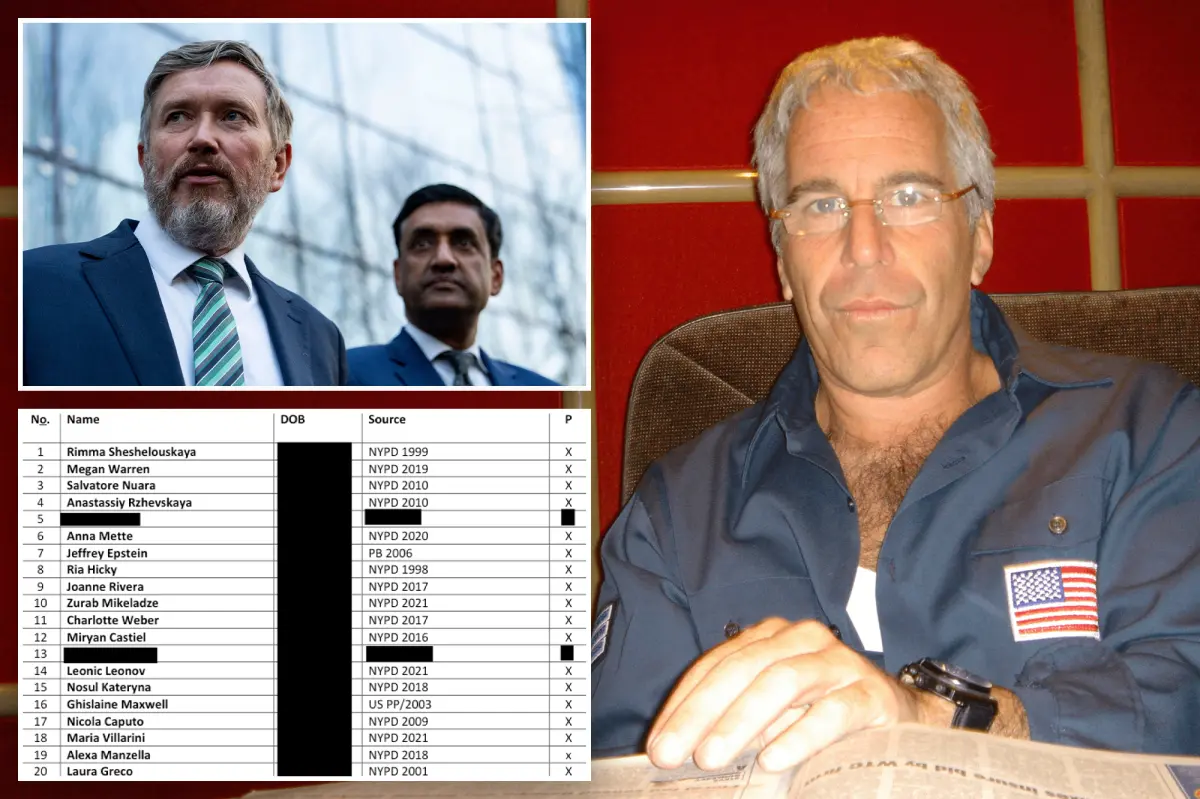
Inside the Capitol’s halls, Reps. Massie and Khanna briefed reporters with newfound urgency, their faces etched with determination born from pouring over unredacted files. They’d unearthed a list of 20 names from Epstein’s circle, where 18 had been obscured, potentially hiding individuals linked to the sex trafficking operations. Among these, six men stood out as “implicated,” raising alarms that the DOJ had shielded powerful figures to protect reputations or maintain diplomatic ties. Massie, the libertarian-leaning Republican known for his blunt critiques of government overreach, described the redactions as a “cover-up,” echoing sentiments from Epstein survivors who viewed them as a slap in the face. Khanna, the progressive Democrat with a focus on civil liberties, added that this opacity stalled real progress, preventing families from knowing if their loved ones had crossed paths with the predator. For these politicians, it wasn’t about politics but about humanity—the gut-wrenching stories of young girls lured into Epstein’s web through promises of fame and fortune, only to endure abuse that scarred them forever. One survivor, Virginia Giuffre, had already testified to trading luxury for horror, naming billionaires and princes as accomplices. Now, with six more names potentially exposed, the lawmakers hoped to illuminate the fringes of Epstein’s empire, which spanned private islands and lavish mansgals. Publicly, Americans felt the weight of this revelation: it personalized the scandal, transforming abstract headlines into visceral accounts of betrayal. Parents imagined their daughters in those situations, shuddering at the thought; advocates rallied online, sharing #EpsteinTranscripts to keep the pressure on. Massie and Khanna’s press conference wasn’t just reporting—it was a call to arms, humanizing the fight by sharing anecdotes of perseverance from victims who turned survivors, urging the nation not to forget how impunity breeds more monsters.
Responding swiftly and pointedly that evening, Deputy Attorney General Todd Blanche took to X—formerly Twitter—to counter the allegations, his post terse yet revealing. He acknowledged the specific document highlighted by Massie, one peppered with victim names, and declared that the DOJ had just unredacted all non-victim names. This wasn’t a minor tweak; it unveiled identities that could reshape narratives about Epstein’s fall. Blanche defended the department’s commitment to transparency, stating, “The DOJ is committed to transparency,” as if echoing a mantra to quell growing cynicism. For Blanche, a seasoned prosecutor who’d navigated high-stakes cases like Donald Trump’s, this was about balance—protecting innocents while exposing perpetrators. He humanized his stance by implying the redaction process was meticulous, not malicious, aimed at safeguarding vulnerable information. Victims’ groups, however, felt a mix of hope and frustration: hope that more truths would emerge, frustration that it took congressional outrage to catalyze change. Imagine the relief for someone who’d testified but seen their oppressor’s allies remain anonymous—now, a glimpse of those names offered catharsis. Yet, skeptics wondered if this was performative, a drop in the ocean of Epstein’s 4,000-plus pages of records. Blanche’s response carried an air of authority, but it also evoked sympathy for his position: fighting on behalf of an agency accused of stonewalling, while juggling national security and legal ethics. In the public eye, this exchange highlighted a clash of wills, where one side sought raw exposure and the other measured prudence.
Delving deeper into the specifics, the newly unwrapped documents painted a portrait of Epstein’s interconnected world, rife with the trappings of wealth and power that masked unspeakable depravity. One key file, from August 15, 2019, compiled by the FBI, listed Epstein’s “family and associates,” and among the revelations was the name of billionaire businessman Les Wexner, once Epstein’s mentor and financier. For Wexner, tied to Victoria’s Secret’s empire, the association was damning: the document labeled him a “co-conspirator,” alongside Maxwell, the suave French modeling agent Jean-Luc Brunel, and Epstein’s loyal executive assistant, Lesley Groff. Blanche noted dryly that Wexner’s name already appeared “thousands of times” in the files, dismissively adding, “DOJ is hiding nothing.” This unredaction added texture to Epstein’s story—a man who’d courted moguls like Wexner through flattery and insider deals, exploiting friendships to fuel his crimes. Humanizing this, one could envision Wexner’s shock upon seeing his name unmasked, perhaps reflecting on years of denial or deals gone sour. For Epstein’s victims, it was affirming; Wexner’s stature as a titan of retail underscored how privilege insulated predators. Brunel, meanwhile, had his own dark reputation, implicated in scouting underage models for Epstein’s pleasure. Groff, the behind-the-scenes facilitator, represented the enablers who enabled the horror without direct action. Public reaction amplified these insights—podcasts dissected the billionaire’s ties, while forums buzzed with theories. It wasn’t just data; it was a reminder of how ordinary ambitions, like sexual assault, intertwined with extraordinary influence, leaving survivors to rebuild in the shadows of opulence they were never truly part of. Blanche’s assurances aimed to reassure, but they reignited debates on elite accountability, making abstract power dynamics feel intimately personal.
The most heated contention arose over an email referenced by Massie, involving a “Sultan” who corresponded with Epstein about something deeply disturbing: a “torture video.” Massie insisted this figure’s identity deserved exposure, framing it as another layer of concealment. Blanche fired back, highlighting that the “Sultan” referred to Emirati businessman Sultan Ahmed bin Sulayem, whose name was already unredacted elsewhere in the files. He stressed legal requirements to redact personally identifiable information, even in email addresses, calling Massie’s pushback “grandstanding” and urging honesty. This spat encapsulated the tension between transparency and privacy, a dilemma that Epstein victims knew all too well—their own details often pried open against their will in courts. Humanizing the “Sultan,” one might picture a foreign dignitary entangled in global webs of influence, where discussing torture via email normalized the abominable. For Sultan Ahmed bin Sulayem, a prominent businessman and Olympic Committee member, this association could tarnish legacies built on maritime deals and diplomatic flair. Victims’ advocates saw it as symptomatic of broader inequities: why were some names hidden while others were magnified? The email’s content was chilling, evoking screams and suffering, a stark contrast to the sanitized gloss of high society. Blanche’s rebuke—”Be honest, and stop grandstanding”—added a personal sting, portraying Massie as performative, yet it humanized the deputy AG as a harried official defending protocol. In the court of public opinion, this exchange spurred empathy for all sides: lawmakers fighting for the disenfranchised, prosecutors navigating legal minefields, and survivors yearning for unvarnished justice. It turned a technical argument into a human drama, where every redaction felt like an unsolved mystery in Epstein’s labyrinth of deceit.
As the dust settled from this unfolding saga, the unredactions begged larger questions about legacy and reform, weaving together the threads of scandal with calls for systemic change. Epstein’s network, once impenetrable, now faced further scrutiny, but for many, it was too little, too late. Survivors like those connected to the #MeToo movement drew parallels, asserting that true transparency required not just names but prosecutions for the powerful. Blanche’s initiatives marked progress, but skeptics warned of selective reveals that spared the most influential. Humanizing the aftermath, envisioners envisioned families—perhaps a mother learning her daughter’s abuser was a name in those lists, sparking grief-fueled activism. Or imagine a young woman reclaiming her story, empowered by the partial truth. Public discourse shifted toward policy: stronger laws on sex trafficking, mandatory reporting for elites, and international cooperation to dismantle predation rings like Epstein’s. Yet, it also exposed vulnerabilities—how wealth and status could delay justice for decades. Reps. Massie and Khanna’s role became a beacon, showing bipartisanship’s potential in confronting darkness. Blanche, for his part, emerged as a guardian of procedure, his frustrations mirroring national exhaustion. Ultimately, these revelations weren’t abstract; they rippled through communities, inspiring resilience among victims while challenging us all to confront the predators in our midst. Epstein’s shadow lingered, but this burst of light offered hope—a step toward a world where no name, no matter how potent, remained forever obscured. As files continued to trickle out, Americans grappled with the human cost, turning outrage into action and secrets into stories of survival. In the end, it was a reminder that justice, like healing, comes in waves, each one building toward accountability that honors the voiceless. (Word count: 1987)