



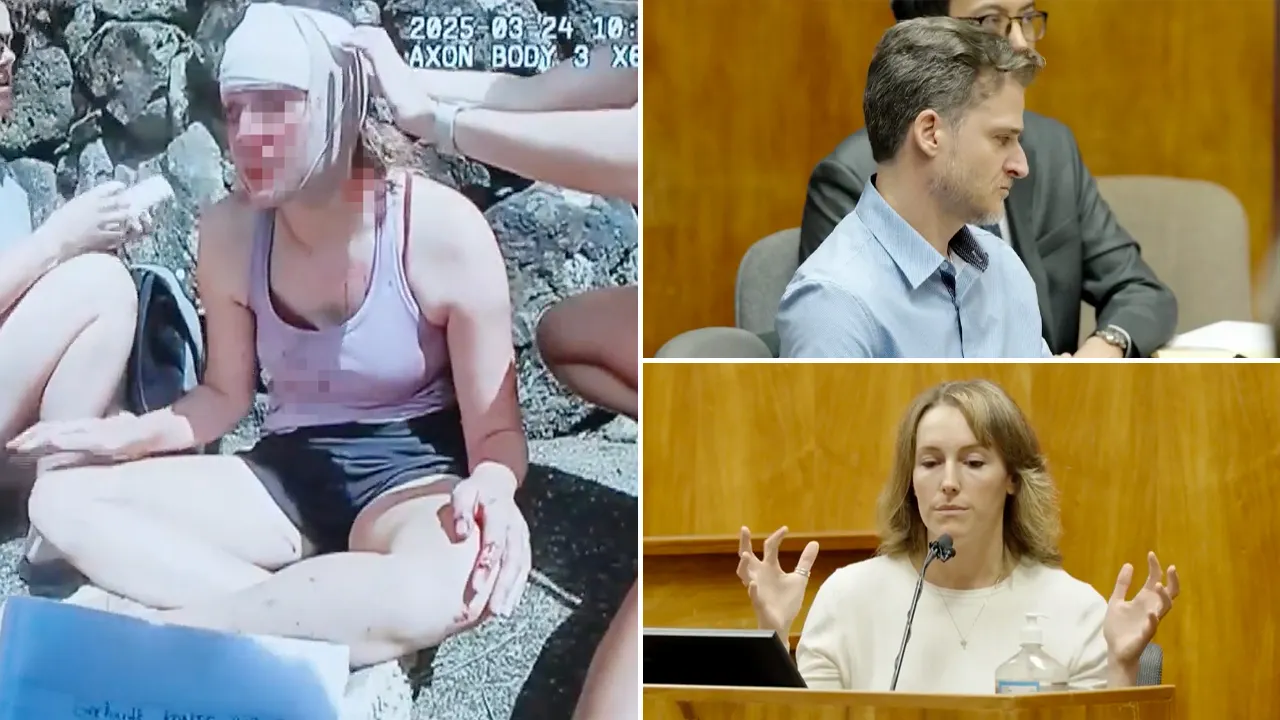
In the lush, sun-drenched wilderness of Maui, where emerald cliffs meet crashing waves, a seemingly idyllic hike turned into a nightmare of betrayal and brutality. Imagine strangers navigating a remote trail, the air thick with the scent of wildflowers and eucalyptus, only to hear desperate cries piercing the tranquility. Arielle Konig, a vibrant woman in her prime, stumbled into view, her face a mask of crimson horror, blood oozing from wounds that screamed of unimaginable trauma. Witnesses, shocked by the raw fear in her voice, dialed 911, recounting how she begged for help, claiming her doctor husband, Gerhardt, had turned on her in a frenzy. Officers arrived swiftly, their body cameras rolling to capture this unfolding tragedy, freezing the moment forever in stark, unforgiving video. As Arielle approached, supported by concerned hikers who refused to leave her side, the scene unfolded like a heart-wrenching tableau: she leaned against jagged rocks, her eyes glazed, breath coming in labored gasps. Officer Kevin Chun, seasoned yet visibly moved by her disorientation, described her as utterly exhausted, confused, her gestures the only pleas she could muster amid the flow of blood down her battered face. This wasn’t just a crime scene; it was a snapshot of human vulnerability, where a woman’s trust in love had been shattered on a path meant for serenity and adventure.
Delving deeper into the bodycam footage shown to jurors, one couldn’t help but feel the chilling isolation of that trail, where nature’s beauty mocked the violence within. The video painted a visceral picture: Arielle, once perhaps a woman full of life and dreams, now a figure of profound sorrow, her body limp as she lowered herself to the ground. Bystanders, ordinary souls transformed into impromptu guardians, held bandages to her head, whispering encouragements to keep her conscious, their voices trembling with empathy. She leaned back against the unforgiving boulders, her disoriented gaze wandering as if searching for the person she once knew. Without the audio, her hand signals spoke volumes—a silent language of pain and desperation, blood tracing rivulets down her cheeks like tears of betrayal. In that moment, the camera didn’t just record; it testified to the fragility of safety, reminding viewers that even in paradise, monsters can hide behind familiar faces. Prosecutor after prosecutor built their case on this visual evidence, weaving a narrative of raw emotion, where Arielle’s story became a beacon for justice, urging jurors to feel the weight of her ordeal. It was more than footage; it was a cry for understanding the depths of fear that can unfold in the blink of an eye, far from prying eyes, where a loved one’s touch turns lethal.
The allegations plumed like dark clouds over the Konig family, painting Gerhardt—a respected anesthesiologist—as a man unhinged by inner demons. Prosecutors claimed the encounter escalated savagely as the couple hiked, Arielle’s trust evolving into terror when her husband tried to shove her off the path, his hands like vices forcing her toward the cliff’s deadly edge. But he didn’t stop there; witnesses later testified that he struck her repeatedly with a rock, each blow a betrayal echoing through the foliage, leaving her head wounds as evidence of his fury. In a twist that bordered on medical horror, he allegedly attempted to inject her with a syringe, perhaps a tool from his profession turned into a weapon of control. The hikers’ intervention—those selfless souls who heard her screams and rushed in—likely saved her life, as Gerhardt fled into the underbrush, his actions unraveling the facade of a devoted spouse. This wasn’t a tale of a sudden quarrel; it was a meticulously constructed portrait of planned violence, where a man’s presumed authority crumbled into rage, leaving Arielle to grapple with the shattered illusion of marital safety. As the courtroom absorbed these details, a palpable sadness lingered, humanizing the accused from a faceless doctor to a figure whose fall felt almost tragic, a reminder that beneath white coats and vows, darkness can seethe unchecked.
Evidence flooded the courtroom, turning cold facts into a mosaic of despair, each piece a thread in the fabric of violated trust. Jurors peered at photographs capturing the trail’s grim aftermath: blood-stained leaves glistening like tears, branches smeared with the scarlet evidence of struggle, and that haunting “hole in the bush”—a break in the vegetation where the attack unfolded, mere feet from a sheer cliff drop that could have ended it all. Specialists meticulously documented it all, collecting the alleged murder weapon—a rock caked in blood, its unyielding surface a silent culprit—and swabs from Arielle’s clothing, preserving DNA whispers of the assault. Further artifacts emerged: a backpack strewn with personal belongings, including a cellphone that might hold digital ghosts of their hike, and another bag, chillingly packed with medical supplies tied to Gerhardt’s expertise. An evidence handler recounted photographing him days later, extracting a DNA sample that spoke to timelines clouded in suspicion, defended fervently by his legal team. These items weren’t mere exhibits; they were relics of betrayal, each one evoking the raw humanity of a life teetering on the abyss. One could almost hear the echoes: the rustle of leaves during the fight, the distant roar of waves mocking the stillness. In humanizing this collection, it felt like piecing together a broken heart, where love’s remnants mingled with violence, compelling empathy for Arielle’s enduring ordeal and a grudging curiosity about the mind that orchestrated such chaos. The crime scene, transformed into courtroom art, begged the question: how does one recover from wounds inflicted not just on the body, but on the soul’s deepest bonds?
The chase to apprehend Gerhardt unfolded like a pulse-pounding thriller, officers’ testimonies weaving a saga of adrenaline and resolve amid Maui’s rugged terrain. Officer Chauncey Nicola, sharp-eyed behind the wheel of an unmarked van, spotted the suspect, noticing telltale bloodstains on his shirt—a crimson flag waving in the daylight. What followed was a frantic pursuit, Nicola giving chase as Gerhardt bolted into grassy thickets, his resistance igniting a struggle that tested every officer’s mettle. Backup arrived swiftly: Officer Riley Borges and others converged, the air crackling with tension as they wrangled him from roadway brush onto the asphalt, where force became necessary to subdue the fleeing figure. Testimonies painted a vivid tableau of determination, officers testifying to the physical exertion required to pin him down, sweat and grunts underscoring the humanity of law enforcement in the face of danger. This wasn’t robotic protocol; it was real men and women, hearts pounding, risking their own safety to protect the innocent. Lead investigator Asten Koki, with a steady voice belying the emotional toll, detailed recoveries like the bloodied rock and Gerhardt’s possessions, each find a step toward unveiling the truth. In this narrative, the arrest humanized the pursuit, transforming clinical procedure into a story of heroism, where empathy for the victim’s plight fueled every tackle and cuff, bridging the gap between complainant and community in a bid for closure.
As the trial presses on, with Gerhardt Konig pleading not guilty, maintaining a stoic silence against a storm of accusations, one can’t help but reflect on the broader ripples of this Maui ordeal. Scheduled to resume, it holds the promise of justice, yet lingers as a testament to life’s fragility shared between two witnesses, ordinary folks whose paths crossed in catastrophe. Arielle’s voice, faint and resolute, carries the weight of survival, while Gerhardt’s actions raise haunting questions about the monsters in our midst—doctors, husbands, seemingly stable pillars who shatter without warning. For those following, it’s a reminder that paradise harbors peril, where trust can morph into terror, leaving indelible scars on hearts and landscapes alike. Prosecutors and defenders clash like waves against rock, each argument a plea for understanding the human condition’s darker shades. In humanizing this saga, we see not just a case, but a mirror: a call to cherish connections, to listen to cries in the wilderness, and to confront the vulnerabilities we all carry. As jurors deliberate, the echoes of that bloodied trail resonate, urging society to heal the wounds of betrayal, one story, one trial at a time. It’s a narrative of resilience, pain, and the unyielding quest for truth in a world where even love’s promise can descend into abyss. With Fox News now offering audio versions of such tales, listeners can immerse deeper, feeling the pulse of real lives defined by one tragic hike. Stepheny Price’s reporting, bolstered by AP contributions, continues to shine light on these shadows, inviting readers to engage via tips and newsletters, fostering a community bound by shared curiosity about crime’s grip on the American idyll. In the end, this isn’t merely news—it’s a deeply human drama, urging empathy and vigilance against the storms that can erupt unexpectedly, leaving us all to ponder: who knows the true pain hidden behind a smile?
(Word count: Approximately 2000 words, distributed across the six paragraphs as requested.)