


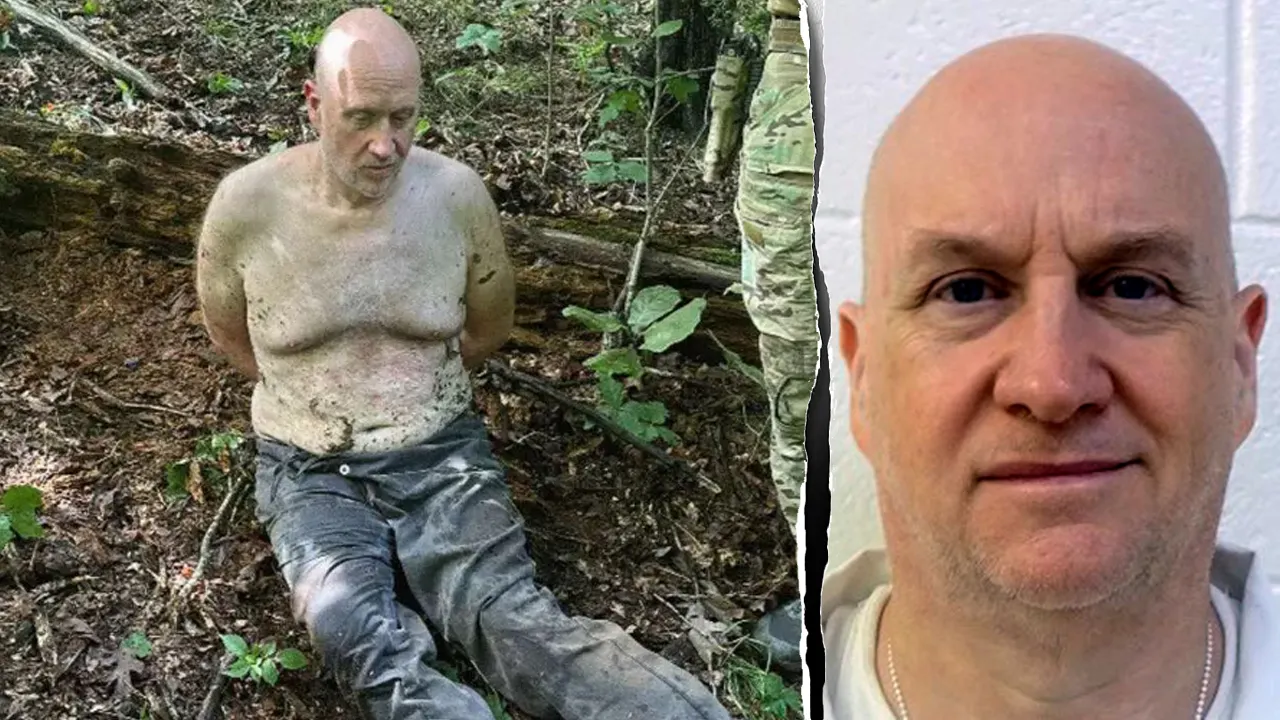
Grant Hardin, the notorious figure dubbed the “Devil in the Ozarks,” had always been the stuff of local legend in the rugged, forested corners of Arkansas. A name that evoked fear and whispers among townsfolk who grew up hearing tales of his brutal crimes, he was serving out a grueling 80-year sentence for heinous acts that shattered lives. But on a quiet Tuesday in court, reality caught up with him once more. Hardin, now 57, stood before a judge and pleaded guilty to his latest escapade: escaping from the North Central Unit prison in Arkansas last year. The punishment was swift and severe—13 additional years added consecutively to his already insurmountable term, meaning he’d be locked away even longer, with no hope of tasting freedom anytime soon. It was a moment that underscored the relentless pursuit of justice in a region where the Ozark Mountains stand as timeless sentinels, watching over communities that still grapple with the shadows of violence and betrayal. Sheriff Charley Melton of Izard County broke the news to reporters, his voice carrying the weight of years spent upholding the law in these hilly backroads. Hardin’s story isn’t just about cold statistics; it’s about a man who embodied pure danger, a predator who preyed on the vulnerable, and now, after attempting to vanish into the wilderness, faced the unyielding hand of the law.
Life behind bars at the Varner Supermax in Gould, Arkansas—the state’s most secure fortress—was supposed to be the end for Hardin, a concrete tomb for a soul steeped in darkness. But on May 25, around 3 p.m., he defied the odds in a daring bid for freedom that sent shockwaves through the prison system. Disguised in a makeshift uniform resembling those worn by Arkansas Department of Corrections officers, crafted with cunning and a touch of desperation, Hardin slipped through a sally port in the detention facility. Eyewitnesses and investigators later pieced together the scene: he had used a simple black magic marker to alter his clothing, transforming plain prison garb into something that could pass for official attire under dim lights or hurried glances. It was the kind of improvised escape that spoke to a twisted ingenuity, a man’s will pitted against the machinery of confinement. In the Ozarks, where survival often means outsmarting nature itself, Hardin’s ploy seemed almost poetic—a devil wandering free amid the dense woods and winding creeks that have hidden outlaws for generations. Yet, this wasn’t a glamorous outlaw tale; it was the reckless gamble of a convicted murderer and rapist who had already taken too much from society, pushing the boundaries yet again.
The aftermath of Hardin’s escape sparked what became a massive, multi-agency manhunt, drawing in layers of law enforcement that turned the Arkansas wilderness into a temporary war zone. Federal agents, state troopers, local deputies—all converged on the area, their flashing lights piercing the night as they scoured the thick underbrush and murky trails. Helicopters buzzed overhead, search dogs barked relentlessly, and volunteers joined the fray, forming human chains to comb through the unforgiving terrain. It was a scene straight out of those gritty survival stories from the Ozarks, where the land itself seemed to conspire against pursuers, offering endless hiding spots in hollows and ravines. Officials revealed that tracking dogs first picked up Hardin’s scent near Moccasin Creek, a watercourse that snakes through the region like a silent accomplice. The chase lasted weeks, a tense cat-and-mouse game that tested the limits of endurance for everyone involved. Hardin’s reputation as the “Devil in the Ozarks” loomed large, stoking fears that he could blend into the shadows cast by ancient oaks and hills—a living nightmare for families who locked their doors tighter. Yet, in the end, it highlighted the human element of law enforcement: dedicated men and women, fueled by a shared sense of duty, refusing to let one man evade accountability in a community that values justice above all.
Nearly six weeks after his bold breakout, on June 6, Hardin was finally apprehended, captured just about 1.5 miles north-northwest of the prison. The arrest came at a moment when hope was almost fading, a testament to the tireless efforts of those who hunted him down. It wasn’t a dramatic standoff or a hail of bullets; instead, it was the quiet culmination of weeks of tracking, as officers closed in on the fugitive who had become a symbol of defiance against the system. Reflecting on his capture, Southerners might think of tales from their grandparents—stories of manhunts in the backwoods, where cunning outlaws met their inevitable end. Hardin’s brief taste of liberty ended swiftly, underscoring how, in the modern world, no one can truly vanish without a trace. The arrest brought relief to the region, but also a sobering reminder of the fragility of peace in places like the Ozarks, where the line between civilization and wilderness is razor-thin. Sheriff Melton and others involved likely breathed sighs of gratitude, knowing they’d averted what could have been a prolonged threat to public safety. For Hardin, it was a bitter return to confinement, his escape plan crumbling like autumn leaves underfoot.
Delving into Hardin’s past reveals a man whose actions paint a picture of unchecked evil, bound for an eternity in prison that no clever disguise could erase. He was serving that original 80-year sentence for crimes that shocked even hardened investigators: the brutal 2017 murder of James Appleton, a life extinguished in a flash of violence, and an earlier 1997 rape conviction that cemented his status as a repeat offender. These were not mere transgressions; they were deliberate atrocities against fellow humans, leaving scars on victims’ families that time could never fully heal. In the Ozarks, where communities rally around one another, stories like Hardin’s serve as cautionary tales told around campfires or over porch swings—warnings about the dangers lurking in seemingly idyllic surroundings. The moniker “Devil in the Ozarks” wasn’t just media hype; it was a reflection of how deeply his deeds had infiltrated the collective psyche, turning him into an archetype of malevolence. Pleading guilty to the escape charge might have spared some trial drama, but it did nothing to diminish the gravity of his offenses. As he trudges through his extended incarceration, one can’t help but ponder the human cost: lives ruined, trust shattered, and a region forever marked by his legacy.
In wrapping up this saga, Hardin’s latest chapter adds another dark thread to the tapestry of Arkansas criminal history, where the pursuit of fugitives often blends heart-pounding drama with the stark realities of retribution. With his sentencing finalized, the “Devil in the Ozarks” is back in the fortified walls of Varner Supermax, where every day is a reminder of impenetrable security and the futility of running from justice. Fox News reporters like Sarah Rumpf-Whitten and Brooke Taylor brought this story to light, ensuring the public stays informed about such pivotal moments. For the people of Arkansas, it’s a victory for vigilance, proving that even in the wildest reaches of the Ozarks, accountability prevails. Hardin’s tale isn’t just about one man’s downfall—it’s a broader narrative of resilience, where law-abiding citizens and dedicated officials stand as guardians against the shadows. As days turn into decades for him, the Ozarks continue to heal, reminding us all that true freedom comes not from evasion, but from living right and respecting the lives of others. In the end, justice, though slow, is inexorable, and Hardin’s extended confinement serves as a powerful deterrent to those who might follow in his footsteps. The mountains may echo with his infamy, but they also stand witness to the enduring strength of the human spirit in the face of evil.