



The Heart of the Story: A Young Boy’s Emotional Journey Through Immigration Chaos
In the quiet suburbs of Minneapolis, where families settle into routines of school runs and weekend pancakes, a 5-year-old boy named Liam Conejo Ramos found himself thrust into the national spotlight—a spotlight that shone harshly on the fragile edges of American immigration policy. What began as an ordinary pickup from kindergarten on a crisp January morning turned into a nightmare of detention, separation, and legal battles that tugged at the heartstrings of millions. Liam, a wide-eyed Ecuadorian boy with a timid smile and a father who had crossed borders in search of safety, became the unwitting face of a heated debate over asylum, detention, and what it means to call America home. His story, captured in news headlines and Fox News audio articles, unfolded amid whispers of empathy and outrage, reminding us that behind the cold words of law are real lives, real fears, and real dreams of a better future. Released over the weekend, Liam and his father, Adrian Alexander Conejo Arias, returned to the familiar comforts of Minnesota, escorted by figures of political prominence who saw in them not just case numbers, but symbols of humanity. As the details emerged through public records and legal filings, it became clear that this wasn’t just about paperwork; it was about the soul of a nation grappling with its promises and its borders. Liam’s journey highlighted the human cost of policies meant to protect, yet often inflicted isolation on the innocent. Friends and neighbors in the community rallied with messages of support, underscoring how one child’s plight could ripple into conversations about belonging and justice. In classrooms across the country, teachers paused to explain the complexities to young minds, turning a tale of turmoil into a lesson on compassion. Liam, with his backpack of crayons and hopes, represented more than a statistic—he was a reminder that every policy decision echoes in the laughter of children and the worries of parents.
Blanche’s Firm Stance: Denying Asylum and Defending Detention
Deputy Attorney General Todd Blanche, a key figure in the Trump administration’s approach to immigration, stepped into the fray on a Sunday interview, his voice steady as he addressed the swirling controversy. Appearing on ABC’s “This Week,” Blanche refuted claims that Liam and his father had any legitimate foothold in the system, insisting they never formally applied for asylum—a cornerstone of protection for those fleeing danger. “That is not true,” he declared, pointing to what he saw as a significant dispute over their entry and legal standing. Officials from the Department of Homeland Security echoed this narrative, describing the family as living illegally in the U.S., a characterization that painted their presence as a violation rather than a plea for refuge. Blanche, drawing from a legal lens honed in years of intense courtroom battles, emphasized that unauthorized entry wasn’t just a technicality but a crime in his view. “The fact that they’re here illegally is a crime,” he stated emphatically, likening it to breaking the fundamental rules of a shared home. He argued that holding such individuals during proceedings wasn’t punitive; it was prudent, a way to ensure accountability in an era where enforcement felt both necessary and neglected. Blanche alluded to ongoing appellate cases, framing a broader “schism in the law” where debates raged over bail for alleged illegal aliens. His words carried the weight of administration policy, rooted in a philosophy that prioritized deterrence over leniency. Yet, beneath the legal jargon, Blanche’s assertions sparked questions about empathy—did viewing immigrants as criminals overlook the desperation that drives families like Liam’s to seek new horizons? In communities watching intently, his comments fueled divides, with some seeing him as a guardian of order, others as a gatekeeper standing tall against waves of humanity. Liam’s father, Adrian, could only imagine the stern faces of officials like Blanche when he first crossed in 2024, driven by hopes that America might offer sanctuary from the uncertainties left behind in Ecuador.
The Lawyers’ Counter: An Active Asylum Claim and Human Rights
On the other side of the debate stood the family’s lawyers, a determined team wielding briefs and testimonies that painted a different picture—one of vulnerability and valid claims rather than criminality. They argued vehemently that Liam and Adrian did, in fact, have an active asylum application pending, a protective umbrella allowing them to stay while courts deliberated. This wasn’t mere semantics; it was a lifeline, acknowledging the legitimate fears of persecution that had propelled them across borders. The lawyers disputed the details of entry, suggesting irregularities in how officials processed or denied their appeals, and spoke of a family’s right to due process. In a world where paperwork could make or break lives, they championed Liam’s innocence, portraying the boy not as an illegal trespasser but as a child deserving of childhood. Their voices, amplified through legal filings and public statements, challenged the narrative of abandonment or abandonment of process, insisting that the family belonged in the ongoing tapestry of America’s plural fabric. They highlighted how the detention—snatching a 5-year-old from a schoolyard—felt like an affront to basic decency, evoking memories of past eras where families were torn apart for political gains. Adrian, often in the background of press conferences, spoke softly of the stress etching lines on his face, wondering aloud if his son’s crayons would ever replace the fear in his eyes. The lawyers’ perspective humanized the statistics, reminding listeners that asylum seekers are people first—fathers with hearts heavy from worry, children with dreams interrupted. Their fight underscored a broader tension: while laws aimed to protect borders, they also risked erasing the humanity of those seeking shelter. In homes across the nation, this duel of stories resonated, prompting reflections on what justice truly entails in a democracy built on ideals of freedom and equality.
Backlash and Outcry: A Nation Divided Over a Child’s Detention
The detention operation itself ignited a storm of criticism, with attorneys, lawmakers, and everyday citizens decrying what they called an egregious lie or worse—a calculated cruelty targeting a vulnerable child. The incident unfolded when ICE agents, acting on directives to enforce immigration laws, detained Liam upon his father’s arrival at school on January 20. What should have been a simple homecoming became a harrowing ordeal, with reports surfacing that Liam was separated briefly from his dad in the chaos of apprehension. Public outcry followed swiftly, flooding social media and news outlets with fervor. Lawmakers from both sides expressed dismay, but especially progressive voices who saw it as emblematic of harsh policies that prioritized enforcement over compassion. “This isn’t your home?” one critic tweeted in disbelief, echoing the sentiments many felt about welcoming families like Liam’s. The operation drew comparisons to historical injustices, stirring memories of family separations at borders, and sparked debates on television panels where experts dissected the optics and ethics. Communities in Minnesota, where the family had seemingly integrated into local life, rallied with candlelight vigils and petitions, humanizing the abstract by sharing stories of neighborly support. Adrian, reflecting on those tense days, described the fear in his son’s eyes—the confusion of a boy too young to grasp why uniformed figures pulled him away. The backlash wasn’t just about one family; it was a mirror to societal fractures, revealing how immigration policies could alienate or unite a populace. In kitchens and cafes, people wondered aloud: at what cost does a nation secure its borders? The incident prompted soul-searching, with many envisioning Liam’s tears as a call to rethink how we treat the strangers who knock on our door, seeking not invasion but asylum.
The Judge’s Ruling and Release: A Light in the Darkness
The family’s plight took a merciful turn when a federal judge intervened, issuing a decisive order that demanded their release within three days—a ruling that cut through the legal thicket and delivered Liam and Adrian back to freedom. Announced just before their weekend discharge from the Dilley detention center in Texas, the judge’s decision weighed the equities, prioritizing the child’s well-being over prolonged custody. Details of the litigation remained shrouded in specifics, as per court protocols, but the outcome spoke volumes about judicial oversight in an administration’s enforcement agenda. Releasing them meant returning Liam to the familiar rhythms of playdates and bedtime stories, away from the stark confines where uncertainty bred anxiety. Adrian, his shoulders sagging from months of limbo, expressed guarded relief, knowing that while free, their status hung in balance. The center in Dilley, known for its austere conditions, had housed families in transition, but for Liam, it felt like a world apart from his Minnesota home. Families reunited stories like theirs often carried stories of resilience, yet this release highlighted fragility—how quickly life could pivot from normalcy to nightmare. The judge’s action rippled outward, prompting discussions on the balance between security and humanity, and reinforcing that courts could serve as check on executive zeal. For Liam, the release wasn’t just paperwork; it was a chance to rediscover laughter, to hug his father without bars in between. In communities following the case, people sighed with relief, seeing in the boy’s return a victory for innocence amid the storm. It reminded us that, sometimes, a single ruling could mend a piece of the nation’s fractured soul, offering hope for those still waiting in the shadows.
Congressman Castro and Omar: Escorting Hope and Welcoming Home
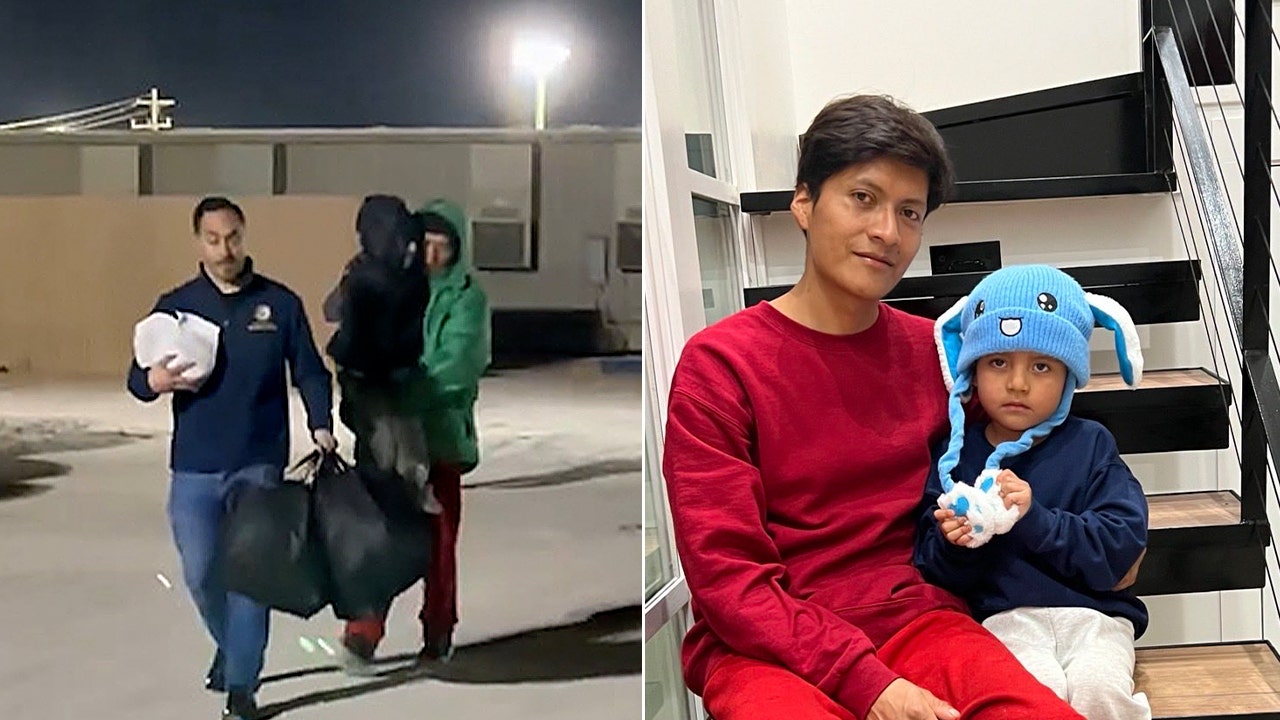
As the sun set on their release, Congressman Joaquin Castro of Texas took up the mantle of compassion, personally picking up Liam and Adrian from the Dilley center and embarking on a heartfelt journey back to Minneapolis. Driving through the night, Castro shared conversations that bridged the gap between policy and people, turning a political gesture into a profound act of empathy. Upon arrival, he shared a touching letter addressed to Liam, scribbled with warmth: “Don’t let anyone tell you this isn’t your home. America became the most powerful, prosperous nation on earth because of immigrants not in spite of them.” These words, posted on social media, resonated deeply, framing Liam as part of America’s immigrant legacy—a narrative that celebrated diversity rather than dwelling on divisions. Congressman Ilhan Omar of Minnesota echoed this sentiment in her own post, standing alongside the family and a smiling Castro, proclaiming, “Liam is home now and we are grateful to Joaquin Castro for traveling to Minneapolis with him and his dad. Welcome home Liam.” Omar’s celebration captured the joy of reunion, a stark contrast to the earlier darkness, and underscored how elected officials could embody the welcoming spirit many longed for. For Liam, the escort meant more than transit; it signaled solidarity, a reminder that voices in power could advocate for the voiceless. Families in immigrant enclaves felt seen, inspired to share their stories openly. Castro’s actions humanized politics, showing that leadership isn’t just about votes but about hearts touched by human struggle. As Liam unpacked his thoughts with toys and dreams, these acts of kindness offered a blueprint for healing—a nation not defined by walls, but by the hands that help build bridges. In reflecting on this saga, one couldn’t help but marvel at how a 5-year-old boy’s ordeal could unite strangers, provoke change, and reaffirm the enduring promise of refuge for those who dare to dream of a better tomorrow.