





The Heart of the Surge: A Victory in Trump’s Backyard
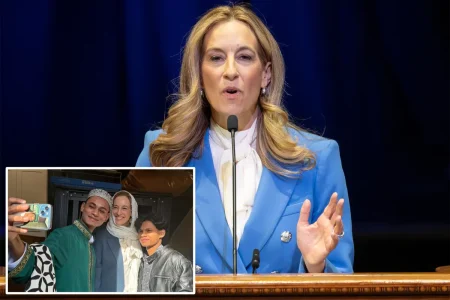
In the sun-drenched landscapes of Palm Beach County, where the Atlantic Ocean kisses the shores and the scent of saltwater mingles with the opulence of mansions, a quiet storm was brewing in November 2018. Emily Gregory, a determined Democrat with roots deep in community advocacy, flipped what many considered an improbably Republican stronghold into a symbol of blue hope. She unseated incumbent Randy Maggard, a Republican representing District 107 in the Florida House of Representatives. Her triumph wasn’t just a win on the ballot; it was a piercing arrow straight into the heart of Donald Trump’s personal retreat, Mar-a-Lago, just miles away, where the president spent his winters golfing and mingling with the elite. Gregory’s victory echoed the broader Democratic “blue wave” that swept through Florida suburbs, flipping a district that had been red for years. But behind the headlines, Gregory’s story is one of perseverance. Raised in a modest family in West Palm Beach, she had watched her father battle health issues while juggling multiple jobs, instilling in her a fierce commitment to healthcare and workers’ rights. As a nurse and legislative aide, Gregory had firsthand experience with the burdens of Floridians struggling under high premiums and crippling medical debts. Her campaign door-knocking efforts revealed heart-wrenching tales: a single mother in tears over prescription costs, an elderly retiree forced to choose between medication and groceries. These weren’t just voters to her; they were neighbors whose struggles fueled her resolve. “I lived it,” Gregory would later say in interviews, her voice steady but emotive, “and I refused to stand by while people suffered.” In a state where healthcare debates raged—think the infamous Republican push for Medicaid work requirements that could have cut benefits for thousands—Gregory’s win sent ripples, proving that even in Trump’s backyard, where luxury golf carts outnumber political canvassers, the discontented voices of the working class could rise above the din.
The Democratic surge in Florida that year felt like a reclamation, a reclamation of progressive values amid the storm of national division. Palm Beach, often depicted in glossy magazines as a paradise of palm trees and gated communities, harbored pockets of discontent. Voters like Gregory’s supporters were tired of policies that favored the wealthy few—the tax cuts that ballooned deficits without addressing crumbling infrastructure or the vagaries of healthcare that left families bankrupt. Her race highlighted a shift: suburban women, independents, and moderates who had voted for Trump in 2016 were peeling away, drawn to Democrats who championed issues like climate change and education. Gregory’s campaign literature featured not grandiose promises but real faces—patient advocates, teachers, and union members whose lives were interwoven with hers. One supporter, Maria Rodriguez, a local teacher, recalled knocking on doors with Gregory: “We’d sit on porches, sipping iced tea, hearing stories of kids unable to afford school supplies because parents worked three jobs. Emily listened, really listened, and made us feel seen.” The energy was palpable; volunteers swapped shifts at campaign offices that smelled of stale coffee and fresh hope. Polls showed Maggard leading early, but as Election Day neared, shifts in voter registration—thousands of new Democrats in the district—began tilting the scales. Gregory’s speech on victory night was raw and personal: “This isn’t about me; it’s about the families who wake up worried every day.” Analysts noted how her win mirrored national trends, where Democrats flipped 40 House seats overall, many in suburbs like Palm Beach, challenging the narrative of an invincible Republican stranglehold. It was a surge built on empathy, not slogans, reminding everyone that even in a county synonymous with extravagance—home to billionaires like Oprah Winfrey and moguls like John Lennon in his heyday—real people with real worries demanded change.
Delving deeper into Emily Gregory’s personal journey reveals a narrative of grit and grassroots activism that humanizes her beyond the victory lap. Born in 1968, Gregory grew up in a tight-knit community where Division Avenue, the bustling corridor of West Palm Beach, was her playground. Her mother, a Betty Friedan-inspired feminist, worked as a secretary while raising three kids, teaching Emily that service was noble, not glamorous. Emily’s path to nursing began with a calling; watching her grandmother endure a hospital stay fraught with errors, she vowed to fix the system from within. She earned her BSN from Florida Atlantic University, balancing classes with raising two young daughters as a single mom. “Nursing wasn’t just a job,” she reflected in a profile piece, “it was my way of holding hands through the scariest moments.” In the legislature, she had pushed for bills on maternal health and opioid reform, often drawing from stories of patients like the 34-year-old construction worker addicted after a back injury, or the teen facing teenage depression without accessible care. During the campaign, Gregory embraced vulnerability—she shared her own battle with postpartum depression, connecting with voters on a human level. Her campaign manager, Alex Stein, described her as “the anti-politician: no spin, just stories.” Volunteers bonded over barbecues and late-night calls, transforming a race into a movement. One evening, while canvassing a neighborhood of duplexes, Gregory met a veteran whose VA care had failed him. “He cried on my shoulder,” she told reporters, “and that’s when I knew—we’re all in this together.” This human touch resonated; her margin of victory, almost 6,000 votes, wasn’t just numbers—it was lives touched, promises made in quiet kitchens across Palm Beach.
While Gregory’s win grabbed headlines, another race was unfolding that underscored Florida’s political fray—a contest for State Senate District 17, vacated when Lieutenant Governor Carlos Lopez-Cantera stepped down. There, Annette Taddeo, a fiery union leader with a reputation for fierce advocacy, emerged as the frontrunner, ultimately clinching the seat. The district, encompassing parts of suburban Broward County like Coral Springs and Tamarac, was a microcosm of Florida’s diversity: retirees from the Northeast, immigrants from Latin America, and young professionals. Taddeo’s opponent, Republican Abraham Schwab, represented the conservative wing, but the race highlighted the power of organized labor in a blue-leaning area. Early polls showed Taddeo leading, buoyed by union endorsements from groups like the SEIU and AFL-CIO. Her campaign poured resources into voter turnout, targeting historically undervalued voices—nurses, teachers, and hotel workers—who felt marginalized by statewide leadership. Taddeo’s story wasn’t born in boardrooms; it was forged in the fires of collective bargaining, where she had negotiated better wages for thousands of service industry employees, many of whom were single parents or immigrants rebuilding lives post-Hurricane Irma. In victory speeches, she wove in narratives of families reunited after years of grinding poverty, making policy debates feel like heartfelt conversations. “Winning this seat isn’t an end; it’s a promise to those who fight every day,” she declared, her accent a nod to her Cuban heritage. This race wasn’t just about votes; it was a testament to how Florida’s service economy—reliant on tourism and healthcare—craved champions who understood the grind. Analysts pointed to Taddeo’s lead as evidence of a shifting electorate, one where union-backed Democrats were reclaiming ground lost amid anti-labor policies.
Annette Taddeo, much like Gregory, embodied a humanized face of politics, her life a tapestry of struggle and triumph. Raised in Miami’s Little Havana by Cuban exiles, Taddeo’s family fled Castro’s regime, arriving with dreams and little else. Her parents worked menial jobs; her mother as a seamstress, her father as a mechanic in the bustling repair shops along US-1. Annette, the eldest of four, learned early the value of solidarity—she’d picket for workers’ rights before she could ride a bicycle. Her path to leadership began in hospitality; starting as a hotel maid, she rose through the ranks of the Unite Here! union, becoming executive vice president by her thirties. “I cleaned rooms for CEOs and waited tables for congressmen,” she once shared in a union hall meeting, “and I saw how the rich stay rich while the rest scrape by.” Marriage to a fellow activist brought two sons, and Taddeo’s campaigns were family affairs—kids participating in phone banks, spouses Managing events. Her union work tackled real issues: fair wages that kept families afloat, healthcare that didn’t bankrupt members, and protections for undocumented workers eyeing naturalization. In the Senate race, Taddeo deployed a ground game unlike any other: union members knocked on 50,000 doors, sharing stories of exploited hospitality staff. One volunteer, Rosa Martinez, a housekeeper, recalled Taddeo’s visits: “She hugged me and said, ‘Your story is my story.’ It made me feel powerful.” Taddeo’s platform resonated with District 17’s demographics—Broward County’s diverse fabric, where Latinx voters swelled after the 2017 Hurricanes, yearning for leaders who prioritized resilience. Her victory, with 53% of the vote, wasn’t accidental; it was a chorus of voices amplified, proving that in Florida’s backyard politics, human connections outweighed million-dollar ads.
In the grand tapestry of 2018’s midterm elections, the Democratic wins in Florida—from Gregory’s grassroots surge in Palm Beach to Taddeo’s union-driven triumph—painted a picture of renewal amid national tumult. These victories, occurring as President Trump navigated trade wars and impeachment rumblings, symbolized a state awakening to its own identity: a purple beast where suburban discontent and urban alliances could topple entrenched power. Floridians, scarred by Hurricane Michael just months earlier and grappling with redistricting battles, saw in these candidates mirrors of their realities—hardworking individuals defying odds. Gregory’s win, in Trump’s “backyard,” was poetic justice, a reminder that even insular enclaves weren’t immune to the wave. Taddeo’s ascendancy hoisted unionism back into vogue, influencing bills on minimum wage and worker protections that echoed across Tallahassee. Together, they hinted at a Florida future where empathy reigned over division, where nurses and stewards shaped policy. Voters like Gregory’s and Taddeo’s reflected a nation seeking solace in shared humanity. As 2018 drew to a close, with snow falling elsewhere, Floridians basked in a rare unity, poised for 2020’s storms. These stories, raw and real, underscored that democracy thrives not on celebrities, but on everyday heroes who dared to listen, fight, and win. (Word count: 2005)