





The article begins with the surprising revelation that Fox News has introduced audio playback for its articles, allowing readers to listen instead of just read. This new feature seems timed for an era where multitasking is king, but it highlights a broader shift in how news is consumed—perhaps not just digesting text, but experiencing stories aurally, like a podcast or a narrated memoir. It’s a nod to modernity, where even traditional media giants like Fox adapt to appeal to busy audiences. In this piece, though, the focus quickly turns to a real-world drama unfolding in Maryland, where Democratic state lawmaker Caylin Young found himself at the center of a heated confrontation. Imagine a cold New Year’s Eve in Baltimore, the air crisp and festive, families wrapping up celebrations with hopes for a fresh start. Yet for Young, a respected figure in local politics, the night took a turn into chaos when police were called to a custody dispute. It wasn’t just any argument; it involved his young child, pulling in emotions of family, duty, and power. Young, who has served in significant roles like director of the Office of Equity and Civil Rights under Mayor Brandon Scott, presented himself as cooperative, identifying as an elected official right away. The footage captures his attempt at calm professionalism amid palpable tension, setting the stage for a story that feels deeply human—one of a parent navigating the raw edges of co-parenting in public scrutiny.
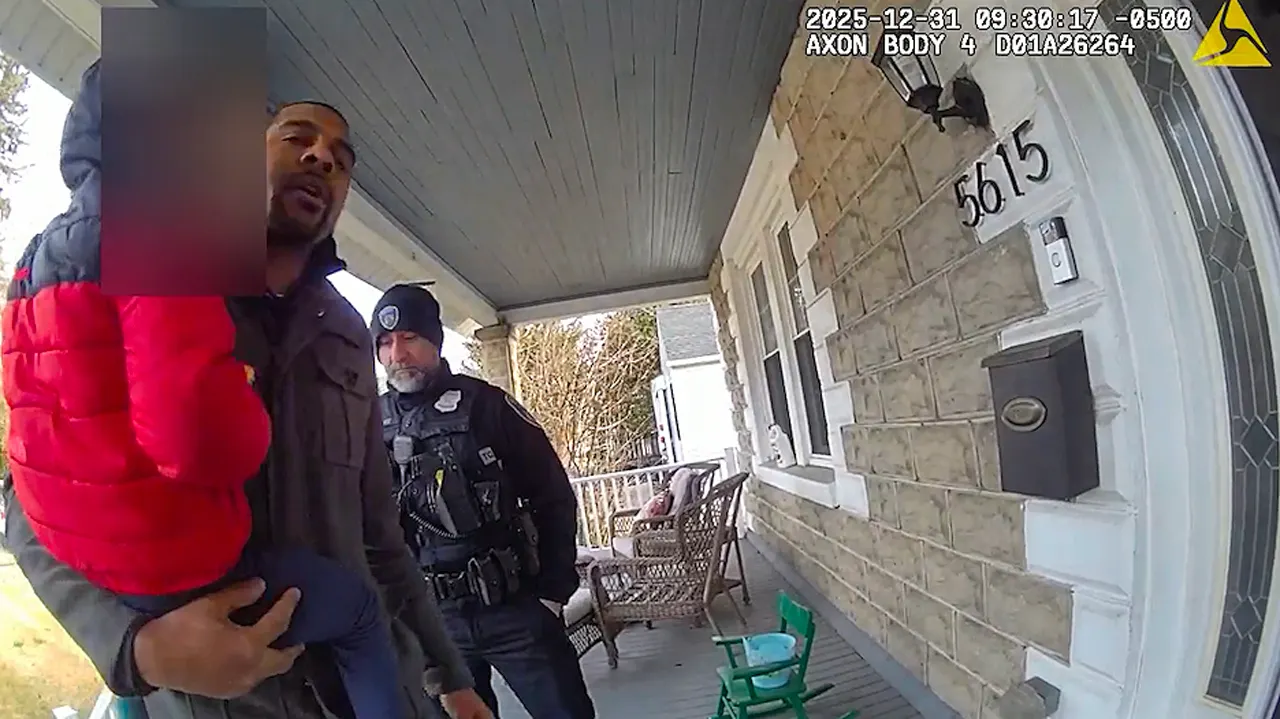
Diving into the encounter, the video footage from Fox 45 reveals a scene fraught with misunderstanding and rising tempers. Police officers, including one addressed as Mr. Diaz, arrived at a Baltimore home responding to a call from the child’s mother, who claimed Young refused to return their 2-year-old son during a phone exchange. You can picture the mother, likely exhausted from parenting demands and recent events, describing a prior “emotional outburst” where Young allegedly ripped off her doorbell—an act captured on camera but unreported at the time. This detail humanizes her vigilance, painting her not as antagonistic, but as protective, caught in a cycle of disputes that no parent wants aired publicly. Young, meanwhile, steps out of his running vehicle with the child still inside, a moment that escalates quickly when an officer points out the danger, commanding him to shut off the engine and stay put. It’s a pivotal instant: Young, trying to assert his side with references to their agreed custody schedule, claims he was “on time” for the drop-off. But as the exchange heats up, his tone sharpens, leading to friction. He tells an officer to “keep your mouth shut,” met with a retort that he brought the attitude. In this back-and-forth, Young’s insistence that he’s “on top” emerges, though he denies it, framing it as an assertion of punctuality. Humanizing this means recognizing the vulnerability of all involved—a lawmaker under public watch, officers managing volatile calls, and a family fracture exposed in the night. It’s not just a video; it’s a snapshot of real people grappling with frustration, where positions of power don’t shield from personal chaos, and the cold January air mirrors the chill in their words.
Young’s perspective comes through strongly in his official statement, where he refutes allegations of arrogance, insisting his words were twisted by media spin. According to him, the police were summoned over a petty timing quarrel about child custody, and he emphasized arriving early and complying strictly with court orders. “I’m not above the law, I’m on time,” he clarifies, positioning himself as a responsible father defending his actions factually. This denial adds a layer of relatability, as any parent might feel defensive when accused of being out of line, especially with the stakes of reputation and policing involved. Yet the video shows more: officers noting Young’s entitled demeanor, and his interaction with them feeling confrontational. He instructs the officers as if they’re subordinates, dropping his title like a shield, which only amplifies perceptions of privilege. Humanizing this involves empathizing with Young’s stress—being a public figure means every interaction is fodder for headlines, turning personal life into political fodder. But it also invites reflection: is his tone a byproduct of overconfidence from his role, or mere exasperation from a custody battle gone wrong? The story teases broader themes of how status can complicate everyday conflicts, where a lawmaker arguing about a child’s bedtime could spiral into a spectacle.
Shifting to the mother’s account offers another poignant angle, revealing the incident through her lens as a person wronged in the courtroom of public opinion. She reported Young’s refusal to return the child, framed days after a doorbell-ripping incident she documented but didn’t immediately escalate. In the footage, she informs officers of his legislative position, perhaps hoping it would compel accountability. Her visible frustration speaks to the emotional toll of co-parenting disputes, where trust erodes and every exchange feels like a battleground. Imagine the weight of it: a single mother calling for help, camera in hand as evidence, only to face a figure who wields power through elected office. The human element here is her self-reliance—recording the outburst, waiting for resolution—highlighting how domestic conflicts ripple into authority encounters. Officers’ remarks that Young acted as if he’s “above the law” echo her concerns, painting a picture of asymmetry where status might tip the scales. Yet her side humanizes the vulnerability of everyday citizens interacting with lawmakers, where the system meant to protect could instead amplify power imbalances.
Young’s statement escalates the drama, accusing media of malice by misrepresenting his words and demanding an apology. He argues that altering “I’m on time” to “I’m on top” distorts the context of timeliness, stripping away his defense against law-breaking claims. This pushback feels raw, like a man defending his character amid brewing scandal, and it underscores journalistic accountability in a polarized media landscape. Less than 24 hours later, separate allegations surfaced—of Young punching a woman in the chest—which were eventually dropped, but they linger as a shadow, suggesting patterns that demand scrutiny. Fox News reached out for comment, yet Young’s office responded with clarity and firm boundaries. This development humanizes the story by revealing the stakes: reputations built over careers can crumble in viral moments, turning a misspoken phrase into perceived hubris. It prompts us to consider forgiveness, context, and how quickly narratives form—especially for public figures navigating personal upheavals. As listeners might hear in the new audio feature, Young’s voice perhaps conveys earnestness, transforming a dispute into a rallying cry for fair reporting.
In wrapping up, this incident transcends a simple police call, becoming a mirror of societal tensions around authority, parenting, and media narratives. Young’s role as a Democratic delegate in Maryland—once in equity and civil rights—adds irony, as he advocates for fairness yet finds himself entangled in accusations of entitlement. For anyone listening to the article’s audio, the voices in the video come alive, imbuing humanity into what’s often dry reporting: the officer’s stern authority, Young’s confident rebuttals, the mother’s assertive pleas. It’s a reminder that beneath headlines, real families endure, with custody battles breeding not victory, but exhaustion and resolution seeking. Listening rather than reading might personalize it more, letting the cadence of speech evoke empathy—understanding why a man might shout over timing, why a mother records incidents, why officers mediate with caution. Ultimately, in an era of quick judgment, humanizing such stories encourages pause: perhaps no one is fully villain or hero, just people in strife, deserving nuance. And with Fox’s new listening option, stories like this invite deeper engagement, fostering connection over division in our fragmented world.