



The Human Cost of Unrest: Minneapolis Protests Cross Legal Boundaries
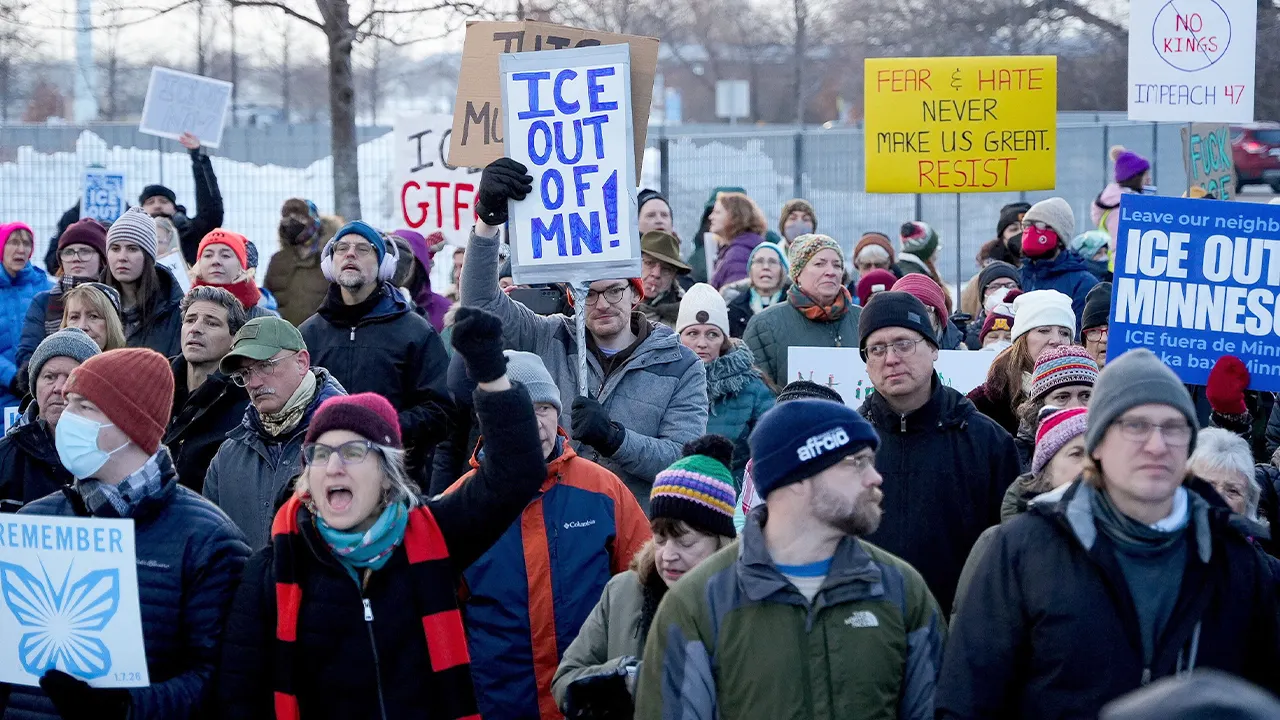
In the wake of recent anti-ICE demonstrations disrupting Minneapolis streets, protest industry insider Adam Swart has taken an unusual stance. As CEO of Crowds on Demand, a national protest-organizing firm, Swart has explicitly distanced his company from the ongoing demonstrations, citing their illegal nature and potential dangers. “We would not touch the Minneapolis protests with a 10-foot pole,” Swart told Fox News Digital, pointing to blocked roadways, obstruction of federal agents, and threats against authorities following a fatal shooting during an ICE enforcement operation. His professional assessment cuts through political rhetoric to highlight fundamental concerns about public safety, emergency services access, and the counterproductive nature of confrontational tactics.
The current unrest stems from a tragic incident involving ICE agents and 37-year-old Renee Nicole Good during a federal enforcement operation in south Minneapolis. According to the Department of Homeland Security, agents were attempting to make arrests when Good allegedly tried to use her vehicle as a weapon against officers, prompting an agent to fire in self-defense, resulting in Good’s death. Homeland Security Secretary Kristi Noem described the shooting as “preventable,” stating it occurred amid escalating interference with federal operations. Noem reported that ICE agents became stranded when one of their vehicles got stuck in snow and was surrounded by protesters. She claimed Good repeatedly obstructed officers, ignored commands, and “weaponized her vehicle” in an attempt to run over an agent, who was struck and required hospital treatment.
Swart strongly rejects the characterization of road blockages and officer confrontations as “nonviolent resistance,” instead framing these actions as inherently dangerous, particularly during active law enforcement operations. “When you block the ability of federal agents to get in and out of a scene, you are putting them at risk from a violent mob,” he explained. “That ability to enter and exit safely is fundamental to law enforcement.” He emphasized how winter conditions compound these dangers, with icy, snowy roads creating additional hazards for vehicles and protesters alike. More concerning to Swart is how such tactics endanger the broader community by potentially blocking emergency services: “Who else can’t get through when roads are blocked? Ambulances. Fire trucks. Emergency services have nothing to do with politics, and you’re making it impossible for them to do their jobs.”
From a strategic perspective, Swart warns that the current approach will backfire dramatically on those seeking to reduce ICE activity in their communities. “If protesters think this will deter ICE, they’re wrong,” he cautioned. “What’s far more likely is that ICE will increase its presence to deal with agitators. The administration will want to show it won’t be intimidated.” This assessment reflects Swart’s professional understanding of how government agencies typically respond to challenges of authority. He also highlighted a more immediate concern about the protest dynamics themselves, noting that mixing peaceful protesters with more aggressive elements creates serious risks. “A lot of the people protesting on the streets are actually violent,” he observed. “They are unhinged, unstable people who pose a risk to peaceful protesters. That’s why we’re staying out.”
The current situation in Minneapolis represents, for Swart, a symptom of broader governance failures in the city. “There’s no one in Minneapolis who believes the city is well run,” he stated bluntly. “It’s failing by any objective standard.” He pointed to reduced police presence, shuttered businesses, and the recent loss of Minneapolis’ only commuter rail line as evidence of this decline. Swart revealed that he has previously offered Minneapolis leaders the opportunity to run lawful campaigns aimed at improving safety and restoring order, but claims these efforts have stalled due to a climate of fear and intimidation. This assessment places the current protests within a broader context of civic dysfunction that extends beyond the immediate ICE controversy.
Despite his stark assessment, Swart offered a message of conditional hope for Minneapolis residents. “This can be your rock bottom,” he said. “You don’t need to fall further. But people have to find the courage to stand up for their city.” His perspective suggests that rejecting lawlessness and intimidation represents the first step toward rebuilding community trust and effective governance. Swart emphasized that his firm’s approach—”peaceful, lawful, persuasive, respectful”—remains the most effective way to create meaningful change. “When protesters commit illegal activity, what’s lost is the substance of the message,” he explained. “People don’t hear what you’re protesting. They just see the blocked street.” This observation speaks to a fundamental reality that transcends the specific circumstances in Minneapolis: how methods can undermine even the most worthy messages when they cross certain boundaries, leaving communities more divided rather than united in addressing shared concerns.