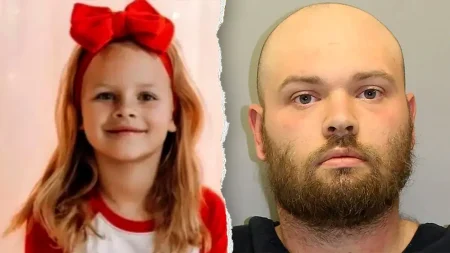








Imagine for a moment the life of a 17-year-old girl named Hailey Buzbee, full of the typical ups and downs of adolescence—school, friends, maybe dreaming about the future. She lived in a quiet neighborhood in Fishers, Indiana, and on January 5, she vanished without a trace, leaving her loved ones in a nightmare of uncertainty. Her world, which should have been filled with hope and discovery, was abruptly shattered. Almost a month later, on February 2, the unthinkable happened: her dismembered remains were found buried deep in the woods of Ohio, a final, horrific chapter in a story that began innocently enough through online gaming. This wasn’t just a random tragedy; it was tied to a man who traded disturbing messages with her for over a year, crossing state lines to lure her from the safety of her home. Tyler Thomas, a 39-year-old from Ohio, is now facing heavy scrutiny, his actions painting a picture of manipulation and cruelty that preyed on a vulnerable teenager.
Hailey’s connection to Thomas started through the online world of Discord, where young people often connect over games and shared interests. But what began as digital chats quickly turned sinister, evolving into sexually charged conversations that Thomas exploited. Prosecutors allege he traded explicit photos and messages, grooming Hailey over the course of a year. It’s heartbreaking to think of a girl trusting someone she met online, sharing pieces of her life without realizing the danger lurking behind the screen. Thomas, living in Columbus, Ohio, didn’t just seduce her with words; he plotted a real-world abduction, driving 160 miles overnight to Indiana to pick her up. On January 6, he snatched her from her home and brought her back to his world, where he subjected her to unimaginable acts before her tragic death. This wasn’t a fleeting encounter—it was a calculated invasion of her trust, turning a young woman’s curiosity into a path of exploitation and danger.
The details of that fateful night reveal a chilling timeline. After picking her up in Fortville, near her Indiana home, phone records show Thomas heading to a rented Airbnb in Logan, Ohio, that very evening. The next morning, he was tracked near the North County Trail in Wayne National Forest, the very spot where Hailey’s mutilated body would later be discovered. It’s almost impossible to fathom the terror she must have endured in those hours—being taken from everything familiar, driven through the night, and subjected to horrific acts in a stranger’s rented space. Traces of blood at the Airbnb hint at the violence that unfolded, a stark reminder of how quickly a teenager’s life can be extinguished by someone else’s dark intentions. Thomas allegedly attempted to erase the evidence, wiping his phone of Snapchat messages and photos, but digital footprints can’t always be hidden. Her family, grappling with grief and the void left by her absence, must now confront this brutal reality, piecing together how online interactions turned deadly.
Investigators uncovered even more disturbing revelations as they delved into Thomas’s digital life. Not only were there explicit images of Hailey taken at his Columbus home and the Airbnb, but they found obscene photos of another child—a roughly 10-year-old girl—and vile chats with yet another teenager claiming to be in tenth grade. In one message, Thomas creepily inquired, “Does baby carve parts of her body?” and suggested she’d “look so good covered in red,” revealing a pattern of predatory behavior that chills to the bone. This paints a portrait of a man obsessed with horror and harm, targeting young girls and crossing boundaries that no one should ever touch. When questioned by police on January 21, Thomas claimed he thought Hailey was “alive and safe,” but refused to confess to her murder, eerily stating, “No, I wouldn’t tell you.” Charged initially with pandaring sexually oriented material involving a minor and evidence tampering on January 31, he now faces federal exploitation charges for transporting her across state lines to commit these atrocities. It’s a reminder of the invisible threats young people face online, where predators like Thomas lurk, exploiting innocence for their twisted pleasures.
Two days after his charges, on February 3, Thomas led authorities to the exact location of Hailey’s remains, buried under a thick layer of frozen dirt in the woods. This act, whether out of fear or calculation, didn’t bring closure to her family—it only underscored the premeditated nature of her abduction and death. No charges have been filed yet for her murder, but federal prosecutors emphasize that the investigation is ongoing, collaborating across jurisdictions to gather every shred of evidence. US Attorney Dominick S. Gerace II noted that this is far from over, urging patience as they chase justice for Hailey and her grieving family. Imagine the pain of her parents, left with infinite questions: What were her last moments? Could they have seen the signs? How could someone so seemingly ordinary inflict such evil? Her story has ignited a call for vigilance, highlighting how online grooming can escalate into real-world tragedies, and stressing the need for better protections for our most vulnerable.
As the case progresses, Thomas’s state charges are set to be dismissed to focus on the federal ones, with him held on a $1.5 million cash bond at Franklin County Jail. Held accountable for crossing state lines to sexually exploit a minor, he’s faced exploitation charges that reflect the depths of his crimes. But beyond the legal rhetoric, this is about human loss—the dreams Hailey would never fulfill, the laughter her family will forever miss, and the devastating ripple effects on a community now hyper-aware of unseen dangers. Prosecutors continue to pore over seized phones and computers, uncovering more layers of his depravity, while emphasizing that justice isn’t swift—it’s thorough. For Hailey’s loved ones, patience amid pain is the hardest burden, as they navigate a system that must hold predators responsible. Her memory deserves no less, serving as a poignant reminder to cherish the innocence of youth and guard against those who seek to shatter it. In the end, humanizing her story isn’t just about recounting the facts; it’s about honoring the life stolen and vowing that her tragedy spurs change, protecting future Hailey’s from wolves disguised as friends in the digital shadows. The fight for justice is personal, emotional—a testament to resilience in the face of unspeakable horror, ensuring that voices like hers are not silenced forever. Communities across borders must unite to support affected families, fostering a safer world where trust online doesn’t lead to irreversible harm. This case underscores the fragility of life and the monster that evil can unleash, compelling us all to empathy and action.
Tyler Thomas’s actions have resonated deeply, prompting reflections on society’s role in safeguarding the young. His online interactions with minors reveal a systemic issue, where platforms like Discord become hunting grounds for exploitation. Hailey’s innocence, tragically exploited over a year, should ignite conversations about better online safety measures and education for parents and teens. Prosecutors’ meticulous work in tracking his movements—from the abduction to the burial site—demonstrates the tireless effort of law enforcement to unravel such sinister plots. Yet, for her family, every detail unearthed is a double-edged sword, offering truths but deepening sorrow. As he awaits trial, Thomas’s bond remains high, a small barrier against escape or further harm. The investigation’s continuation reassures that no stone will be left unturned, but it also prolongs the agony for those who loved Hailey.
Ultimately, summarizing Hailey Buzbee’s ordeal humanizes the raw pain beneath the headlines, transforming stark facts into a narrative of loss and resilience. Her 17 years, cut short by predation, deserve remembrance not as a victim statistic but as a vibrant life extinguished. Thomas’s federal charges mark a step toward accountability, yet true justice involves healing communities shattered by such atrocities. By humanizing this tragedy, we amplify calls for prevention—stronger digital protections, mental health support for families, and empathy-driven policies. Hailey’s story, tragic and preventable, urges us to confront the darkness in plain sight, ensuring that her untimely death becomes a catalyst for safeguarding generations to come. In remembering her, we honor the hope she represented and the futures protected when we address these pervasive threats with compassion and unwavering resolve.