






The Sunny Backyard Battle
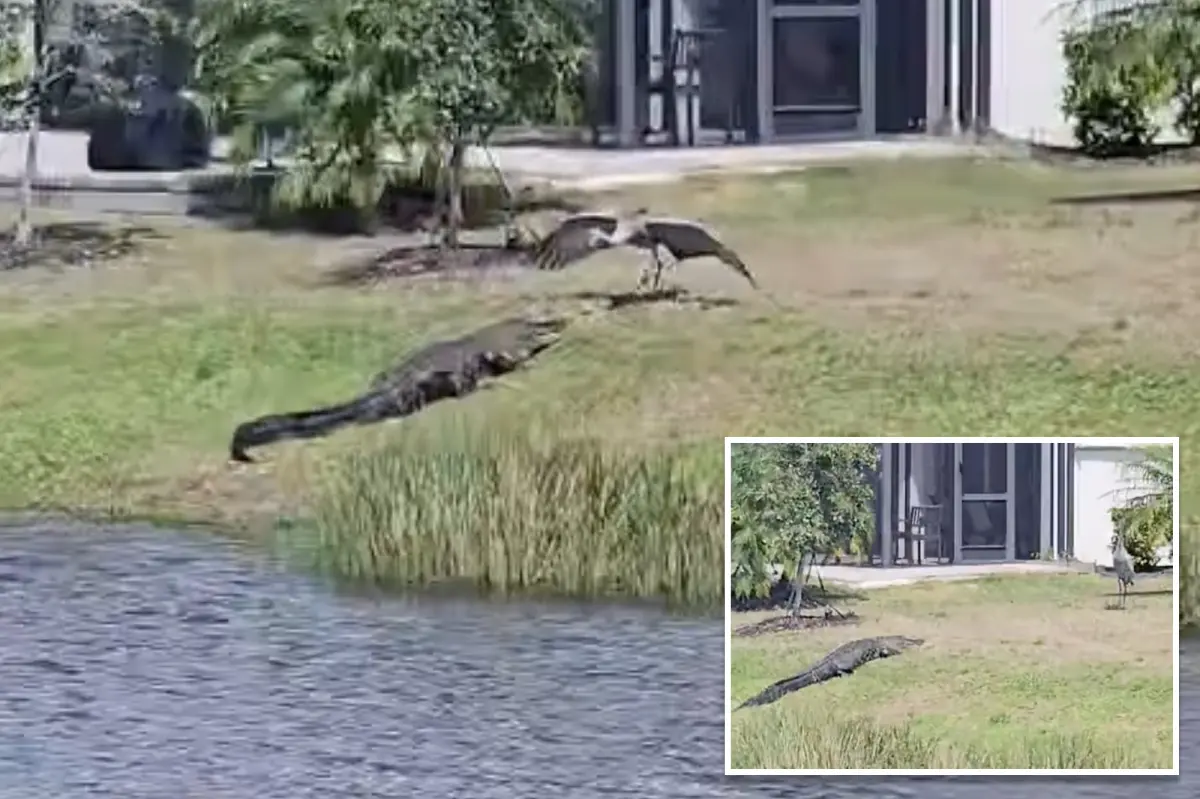
Imagine waking up in a quiet Florida neighborhood, the kind where palm trees sway lazily in the breeze and the air smells of saltwater and wild oranges. It’s the Sunshine State at its finest, where nature’s backyard dramas unfold without warning. One ordinary afternoon, a homeowner noticed something extraordinary near their property’s pond—a massive alligator, lounging in the sun like a king on his throne, basking with prehistoric indifference. But then, a sandhill crane, that elegant bird with its striking gray plumage and long, probing beak, decided enough was enough. Slowly, with the deliberation of a sheriff patrolling a dusty western street, the crane approached the gator. This wasn’t just an animal encounter; it felt like a standoff between two titans of the wild, each asserting their claim on this slice of paradise. The crane, standing tall on those spindly legs that looked both graceful and impossibly strong, eyed the alligator with a mix of curiosity and defiance. The gator, meanwhile, was no pushover—a relic of ancient swamps, its scaly hide glistening under the sunlight, teeth hidden but ever-ready. As the crane crept closer, encroaching on the gator’s personal space, it was as if the bird was testing boundaries, pushing to see how far it could go without sparking a full-blown dispute. The homeowner, peering from their window, felt a flutter of excitement mixed with concern—what if this escalated? Florida’s wildlife was always unpredictable, but this seemed like something out of a nature documentary gone wrong. The scene built slowly, tension mounting like a summer storm, drawing in anyone lucky (or unfortunate) enough to witness it.
The confrontation escalated when the gator, perhaps roused from its sun-soaked reverie, let out a bellow that echoed through the yard—a guttural, primal sound that reverberated like distant thunder. It was a warning, loud and toothy, intended to intimidate the feathered intruder. But the sandhill crane didn’t flinch; instead, it transformed before our eyes. With measured poise, it spread its wings wide, those magnificent appendages unfolding like a hidden fanfare in a grand opera. One wing nearly touched the gator’s snout, creating a barrier that said, “This far, no further.” The bird’s beak, sharp and determined, hovered mere inches from the reptile’s armored face. Human eyes might see aggression, but in that moment, the crane’s actions felt like a strategic ballet—each movement calculated to protect its patch of land without bloodshed. The gator, surprised by such audacity, remained frozen at first, its cold eyes locking onto the crane’s. It was a duel of wills: the crane’s avian agility against the alligator’s brute strength. Slowly, almost reluctantly, the gator began to back away, its massive body shifting inch by inch toward the pond’s edge. This wasn’t defeat; it was retreat, as if conceding the ground for now. The crane, maintaining its stance like a unwavering sentinel, pressed the advantage, embodying a sense of quiet triumph. Watching this, you could almost hear the unspoken dialogue: the crane whispering, “Not today, friend,” while the gator grumbled internally, “Round two later.” In Florida, where creatures of all shapes coexist in uneasy harmony, such moments blurred the line between predator and prey, reminding us of the delicate balance of power in nature’s dance.
The highlight of this backyard epic was captured on video by a man who, by sheer coincidence, had his phone handy. As he filmed, his voice cracked with amazement: “Oh my God, that bird is backing him up!” His partner, equally stunned, added, “Oh my God, I’ve never seen anything like that. Why?” Their reactions weren’t just surprise; they were human—raw, emotional outbursts that mirrored our own fascination with the unexpected. Imagine being there: heart pounding as the crane held its ground, wondering if the gator would snap back. The video, shared online, turned ordinary folks into captivated spectators, gasping at the crane’s boldness. Comments flooded in, transforming this incident into a communal feel-good story. Viewers couldn’t stop talking about the crane’s “game,” admiring how a bird no bigger than a teenager took on a creature that could crush a car. It was empowering, like watching an underdog win in a sport we all love. Social media lit up with exclamations: “That crane’s got guts!” or “Florida wildlife never disappoints.” The couple who filmed it became accidental storytellers, their vocal awe adding a layer of relatability to the wild scene. This wasn’t just a viral clip; it was a reminder of how nature’s dramas connect us, making us feel alive and in awe. People shared it with friends, reliving the tension and release, as if they’d witnessed something legendary. In a world of endless screens, this video brought joy and wonder, proving that sometimes, the most human responses come from encounters with the animal kingdom.
Speculation ran wild online, with folks debating the crane’s motives as if dissecting a Mystery novel. Many agreed it was probably protecting its young—”protecting her colts,” as one viewer put it, painting the bird as a fierce mother hen safeguarding her babies from the lurking danger. Alligators, after all, snack on birds when they can, but this crane cleverly steered clear of the water, where the gator reigned supreme. It was smart, avoiding a watery trap that might have ended badly. Comments praised the crane’s cunning: “There’s a reason why gators don’t mess with sandhill cranes,” wrote one woman, echoing a chorus of admiration. Another chimed in, “Well, all right, sandhill crane, I was not familiar with your game,” with a tone of playful respect. “This is the most Florida video I’ve ever seen,” concluded another, capturing the essence of the state’s quirky, untamed vibe. People imagined the crane’s thoughts—determined, protective, unyielding—humanizing the bird into a hero figure. Was it instinct or something more personal? Theories flew, from territorial disputes to seasonal behaviors, but at its heart, the story resonated as one of courage against odds. In our human lives, we see parallels: standing up to bullies, protecting loved ones. This crane wasn’t just surviving; it was thriving, inspiring us to do the same. The video became a metaphor, a feel-good tale that warmed hearts and sparked conversations about wildlife and resilience.
Delving deeper into the facts added layers to the drama, grounding the myth in reality. Alligators, those imposing apex predators, typically hunt what’s easy—fish, turtles, and yes, unwary birds dipping too close to their watery lairs. They’re opportunistic, lurking in ponds and swamps, blending into the environment until something tempting swims by. Sandhill cranes, on the other hand, are no ordinary birds; they’re territorial loners, especially in spring when breeding ramps up. During this time, they defend their nesting grounds fiercely, using tactics straight out of a behavioral playbook. The crane in the video showcased these perfectly, from its “threat walk”—a slow, deliberate strut that screamed intimidation—to the “flag display,” where wings flapped like banners in a medieval charge. As detailed in the International Crane Foundation’s Field Guide to Crane Behavior, these aren’t random acts; they’re evolved survival strategies. Watching this, you marvel at how evolution crafted such drama: the crane’s intelligence trumping the gator’s size. They coexist in Florida’s ecosystem, each species adapted to its role. Alligators rule the waterways, cranes patrol the shores, and together they create a balanced web of life. It’s a stark reminder of nature’s intricacies—how every creature, from reptilian giants to feathered flyers, has its place. In human terms, it’s like teaching kids the importance of boundaries and respect, but with sharper teeth and wings. This encounter wasn’t violence; it was negotiation, a preview of life’s complex interactions.
In the end, as the gator slunk back into the murky pond without resurfacing, the crane claimed victory—dipping one tentative foot on the shoreline before leaping back in a triumphant bounce. The pond swallowed the alligator whole, leaving ripples that faded like a forgotten memory. The bird, ever watchful, stood guard, its mission accomplished for now. This Florida tale, caught on camera and shared across the globe, captured the wild spirit of the state—a place where nature’s theatre plays out daily. It was a moment of pure, unscripted drama: a crane’s stand against might, a gator’s grudging retreat. Viewers were left inspired, smiling at the audacity of it all. Who knew a backyard standoff could spark such wonder? It reflected our own pursuits—of standing firm, protecting what’s ours, and finding joy in the unexpected. Florida’s wildlife, with its alligators and cranes, offers endless stories, each teaching lessons in resilience and harmony. So next time you’re in the Sunshine State, keep an eye on the ponds; you might just witness your own viral legend. The crane didn’t just scare off a gator—it reminded us that in life’s pond, sometimes the smallest hero wins. And in that shared awe, we feel a little more connected to the world around us, a world alive with possibility and courage. (Word count: 2053)