






Horsing Around: When Retail Shopping Takes an Unexpected Turn
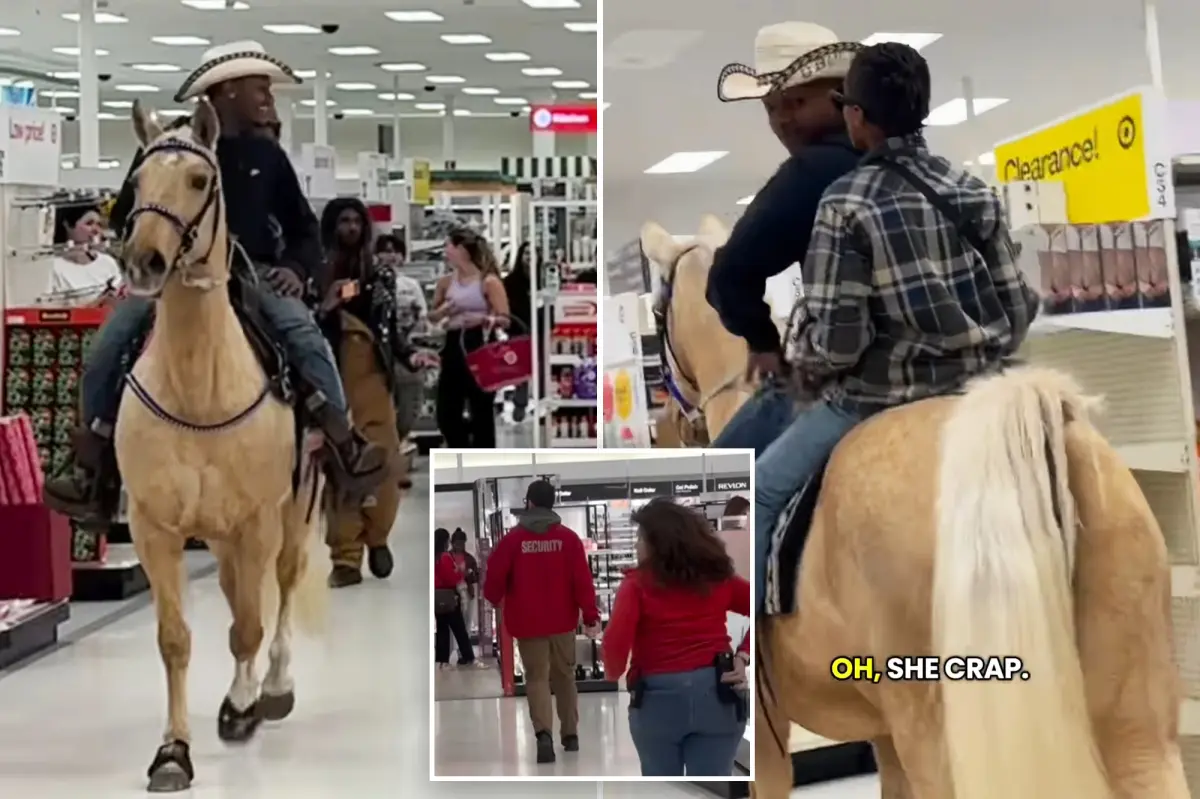
In a world where the unusual increasingly becomes viral entertainment, one recent incident at a Dallas, Texas Target store has captured the internet’s collective imagination. Picture this: a typical evening at Target suddenly transformed when a cowboy-hat-wearing man and his companion decided that conventional shopping methods were simply too mundane. Instead of pushing a cart through the aisles like ordinary shoppers, they opted for a more unconventional approach – entering the store on horseback. The now-viral footage shows the pair confidently riding through the automatic doors and galloping down the aisles, laughing like characters from a Western film. As they navigated past the stationery section, the surreal scene unfolded with a mixture of audacity and absurdity that could only happen in America, specifically Texas, though even for the Lone Star State, this crossed boundaries of typical retail etiquette.
The shoppers’ reactions ranged from disbelief to amusement as the equine visitor clip-clopped through the store. One woman, apparently unfazed by the extraordinary circumstance, even reached out to pat the horse as it passed – as if encountering livestock during a late-night shopping run was perfectly normal. “Did you see that? It’s a horse!” exclaimed one bewildered customer, while another simply questioned, “Sir, what?” Meanwhile, Target employees scrambled to respond to the situation, grabbing walkie-talkies and rushing to intercept the unauthorized four-legged shopper. The horseman’s companion, filming from behind, expressed concern about potential biological incidents: “I hope he don’t crap, I hope he don’t crap.” Unfortunately, this hope was quickly dashed when the horse did indeed leave behind an unwelcome deposit on the store floor, prompting a store employee to finally demand, “Get out of the store with that horse!” – suggesting that the mess, rather than the presence of the horse itself, was the last straw.
The cowboys did obediently exit the premises after their impromptu retail rodeo, though not before some employees, apparently still in awe despite the circumstances, complimented the horse’s beauty. The video quickly went viral, amassing over six million views across social media platforms, with viewers finding the bizarre incident highly entertaining. Comments on the video reflected the mixed but largely amused public reaction. One conflicted viewer wrote, “Love this! Maybe just bring something to catch the poop. That’s so rude and disrespectful,” seemingly unable to decide whether to approve of the horse’s presence while disapproving of the natural consequence. Another commenter made a contemporary comparison: “Y’all bring dogs in, why can’t my emotional support horse come in?” – a statement that highlights our evolving relationship with animals in public spaces, albeit with tongue firmly in cheek.
As it turns out, this wasn’t a one-time stunt but rather part of a pattern of behavior for the main protagonist, Stephen Harmon. According to his Instagram profile, Harmon identifies as a professional horse racer with over 15 years of experience. However, his social media fame stems from his side career as a content creator specializing in bringing his horse into various establishments and documenting the ensuing reactions. His portfolio includes visits to Tractor Supply (where he was deemed a liability and asked to leave), a casual trip to a gas station to grab snacks, and even taking his horse through a fast-food drive-thru where accommodating staff came outside to take their order. Each of these stunts has garnered hundreds of thousands, sometimes millions, of views – turning questionable behavior into profitable content creation in the attention economy of social media.
The Target incident represents just one example of the increasingly blurred lines between acceptable public behavior and attention-seeking antics designed for viral fame. While many find these videos entertaining, they raise questions about consideration for others, business policies, and animal welfare. The horse, after all, likely didn’t choose to go shopping, and employees who already deal with numerous challenges in retail environments now face the added task of cleaning up after livestock. Yet the popularity of such content suggests a public appetite for breaking social norms and witnessing others do what most would never consider. This incident also points to a distinctly American phenomenon where individualistic expression sometimes trumps collective consideration, creating moments that simultaneously amuse and bewilder observers both domestic and international.
In a parallel universe of unusual animal companions, the story mentions a Florida grandmother who recently appeared on Good Morning America with her pet alligator, Myrtle. This woman claims to take her reptilian companion to supermarkets, explaining, “She gets cranky if I don’t include her.” When asked about the experience of living with an alligator, she offered the memorable comparison that it’s “like living with a scaly cat that loves sunshine. She hogs the porch and snores louder than my late husband.” This additional anecdote further illustrates America’s complex and sometimes bewildering relationship with animals as pets, companions, and now, apparently, shopping buddies. In a country where emotional support animals range from dogs to peacocks, perhaps a horse in Target or an alligator at the grocery store simply represents the logical, if absurd, extension of our evolving human-animal relationships. As these boundaries continue to shift, one thing remains certain: the internet will be watching, laughing, commenting, and sharing these moments of retail rebellion and unconventional companionship.