






Fear and Chaos at Brown University: The Human Experience of an Unexpected Tragedy
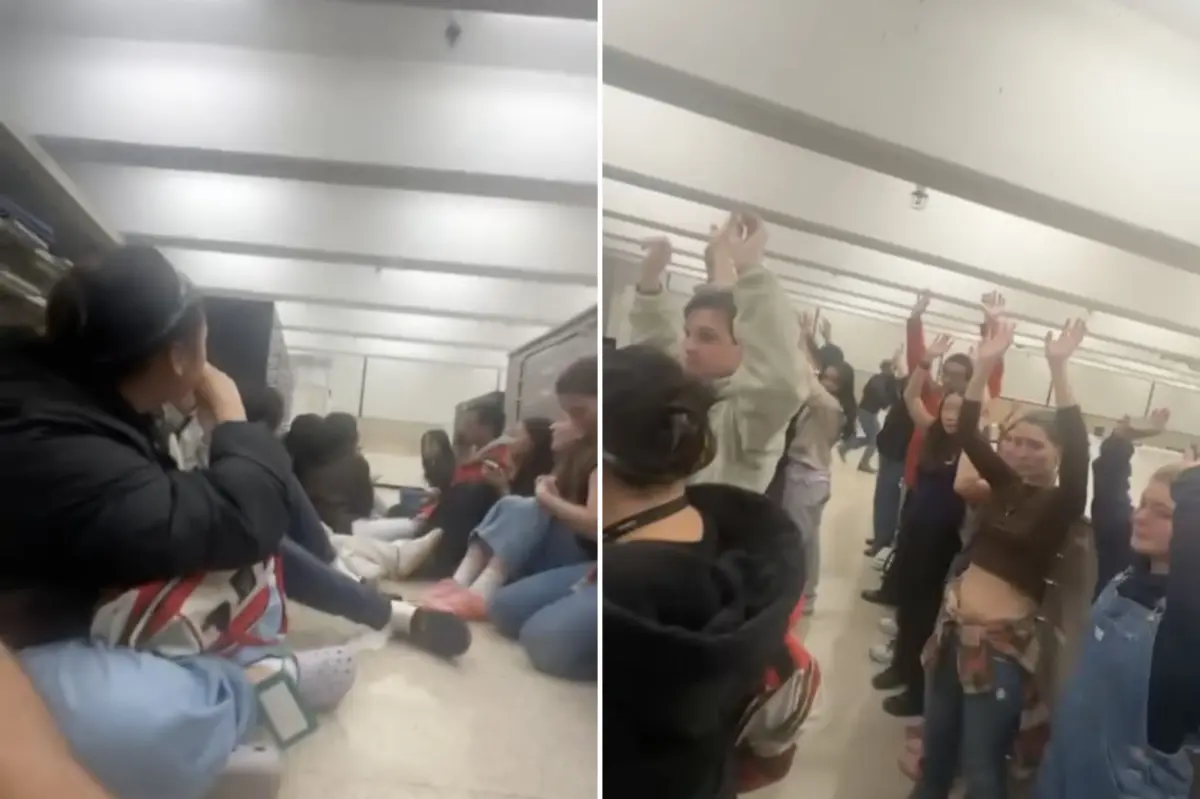
In a heart-wrenching scene that has become all too familiar in American society, Brown University students found themselves living through moments of pure terror as what appeared to be a shooting incident unfolded on their campus last Saturday. Exclusive footage obtained by The Post captures the raw human experience of these young people—not as statistics or headlines, but as individuals experiencing profound fear in what should have been a sanctuary of learning. The video shows visibly shaken students huddled together in the university library, their faces etched with anxiety and uncertainty as loud bangs echoed outside their refuge. These students, who had likely arrived at the library that day with nothing more on their minds than upcoming assignments or exams, were suddenly confronted with what many Americans now fear might happen in any public space: the threat of indiscriminate violence.
The footage painfully documents the psychological impact of such events, even as they unfold. More than a dozen students can be seen crouching between library shelves—places normally associated with quiet contemplation and academic pursuit now transformed into makeshift shelters. Many appear teary-eyed, their breathing shallow and rapid, exhibiting the physical manifestations of the fight-or-flight response being triggered in real-time. The camera captures at least seven distinct loud bangs resonating through the building, each one causing visible flinches among the huddled group. Though the exact source of these sounds remains unclear from the video alone, their effect on the students is unmistakable—each bang reinforces the terrifying possibility that someone with lethal intentions might be nearby. This visceral human response to perceived danger cuts across all backgrounds and beliefs, reminding us of our shared vulnerability in such moments of crisis.
The atmosphere of fear is suddenly interrupted by the arrival of police officers in SWAT gear, armed with firearms—a sight that in normal circumstances might itself be alarming but in this context represented potential salvation. Their entry marks a pivotal emotional shift in the video, as the students’ expressions change from pure fear to a complex mixture of relief and continued anxiety. “Obviously there’s something going on, we’re here to help you… just listen to our commands, we’ll get you out of here now,” one officer can be heard saying, his voice striking a balance between authority and reassurance. This moment captures the strange duality of modern crisis response—heavily armed tactical units becoming, paradoxically, symbols of safety in our most vulnerable moments. The interaction between the officers and students represents the thin line between chaos and order that exists in such situations, where clear communication becomes literally life-saving.
The aftermath of the initial crisis unfolds with a procedural efficiency that feels both comforting and surreal to the students involved. The officers calmly instruct the group to quickly gather their belongings before evacuation—a mundane request in extraordinary circumstances that creates a bridge back to normality. The video shows the young people scrambling to collect backpacks and personal items, their movements now urgent but purposeful rather than panicked. This brief transition captures something profoundly human—even amid potential life-threatening danger, we still feel connected to our personal possessions, these artifacts of our daily lives and identities. There is something poignantly ordinary about watching these students, who moments before were fearing for their lives, now concerned about leaving behind a laptop or textbook, highlighting how the mind grapples to maintain connections to normal life even in the most abnormal situations.
What makes this footage particularly devastating is the knowledge that this was not a false alarm or drill, but part of an actual incident that reportedly left two people dead and eight critically injured, according to The Post’s reporting. Each face captured in this video represents a life fundamentally changed—young people who entered adulthood in an era where such violence has become a tragic feature of American life. For these students, the Brown University library will never again be just a place of study; it now carries the weight of this collective trauma, an invisible but indelible mark on the campus geography and community psychology. Their experience joins the growing catalog of similar events at educational institutions across the country, from elementary schools to universities, creating a generational consciousness shaped by the possibility of such violence erupting in spaces meant for learning and growth.
As the video concludes with students rushing to follow police instructions, we’re left to contemplate the longer journey ahead for this community—the one that begins after the immediate danger has passed and the cameras stop rolling. The psychological aftermath of such events often extends far beyond the day itself, manifesting in changed behaviors, heightened anxiety, and a altered relationship with public spaces. These students will return to classes, continue their education, and move forward with their lives, but they carry with them now an experience that most hope never to have. Their story represents both the terrible specificity of this incident at Brown University and the broader American experience of gun violence that continues to affect communities across the nation. In their faces, we see not just the students of one university, but a reflection of a society still searching for answers to prevent such moments of terror from becoming an expected part of our collective experience.