


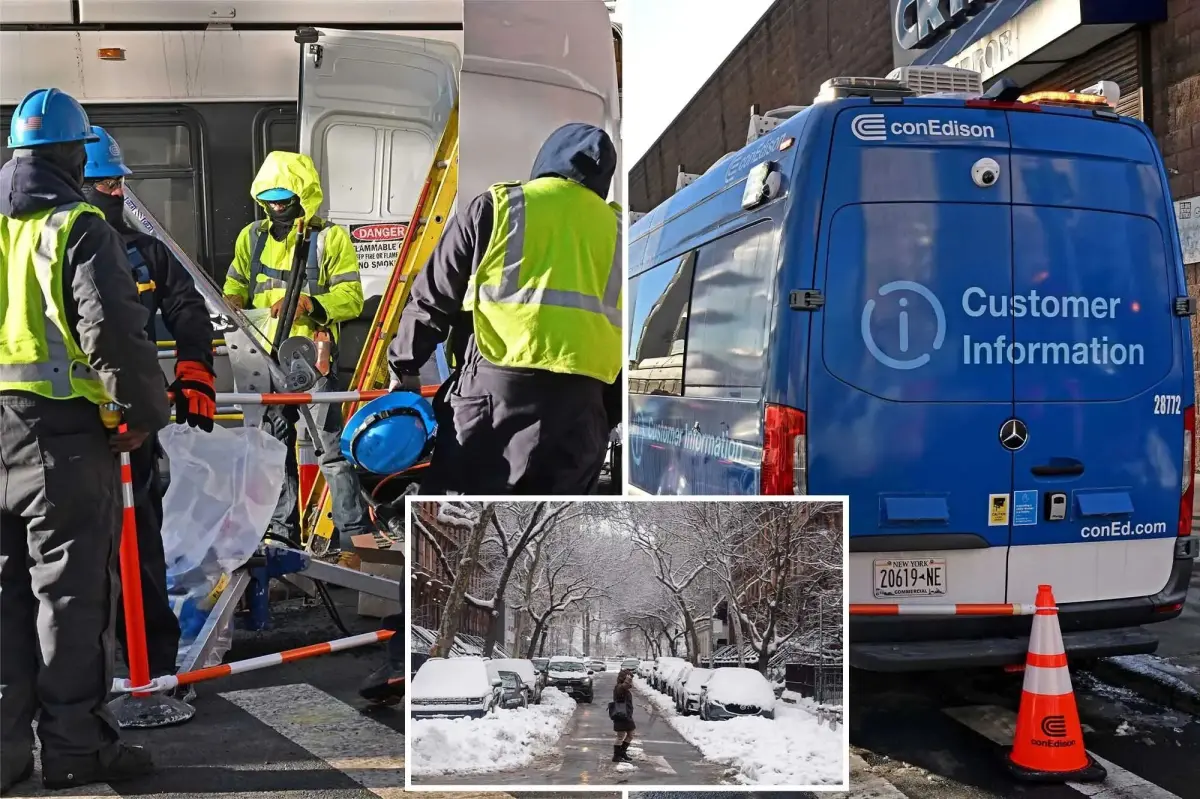
During the biting chill of a winters storm that gripped New York City in late January, a unexpected power outage plunged parts of Brooklyn into darkness for days. Residents in neighborhoods like Park Slope, Gowanus, and Boerum Hill woke up to silent refrigerators, flickering power gone, and the harsh reality of subzero temperatures creeping through their homes. For many, this wasn’t just a temporary inconvenience—it was a fight for survival as newborns cried in the cold, elderly neighbors shivered under layers of blankets, and families rationed flashlights while sharing scant heaters. Con Edison, the utility giant responsible for delivering that essential lifeline of electricity, left thousands without power, and now, in the aftermath, their customer service—or lack thereof—has left residents feeling abandoned and unheard. Stories are emerging of denied reimbursement claims, endless hold times, and a bureaucracy that seems indifferent to the real human suffering caused. It’s not just about lost power; it’s about trust shattered, lives disrupted, and a company that appears more focused on corporate priorities than empathizing with the people they serve. James Kilmeade, a 30-year-old Park Slope resident, embodies this frustration. He described the ordeal with a mix of exasperation and sorrow, recalling how the outage forced him to make heart-wrenching decisions to protect not just his comfort, but the life of his beloved pet. Imagine a young man, bundled in layers, making frantic calls from a darkened apartment, only to be met with dismissive voices on the other end. Kilmeade spent two nights in a hotel, valuing his 9-year-old bearded dragon above his own warmth—the reptile’s heat lamp powered by electricity had betrayed them, leaving the creature vulnerable in the frozen void. He didn’t just smuggle the pet into the hotel under a blanket; he did it with a sense of urgency, knowing that without intervention, his scaly companion could perish from the relentless cold. The hotel stay cost him hundreds he could ill afford, yet Kilmeade hasn’t even bothered to claim that reimbursement. His primary request was for $200 to cover spoiled food—groceries in his fridge turned rotten amid the blackout that lasted nearly a week. But the interaction with Con Edison felt dehumanizing; agents wouldn’t provide names or IDs, refused to return calls, and left him dangling in uncertainty. After holding for hours, sometimes spanning days, Kilmeade felt like an afterthought, a number in a system that prioritized efficiency over empathy. This wasn’t a minor hiccup; it was a profound betrayal of the social contract utilities like Con Edison are supposed to uphold.
Residents across these impacted areas shared similar tales of frustration, painting a picture of a community resilient yet worn down by systemic neglect. One anonymous poster on social media captured the collective dismay: “We’re not just customers; we’re human beings trying to live our lives.” The outage, sparked by melting snow and salt corroding underground wires in a manhole fire, exposed vulnerabilities in infrastructure that seemed overlooked in a city accustomed to harsh winters. Salt on roads is commonplace, a necessary evil to clear ice, yet Con Edison’s stance that such events aren’t “qualifiable” for recompense left many questioning fairness. Residents like A.C., who wished to remain partially anonymous out of ongoing dialogue, detailed how the company denied his claim outright, citing the salt corrosion as an unforeseeable external factor. But to affected families, it felt foreseeable—New York winters are notorious for such conditions, and the utility’s equipment should withstand them. A.C. spent precious time on hold, arguing that the company owed compensation for spoiled food and disrupted lives, yet was stonewalled by a policy that favored corporate bottom lines over customer well-being. The human cost rippled outward: elders without power couldn’t recharge medical devices, parents juggled homeschooling without lights, and small businesses shuttered, compounding financial woes. In a city already strained by rising costs, this felt like yet another blow, where everyday people bore the brunt of corporate shortcomings. Con Edison responded publicly, acknowledging the outage affected hundreds and promising payments for “validated claims” lasting over 48 hours, but their reimbursement policy—up to $655 for spoiled goods or prescriptions after 12-hour outages—seemed begrudgingly narrow. Residents wondered why such caps existed when their losses stretched into thousands, from rotting perishables to emergency relocations. The company’s representative noted the process was underway, but without detailed timelines, it bred resentment. Families envisioned the piles of ruined meat, dairy, and produce tossed into trash bins, each item a reminder of wasted money, while prescriptions expired, jeopardizing health. Humanizing this, picture a single mother calculating her grocery budget, stretched thin by the pandemic’s lingering effects, now facing empty shelves and no refund in sight. Or a retiree, dependent on medications kept cold, panicking without electricity, their dignity chipped away by unresponsive calls.
Compounding the outrage, Con Edison received approval to raise rates—a 10.4% hike for electricity and 15.8% for gas over three years, translating to an average New Yorker paying $600 more annually by 2028. This news landed like salt in an open wound for Brooklynites still reeling from the outage. It felt hypocritical: how could a utility demand more money while leaving communities in the lurch? Hanif wrote passionately about neighbors carrying food up stairwells by flashlight, sharing blankets in communal efforts to stay warm, and boiling water on stoves that flickered unreliably. These weren’t heroes from a dystopian novel; they were real people—teachers, nurses, students—adapting to an unfair situation. The letter, co-signed by six lawmakers, demanded Con Edison reconsider denials and outline preventive measures, emphasizing that residents shouldn’t “shoulder the burden of infrastructure failure.” For affected families, the letter represented a glimmer of hope, a collective voice amplifying their individual struggles. Humanizing the lawmakers’ stance, envision Hanif, a Brooklyn native with roots in the community, visiting darkened homes, listening to stories of frozen pipes and lost incomes. She didn’t see policy; she saw faces—tear-streaked mothers, exhausted fathers—urging a system change to avert future disasters. The demand for a prevention plan wasn’t abstract; it stemmed from tangible fears of recurring chaos, where salt-damaged wires could strike again during the next freeze.
In the broader context, this incident highlights a disconnect between big energy corporations and the communities they serve, where rate hikes for profit seem prioritized over service reliability. Residents expressed a mix of anger, resignation, and existential dread—how many more outages until real change? Kilmeade’s unreturned calls symbolize a larger failure of accountability, where people like him, trying to protect a pet that brought joy amid loneliness, end up feeling invisible. The reimbursement denials strip away dignity, reducing personal losses to bureaucratic checkboxes. Yet, stories of community resilience shine through: neighbors checking on one another, hotlines buzzing with shared horror stories, and social media threads viraling empathy. Humanizing this means recognizing the emotional toll—the anxiety of uncertainty, the physical exhaustion of bundling kids into cars for warmth, the financial scramble for replacement items. Con Edison’s apology, buried in press releases, feels hollow; residents yearn for authentic dialogue, perhaps town halls or personal resolutions. As winter fades, the outage lingers as a cautionary tale, urging vigilance against complacency.
Ultimately, this episode underscores the fragility of modern life in an urban powerhouse like Brooklyn, where reliance on utilities intertwines with human vulnerability. The cold snap amplified existing inequalities, exposing how poor infrastructure disproportionately impacts low-income and vulnerable populations. James Kilmeade’s experience with his bearded dragon, a creature cherished like family, adds a poignant layer—animals, too, suffer in silence. Residents like A.C. empathized with the hotel grabs, the spoiled food aromas wafting from trash cans, etching memories of uneaten meals into their psyches. The City Council’s push for reconsideration offers optimism, but only if Con Edison listens, truly humanizing their approach by valuing stories over statistics. In a world of advancing technology, a company known for powering dreams should prioritize fixing the nightmares, ensuring no one else freezes in the dark. Advocacy groups are mobilizing, petitions circulating to pressure for better service— a testament to community’s unyielding spirit.
Looking ahead, this blackout serves as a wake-up call for systemic overhauls, from reinforced underground systems to transparent reimbursement processes. Human lives hinge on electricity; denying fair compensation isn’t just poor service—it’s a moral failing. Brooklynites, scarred but stronger, are demanding more: empathy in customer interactions, proportional payouts, and proactive maintenance to prevent “foreseeable” disasters like salt corrosion. Kilmeade, still waiting for a callback, embodies hope—he’s not giving up, sharing his story to inspire others. In the end, incidents like this bridge divides, fostering unity as people realize shared struggles against corporate giants. Con Edison’s next moves will define if they learn from this, or repeat history, leaving more humans and their pets out in the growing darkness.