




Broadway Legend Nat Horne Fights to Keep His Hell’s Kitchen Sanctuary
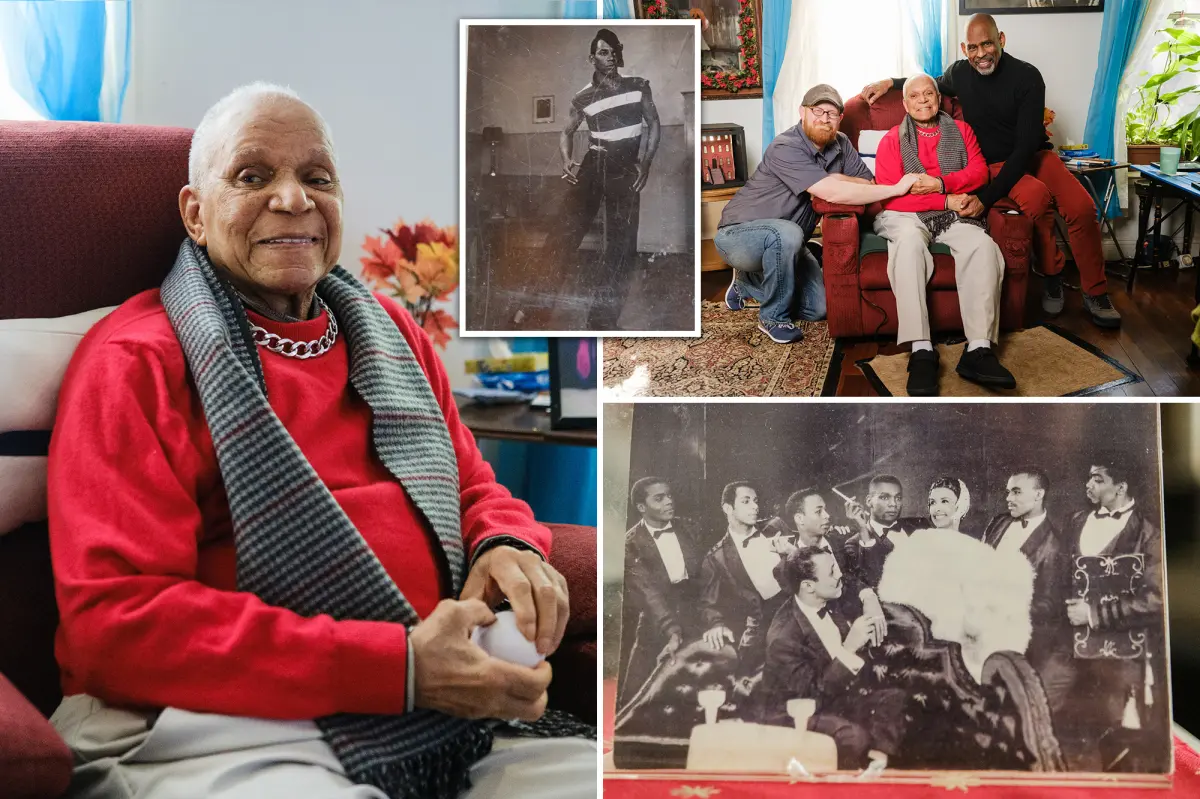
At 95 years old, Nat Horne, an original member of the Alvin Ailey American Dance Theater and a Broadway icon, is facing the possibility of losing the Hell’s Kitchen apartment he has called home for over five decades. As Horne approaches his 96th birthday in December, he fears being forced to leave his beloved sanctuary due to financial constraints. “I’ll probably die if they take me out,” Horne confessed with the raw honesty that has defined his character throughout his remarkable life. His third-floor walk-up on 47th Street isn’t just an apartment—it’s a living museum of American theatrical history. The walls are adorned with movie posters, awards, and photographs of celebrities he worked with and mentored, including Lena Horne, Martin Sheen, and Laura Bacall. Despite battling dementia, legal blindness, and recovering from a hip replacement, Horne remains remarkably vibrant and lucid, still performing on a YouTube show hosted by his neighbor and former student. His presence in the neighborhood has been so constant and cherished that locals have affectionately dubbed him the “Mayor of 47th Street.”
Long before he became a fixture in Hell’s Kitchen, Horne was breaking barriers as the first Black member of the US Army’s Special Services entertainment branch during the Korean War. After uplifting troops’ spirits abroad, he arrived in New York City to pursue his passion for the performing arts. His subsequent career reads like a history of mid-century American dance and theater: he performed in numerous Broadway shows, joined the groundbreaking Alvin Ailey American Dance Theater as an original member, worked on “The Sammy Davis Jr. Show,” and eventually established The Nat Horne School for Musical Theatre on 42nd Street in the 1970s. Throughout his career, Horne’s generosity was legendary. He opened his home to students who needed a place to stay or extra practice time, charging minimal rent that made living in Manhattan possible for young performers. “When we were in class, he would say, ‘You are gods and goddesses. Hold your head high and lift your chest. You deserve to be special,'” recalled Stanley Harrison, a former student who now visits Horne almost daily. “That generosity is infectious.” Beyond New York, Horne established the Muse Machine, an arts education program for youth in Dayton, Ohio, providing scholarships to promising students who otherwise couldn’t afford training.
A health crisis last spring revealed the precariousness of Horne’s situation when a fall in the middle of the night made it clear he needed round-the-clock care. This necessity has rapidly depleted the retirement savings he had carefully accumulated over decades of dancing and teaching. By August, Harrison realized that Horne only had enough money to make it through December of this year. The looming possibility of moving Horne to a nursing facility terrifies those who know him best. “This constant presence of humanity in space gives him energy and the willingness to continue,” Harrison explained. “If he were in a home—Nat can’t see people’s facial expressions—he isolates himself from social situations. I think he would probably live a very isolated existence or a very lonely existence, and probably would die a lot sooner.” The apartment Horne has occupied since 1968 represents far more than shelter; it embodies his independence, his history, and his ongoing connection to the vibrant community he helped nurture.
The response to Horne’s situation demonstrates the profound impact he’s had on countless lives throughout his long career. Former students, neighbors, and even strangers who recognize his cultural significance have rallied around the dance legend. A GoFundMe campaign has already raised an impressive $30,000, though organizers hope to reach $100,000—an amount they estimate would cover a full year of rent, in-home care, and medical expenses. Benjamin Magnuson, a Broadway performer who appeared in shows like Sweeney Todd and serves as Horne’s archivist, credits the dancer for his own success after receiving a scholarship to the Muse Machine. “He did that for many students every year,” Magnuson explains. “It’s not that I owe him a debt, it’s that I respect the idea of: it’s not a handout, it’s a hand up.” This philosophy of upliftment that Horne championed throughout his career is now being reflected back to him as the community mobilizes to preserve his ability to remain in his home.
Horne’s situation highlights the broader issues facing aging artists who contributed enormously to American cultural life but now find themselves financially vulnerable. Despite his illustrious career spanning Broadway, television, and dance education, the high costs of healthcare and Manhattan housing have overwhelmed his careful financial planning. The crisis also underscores the particular challenges faced by people of color who were pioneers in their fields during eras when compensation often didn’t match their contributions or historical significance. Yet amidst these sobering realities, the community’s response offers hope. The collective effort to keep Horne in his home represents a recognition that cultural elders deserve dignity and stability in their later years—especially those who, like Horne, devoted their lives to nurturing younger generations of artists.
Aware of the fundraising efforts on his behalf, Horne expresses both surprise at the outpouring of support and determination to remain where he belongs. “This is my home. I love it. I think it’s a wonderful place to be. And I don’t want to leave, I’ll tell you that right now!” he declared with characteristic spirit. As the campaign continues, those who know Horne’s story hope others will recognize what’s at stake: not just an elderly man’s housing situation, but the preservation of a living link to a pivotal era in American performing arts. The “Mayor of 47th Street” has spent decades creating community through art and generosity. Now, that community is fighting to ensure he can spend his remaining years in the sanctuary he created—surrounded by memories of his extraordinary life and the ongoing love of those whose lives he transformed.