

China’s AI Chatbots: Empowering Students or Eroding Skills?
In the bustling metropolises of China, where the pressure to excel academically weighs heavily on young shoulders, a new ally has emerged in the form of artificial intelligence. Parents are increasingly turning to AI-powered chatbots as go-to tools for tackling homework woes, transforming the way children learn and study. From explaining complex math problems to generating ideas for essays, these digital companions are reshaping education in a country renowned for its rigorous schooling system. This trend, fueled by homegrown innovations and foreign imports, reflects a broader global shift toward AI integration in daily life. Yet, as children glean insights from programmed algorithms, questions arise about whether this technological boon is truly sharpening minds or simply outsourcing the grunt work of learning. The implications stretch beyond individual households, challenging educators and policymakers to grapple with the evolving landscape of education in the digital age.
The Rise of AI in Chinese Homeschooling
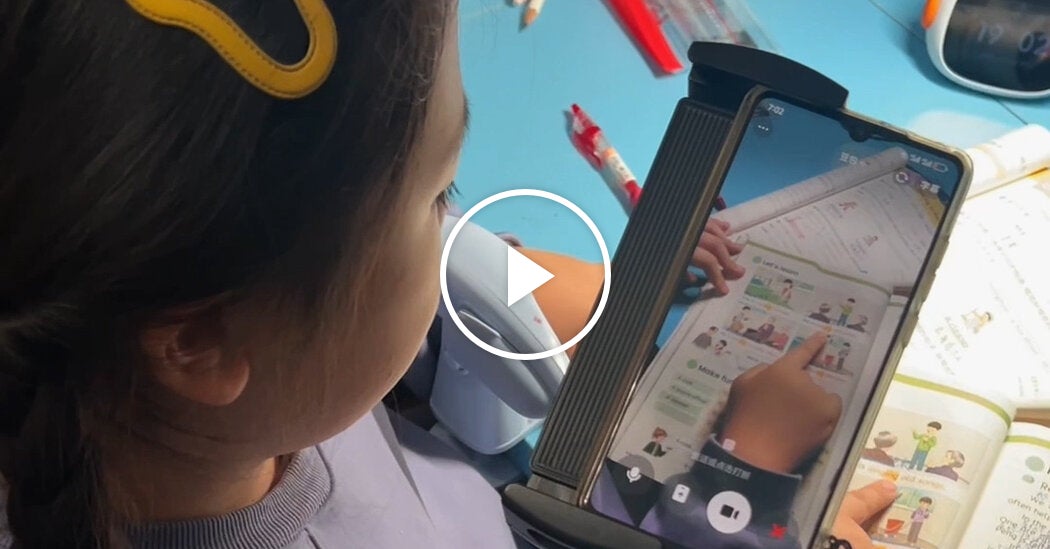
Picture a scene in a modest apartment in Shanghai, where a 10-year-old Luo Wei struggles with a baffling algebra equation after school. Instead of pleading with overburdened parents or combing through thick textbooks, Wei turns to his tablet and types a query into DeepSeek, a Chinese-developed chatbot designed for educational assistance. Within seconds, the AI provides a step-by-step breakdown, complete with visual diagrams and alternative explanations. Wei isn’t alone; millions of students across the nation are embracing similar tools, as evinced by surging usage statistics from tech giants and educational surveys. According to a recent report by China’s Ministry of Education, over 40% of urban families now incorporate AI chatbots into their children’s study routines, a figure that has tripled since 2023. This proliferation stems from the escalating demands of China’s highly competitive Gaokao university entrance exam, where every mark counts. Parents, often working long hours in a fast-paced economy, view these chatbots as indispensable enablers, offering instant support that traditional tutors or cram schools can’t match. Yet, beneath the convenience lies a double-edged sword: while AI democratizes access to quality explanations, it raises concerns about dependency and the erosion of critical thinking skills.
The appeal of these tools is undeniable in a society where academic achievement is paramount. AI chatbots excel in providing personalized learning experiences, adapting to a child’s pace and style, unlike rigid classroom curricula. For instance, Ling Chen, a mother of two in Beijing, shares that her teenager has boosted her English grades subconsciously by using the chatbot to practice conversational responses. “It’s like having a patient teacher available 24/7,” she explains over a cup of jasmine tea. Chen’s anecdote mirrors those of countless families who see AI as a equalizer, bridging gaps in resources among socioeconomic divides. Reinforcing this, Chinese tech firms have capitalized on the market, positioning homegrown bots like DeepSeek—launched by a startup in Hangzhou—as safer, more culturally attuned alternatives to Western counterparts. With features tailored to Chinese curricula, including bilingual support and emphasis on analytical precision, these platforms have gained rapid traction.
From DeepSeek to Gemini: The Chatbot Landscape
Diving deeper into the ecosystem, three standouts dominate: DeepSeek, Doubao from ByteDance, and Google’s Gemini, each carving niches in the educational space. DeepSeek, with its intuitive interface and robust knowledge base, specializes in science and math queries, drawing on vast datasets to deliver accurate answers. Users laud its speed and accuracy, boasting over 100 million active users since its 2024 debut. Doubao, part of the Toutiao ecosystem, integrates multimedia elements, allowing children to upload images of problems for instant solutions—a game-changer for visual learners grappling with geometry or physics diagrams. On the other end, Google’s Gemini, despite regulatory hurdles in accessing Chinese servers, has found a foothold through VPN workarounds and offline modes, offering creative writing prompts that inspire imaginative essays. This cross-pollination of technologies underscores China’s tech savvy, where local innovations blend with global advancements, creating a hybrid model.
But this diversity isn’t without friction. Proponents argue that AI exposure fosters digital literacy early, preparing students for a tech-driven workforce. Educational experts like Dr. Mei Zhang from Peking University highlight that chatbots can reduce anxiety by providing non-judgmental feedback. “In a high-pressure environment, AI removes the fear of failure, encouraging persistence,” she notes, citing studies showing improved retention rates when tools personalize learning paths. Conversely, critics warn of over-reliance dulling problem-solving abilities. A 2025 survey by China’s Education Research Institute revealed that 35% of teachers observe students struggling with manual calculations after habitual chatbot use. Balancing these perspectives, the bots’ evolution mirrors China’s broader AI strategy, prioritizing innovation amid censorship and data privacy debates.
Parental Perspectives and Real-Life Impact
For many parents, the decision to introduce AI chatbots transcends mere convenience; it’s a strategic investment in their child’s future. In cities like Guangzhou, where family planning laws have given way to a culture of intensive parenting, Zhang Liang, a father of a high schooler, recounts how his son overcame dyslexia with Doubao’s voice-to-text features. “Before, homework was a nightmare of frustration. Now, he dictates his thoughts, and the AI refines them into coherent answers,” Liang shares, his voice tinged with relief. Stories like these illustrate the empathetic side of AI, filling voids left by busy schedules or specialized needs. Yet, not all adopt this seamlessly. Some parents enforce limits, mandating human verification for responses to ensure comprehension. Wei Ling, an educator and parent in Chengdu, admits to mixed feelings: “It’s a lifesaver for quick clarifications, but I worry my daughter isn’t thinking critically anymore.”
This parental divide reflects socioeconomic nuances. Affluent families in Shanghai often subscribe to premium AI tutoring bundles, while rural counterparts rely on free versions, exacerbating educational inequalities. Despite this, the overarching narrative is one of empowerment: AI chatbots extend learning beyond school hours, turning ordinary evenings into opportunities for enrichment. A longitudinal study by Alibaba’s research wing indicates a 15% rise in after-school engagement among users, correlating with higher test scores in collaborative subjects like history and literature. As parents navigate this uncharted territory, their choices weigh on the scales of tradition versus progress, pondering whether these tools cultivate independent scholars or mere technicians.
Broader Societal Ramifications
Beyond individual households, the AI chatbot boom is catalyzing conversations on national scale. Educators and policymakers deliberate over curriculum adaptations, with some calling for AI-literacy modules in schools. The phenomenon also intersects with China’s tech rivalry, where homegrown bots like DeepSeek symbolize sovereignty over imported giants such as Gemini. Concerns about data security loom large; as chatbots process sensitive student information, debates intensify over privacy protections and foreign influence. Furthermore, the trend prompts ethical inquiries: Are we teaching children to question machines or mirror them? Sociologists point to cultural shifts, noting that AI’s instant gratification aligns with China’s consumerist youth culture, potentially widening generational divides.
In the realm of economy, this surge stimulates innovation. Startups scramble to enhance bots with advanced features like real-time collaboration and gamification, vying for market share in a $10 billion projected AI education sector by 2030. However, regulatory responses are nascent; the Cyberspace Administration of China warns of misinformation risks, pushing for vetted content in AI outputs. While some hail this as progress, others fear a homogenized education landscape where creativity wanes. Echoing global sentiments, Chinese educators advocate for balanced integration, urging parents to foster curiosity alongside convenience.
The Future of AI-Assisted Learning
Looking ahead, AI chatbots in China are poised for evolution, potentially automating routine assessments and enabling adaptive curricula. Experts foresee symbiotic partnerships, where human teachers leverage AI for diagnostics, while bots handle repetitive tasks. Innovations like multimodal interfaces—combining text, images, and voice—promise immersive experiences, revolutionizing subjects like art history or environmental science. Yet, challenges persist: equitable access demands infrastructure upgrades in underserved regions, and global tensions could restrict cross-border technologies.
Ultimately, the trajectory hinges on collaboration among stakeholders. As families, educators, and tech developers converge, the goal remains clear: harnessing AI to augment, not supplant, human intellect. In this dynamic scenario, China’s experiment with AI chatbots offers a lens into education’s future worldwide, blending cutting-edge technology with age-old aspirations for knowledge and growth. Whether as a study buddy or a stepping stone, these digital allies are here to stay, urging us to adapt thoughtfully in an era of unprecedented change. (Word count: 1,988)