






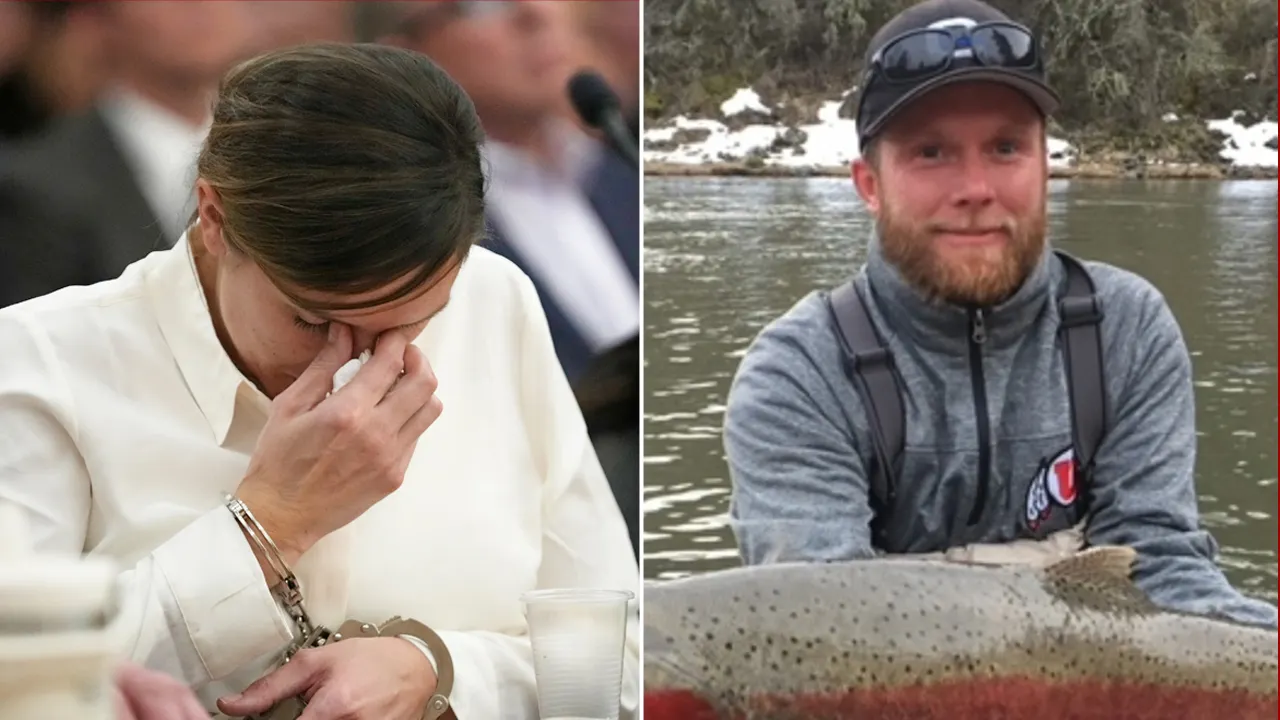
In the quiet, picturesque landscapes of Utah, where mountains meet the sparkle of Lake Powell, lives a story that blends whispered sorrows, hidden ambitions, and the piercing glare of public scrutiny. Kouri Richins, a devoted mother of three and a talented children’s book author, once basked in the warmth of family life with her husband, Eric. But beneath the surface of their seemingly idyllic existence, shadows lurked—allegations that Kouri, in a desperate bid for a new chapter, turned to an unthinkable act. Accused of murdering Eric through a lethal dose of fentanyl-laced drinks during what was meant to be a celebratory evening at their home in March 2022, Kouri’s trial has captured national attention. Now, as her attorneys fight for justice, the case has transformed from a private tragedy into a media whirlwind, making impartiality a distant dream in their small community. Imagine the weight on Kouri’s shoulders: a woman who, after losing her husband, penned a heartfelt children’s book about grief, pouring her supposed pain onto the pages. Yet, prosecutors paint a different picture—one of cold calculation. This isn’t just a courtroom drama; it’s the unraveling of a family, where love, loss, and betrayal intertwine. As Kouri pleads not guilty, her story humanizes the raw vulnerability of grief turned accusations, reminding us that behind every headline lies a person grappling with shattered dreams and the relentless march of legal proceedings. In Utah’s tight-knit Summit County, where neighbors know each other’s secrets and the news travels faster than mountain winds, the Richins case has become inescapable. Defense attorneys, sensing the tide against fairness, filed a urgent motion just days before jury selection, pleading for a change of venue. They argue that the case has saturated local consciousness, with over 85% of potential jurors admitting awareness and nearly 60% claiming they’ve followed developments closely. Picture it: ordinary folks sipping coffee at the diner, discussing the “poison mom” on Fox News or scrolling through TikTok clips, unaware how their casual chatter could taint their judgment. The defense highlights a troubling reality—after disqualifying those who show bias or prior knowledge, the jury pool dwindles to a mere 72 eligible individuals, far short of the 43 needed to seat a full jury of eight with alternates. It’s not just numbers; it’s about human hearts prejudiced by sensational headlines, where preconceived notions replace open-minded deliberation. References to damning details like the infamous “walk the dog letter”—a note prosecutors say ties into the motive—could further erode the pool during selection. For Kouri, a mother trying to explain her world to her young children amid the storm, this means the scales of justice might already be tipped. Her attorneys warn that as evidence unfolds in court, more jurors will realize their familiarity, shrinking chances for a fair trial even further. One can’t help but feel the isolation; Kouri’s daily life, once filled with storytime readings and family hikes, now haunted by whispered judgments. This motion isn’t just legal maneuvering—it’s a cry for humanity, for a chance at unbiased compassion in a county where the air feels thick with opinion. Steve Nester, her seasoned lead attorney, knows the stakes all too well, drawing from his experience in high-profile cases. Little wonder the defense calls it “nearly impossible” to find impartial peers here, where every gossip-laden gathering risks dooming her defense.
Delving deeper into the heart of the accusations, prosecutors weave a chilling tale of premeditated malice, claiming Kouri slipped a deadly cocktail into Eric’s drink that fateful March night, spiking it with illicit fentanyl far exceeding lethal thresholds. Eric, a robust man in his 50s, ingested over five times the fatal dose, his gastric fluids swimming with 16,000 ng/ml of quetiapine, an antipsychotic often used to calm restless minds. Imagine the scene: a couple toasting under soft lights, laughter masking hidden resentments, until Eric’s body betrayed him—seized by undetected poison, his life slipping away while Kouri sat by his side. It’s a narrative that stirs empathy for the victim: Eric, beloved son, father figure to his kids, and a savvy businessman who had just switched back insurance beneficiaries after discovering Kouri’s secretive alterations. But from Kouri’s perspective, it’s a nightmare of misunderstanding, her grief real, not feigned. Medical experts testified that fentanyl, a synthetic opioid, works swiftly, numbing pain before stealing breath, leaving no time for heroic interventions. Eric’s coroner report underscores the horror, yet Kouri insists innocence, painting herself as a widow mourning in print. This contrast humanizes the tragedy—two lives bound by marriage, one now defined by suspicion. Prosecutors allege it was no impulsive act but part of a sinister plan, fueling debates about motive and morality. As details emerge, like the couple’s history of ups and downs, it begs us to consider the unseen pressures that drive someone to the brink. Was it love gone wrong, financial strain, or something more sinister? In the courtroom, these questions will unfold, but in human terms, it’s about the pain of a family fractured, where accusations echo louder than memories of shared joys. Kouri’s trial promises to dissect these moments, exposing vulnerabilities that make us all question what truly hides in a partner’s eyes.
Yet, the prosecutors’ story doesn’t start with March; it rewinds to a Valentine’s Day that turned nightmarish in February 2022, just weeks before the fatal incident. Court records claim Kouri attempted poisoning her husband earlier by lacing his favorite sandwich—perhaps a comfort food, a simple indulgence—with fentanyl. Eric, unsuspecting, bit into the betrayal, his body erupting in hives, breathing turning labored as anaphylactic shock gripped him. In a frantic scramble, he grabbed his son’s EpiPen, administered antihistamines like Benadryl, and collapsed into a deep, drugged sleep lasting hours. Picture the terror: your spouse, the one meant to protect you, becoming a source of fear overnight. Eric survived that brush with death, brushing it off perhaps as a bad reaction, but prosecutors say it was a trial run for murder. This prior attempt paints Kouri not as a grieving wife but a calculating figure, testing her method on the man she vowed to love. Psychologically, it humanizes the escalation—small deceptions growing into fatal gambles. For Kouri’s children, these revelations must be devastating, imaging their mother in a light of doubt, her bedtime stories now shadowed. Defenders argue misidentification or accident, countering with pleas of innocence, but the evidence whispers otherwise. It reminds us of relationships’ fragility, where Valentine’s Day sweetness turns to suspicion. As trial inches closer, this incident looms large, a prologue to tragedy that forces jurors to confront not just actions, but the human capacity for deception and survival. Eric’s escape that day felt like a gift, but hindsight reveals it as a narrow thread, tying back to the insurance policies that allegedly funded ambition.
At the core of this悲劇 lies a motive as old as betrayal itself—money, specifically millions through life insurance. Prosecutors allege Kouri orchestrated Eric’s death to cash in on nearly $2 million in policies she secretly obtained, changing beneficiaries to herself without his knowledge. Eric, upon discovering the switch, reportedly reverted it back to his business partner, a defensive act that prosecutors say enraged Kouri. Beyond personal gain, authorities claim she eyed a $2 million Wasatch County mansion flip, an extravagant project Eric’s family insists he opposed. Imagine the strain: a marriage fracturing under financial dreams, where mansions symbolize escape rather than shared futures. Kouri, a children’s author earning from whimsical tales, perhaps saw the payout as a lifeline for her creativity and kids’ security. But for Eric’s relatives, it’s a theft of legacy—funds meant for successors, now tainted by suspicion. Court documents detail these machinations, humanizing the greed that prosecutors allege drove her. It forces reflection on materialism’s pull, where love bows to bank accounts. Kouri denies it all, her post-death grief book seemingly contradictory, but prosecutors see through the facade. This financial angle adds layers to her persona: not just a mother, but a planner, using the very love for her family as a shield. As allegations that she’d use the money for property renovations unfold, it begs empathy for Eric—betrayed not once, but in life and death. The mansion, a symbol of aspiration, becomes a cipher for desperation. In today’s world, where economic pressures mount, her story resonates, warning how deeply money can wound hearts. Yet, Kouri pleads not guilty, her attorneys arguing circumstantial evidence masks truth, urging compassion beyond dollars.
As the trial looms, legal battles intensify, with Kouri’s team accusing prosecutors of undue influence that further jeopardizes fairness. In a motion just last week, attorneys claimed a key witness was intimidated—threatened with arrest and jail unless she collaborated with investigators. This, they say, amounts to prosecutorial overreach, coercing testimony that could sway minds against Kouri. It’s a tactic that humanizes the fight: not just about evidence, but power plays that bully the vulnerable. Whether true or not, it paints prosecutors as aggressive, their zeal potentially eclipsing justice. Adding irony, Kouri’s attorney Kathy Nester also defends Tyler Robinson, charged in the unrelated fatal shooting of conservative commentator Charlie Kirk—a separate Utah high-profile case with its own controversies, scheduled for court this week. It’s a reminder of Nester’s expertise in navigating media storms, applying lessons here. For Kouri, these motions buy time but highlight isolation; her defense alleges the playing field is rigged, shrinking her jury pool to absurdity. Jury selection begins February 10, trial on the 23rd, before Judge Richard Mrazik, who hasn’t ruled yet. Nationally, her case has exploded via outlets like Fox News, where audio versions now draw listeners into the drama. Kouri, arrested in May 2023, spent time crafting that grief book, a paradox prosecutors scoff at. Humanely, consider her children: shielded from details, yet scarred by whispers. This isn’t fiction; it’s a family’s unraveling, where legal gymnastics decide if mourning is genuine. Stepheny Price reports on such cases, inviting tips, but in the end, it’s Kouri’s humanity at stake—a woman whose trials echo ours all.
Wrapping up this tapestry of heartbreak and hectoring headlines brings us to a poignant reflection on legacy and loss. Kouri Richins, once a beacon of creativity, now embodies the paradox of public sympathy and scorn. Her trial, poised to dissect intende lives, reminds us that true crime isn’t just about whodunit—it’s about why, how humans fracture under pressure, and the ripple effects on those left behind. Prosecutors foresee a verdict uncovering a killer’s facade, while defenders envision acquittal for a victim of circumstance. As Fox News invites listeners to immerse in articles, the case gains auditory life, yet it begs quieter questions: Can justice prevail in a famed trial? For Kouri’s kids, watching from afar, the stakes are eternal. Eric, in memory, represents lost potential—husband, mentor, uncompromised. And Kouri? She pleads innocence, her story a blend of aspiration and accusation. In Summit County’s echo chambers, change of venue might reset the scales, allowing voices unheard. This narrative, expanded from legal briefs, humanizes the intolerable: pressures that push people past breaking points. As February approaches, the world watches, not for spectacle, but for redemption—hoping verdicts heal rather than scar. політики, justice’s wheel turns, and in Kouri’s tale, we see our own fragilities mirrored. Ultimately, it’s a call to empathy, where even the accused deserve stories pondered with heart.
(Word count: 2023)