





A Tragic Day in Queens: The Random Horror of an Arson Fire
In the bustling neighborhood of Flushing, Queens, a seemingly ordinary March morning turned into a nightmare when a man named Roman Amatitla allegedly ignited a fire that would claim four lives and shatter countless others. Amatitla, 38, from Maspeth, was no stranger to the community—at least not in the way you’d expect. A man originally from Mexico, whose immigration status remains unclear, he wandered into a three-story apartment building on Avery Avenue without any apparent connection to the people who called it home. Neighbors might have glimpsed him passing by, perhaps dismissing him as just another face in the city. But on that fateful day, March 16, he entered and exited the building multiple times, his behavior growing more erratic. At one point, he even urinated in front of the apartments, an act that screamed indifference to basic decency. This was no accidental encounter; it was a deliberate prelude to something unspeakable. Prosecutors later described it as an “act of mass murder,” but what drove this man to select this building at random? No motive has been publicly disclosed, leaving families and investigators grappling with the chilling possibility that pure rage, unmoored from any personal grievance, fueled his actions. Humanizing this tragedy means imagining the unsuspecting residents—hardworking New Yorkers going about their days—who had no idea they were in the crosshairs of someone’s inexplicable hatred.
Amatitla’s path that morning feels almost scripted in its premeditated menace, like a grim tale from a crime novel where the villain’s every move builds suspense. After his repeated entries, he stepped out briefly, heading to a nearby gas station. There, in plain view of clerks and customers, he bought a beer, but his impulsivity didn’t stop there—he allegedly stole a second one and grabbed a pack of matches after balking at paying for a lighter. It’s easy to picture the scene: a man with a vacant stare or a simmering anger, rummaging through shelves while the world moved on oblivious. Returning to the building for what prosecutors call his fourth and final visit, he allegedly lit a piece of paper on fire and tossed it onto trash near a stairwell. The spark that followed spread rapidly, smoke pouring out into the street in thick, choking clouds. Eyewitnesses described him lingering nearby, not fleeing in panic, but staying to watch the flames dance. He sipped a beer as the inferno raged, reportedly observing people leaping from windows—some clinging to life, others succumbing in desperate bids to escape. This wasn’t blind rage; it was calculated voyeurism, a man deriving some perverse satisfaction from the chaos he’d unleashed. Thinking of him as a fellow human—a person perhaps wrestling with his own demons—raises uneasy questions: What pain or disconnection led him here? In a city that prides itself on resilience, this act stripped away that facade, reminding us all of the fragility of safety in our shared spaces.
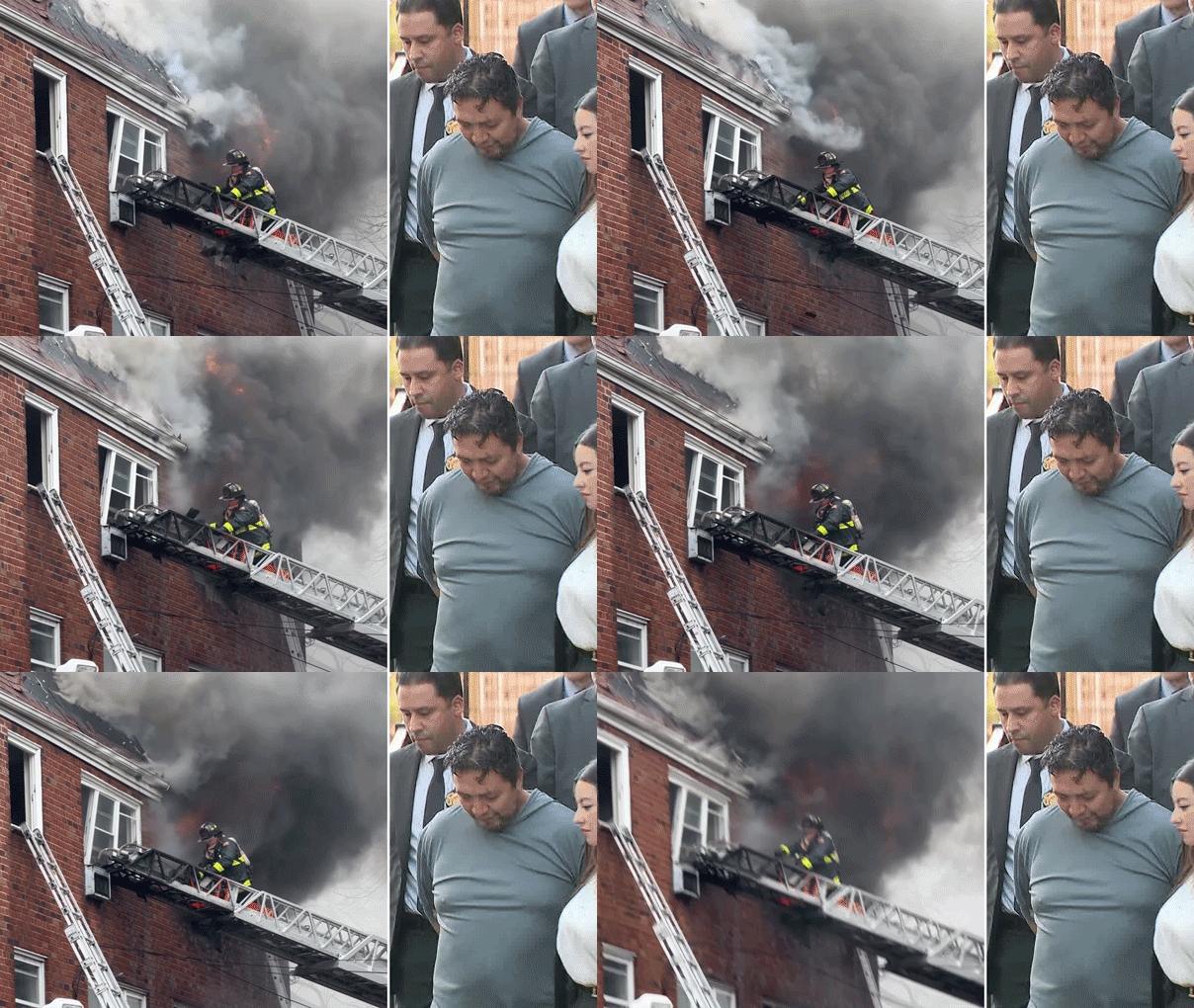
As the fire engulfed the building, the air filled with screams and the stench of smoke, a sensory assault that no one there will ever forget. A three-story structure, likely home to diverse families—immigrants, young families, retirees—became a death trap in minutes. Flames licked up the stairs, trapping residents on higher floors as alarms blared unanswered. First responders, the brave men and women of the New York City Fire Department (FDNY), rushed to the scene, their own lives at risk in a heroic bid to save others. Tragically, among the injured were an FDNY lieutenant and a firefighter who plunged into the basement when a staircase gave way, sustaining thermal burns and smoke inhalation as they battled the heat and falling debris. One can almost hear the crackling wood, feel the scorching air, and sense the terror as occupants made split-second decisions to jump from windows, plummeting to the ground below with hopes of survival. Seven people were injured in total—four from desperate leaps, and one lucky soul rescued clinging to hope on a second-story window. This wasn’t just a fire; it was a brutal, indiscriminate assault on innocence, where everyday people became pawns in a stranger’s dark game. Visualize a mother clutching her child, or an elderly resident limping in the smoke—the human cost is immeasurable, etching pain into the collective memory of New York.
Among the four who perished, their stories paint a heartbreaking tapestry of lives cut short. Little Sihan Yang, just 3 years old, was found in the building, her tiny body overcome by smoke inhalation. A child full of potential—perhaps giggling at cartoons or learning her first words—was silenced forever. Chengri Cui, 49, and Chie Shin Ming, 61, shared the same fate, their remains discovered amidst the rubble, victims of a force they never saw coming. Hong Zhao, 64, didn’t die instantly; he leapt from a window to escape, suffering multiple broken bones and brain trauma that claimed him hours later in a hospital bed. These weren’t just names; they were parents, grandparents, children dreaming of futures. Sihan might have had siblings who adored her, or a family building traditions in the U.S. Cun and Ming, perhaps immigrants themselves, work tolerances to provide better lives. Zhao, an elder, had probably lived decades of challenges only to face such an end. The grief rippling through their loved ones is palpable—a void that words can barely fill. In humanizing their loss, we confront the reality that a random act of violence can erase generations of hopes, leaving families to mourn in silence, wondering why their beloved ones were in the wrong place at the wrong time.
Authorities, led by Queens District Attorney Melinda Katz, wasted no time in labeling this atrocity. Roman Amatitla is now charged with eight counts of second-degree murder and first-degree arson, staring down the possibility of 25 years to life behind bars if convicted. His arrest came swiftly on the Wednesday following the fire, with arraignment setting the stage for a legal battle that promises to captivate and horrify. Prosecutors noted his lack of motive, describing it as someone needing to “get his rage out on someone or something,” a chilling insight into a mind possibly tormented by unresolved turmoil. New York City Police Department records list him as Mexican-born, though the Department of Homeland Security and Immigration and Customs Enforcement have yet to clarify his status, adding layers of complexity in an era rife with debates on migration. Amatitla was ordered held without bail by Judge Thomas Wright-Fernandez, with a court date looming in April. In the courtroom, one can imagine the prosecutors’ impassioned pleas, painting Amatitla as a menace to society, while any defense might delve into his background, seeking reasons for mercy. Yet, for the survivors and victims’ kin, justice means accountability, a hope that the system will shield the vulnerable from such predators.
This incident doesn’t exist in isolation; it’s a harbinger of broader fears echoing across America, where reports of alleged migrant-involved crimes fuel calls for stricter immigration measures. Headlines scream of similar tragedies—a four-time deported Honduran shoving an elderly Air Force vet onto subway tracks, another immigrant charged with murder—igniting fury and demands for crackdowns. Officials warn of potential for more carnage, emphasizing that unchecked entries can empower individuals like Amatitla, who might exploit loopholes to unleash horror. For families affected, this underscores the urgent need for vigilance, from community watch programs to policy reforms ensuring accountability. But at its core, humanizing this means empathizing with all sides: the victims’ excruciating pain, the first responders’ courage, the community’s collective trauma, and even Amatitla’s shadowy past that perhaps includes similar crimes or personal fractures. In New York, a melting pot of dreams, such events shatter trust, prompting soul-searching about how to protect the innocent. As funerals are planned and tears flow, the city mourns not just losses but the erosion of a shared sense of security. Moving forward, voices rise for change—better fire codes, mental health interventions, and border controls—to prevent the next random tragedy. For now, though, the focus is healing: counseling for survivors, support for emergency workers, and prayers for a justice that restores faith in humanity’s essential goodness.
In reflecting on the lingering anguish, one can’t help but ponder the societal ripples of Amatitla’s actions. A city like New York, alive with diversity and ambition, now grapples with vulnerability amplified by recent migrant-related incidents, creating a climate of anxiety. Reports highlight patterns—alleged offenses by those with deportation histories or uncertain statuses—prompting officials to advocate for comprehensive crackdowns. Yet, beneath the outrage lies a humanity we all share: the desire for safety, the ache of loss, and the quest for understanding. Amatitla, sitting in custody, becomes a symbol of fractured justice, as immigration debates rage on. Families will rebuild, piecing together memories of their loved ones, while the injured recover from physical and emotional scars. Firefighters, scarred themselves, return to duty, driven by mission. This story, though dark, reminds us of resilience—of communities rallying, of investigations uncovering truth, and of wins against indifference. In the end, humanizing this tragedy calls for compassion extended even to antagonists, recognizing that true prevention lies in addressing root causes: poverty, mental health crises, and systemic failures that breed such rage. As New York mourns, it heals, emerging stronger, vigilant, and undeniably human in its unity against evil. The call is clear: listen to stories like this in full, from the Fox News app or elsewhere, and act to safeguard our shared world. (Word count: 1987)