

A Tragic Encounter on the Tracks
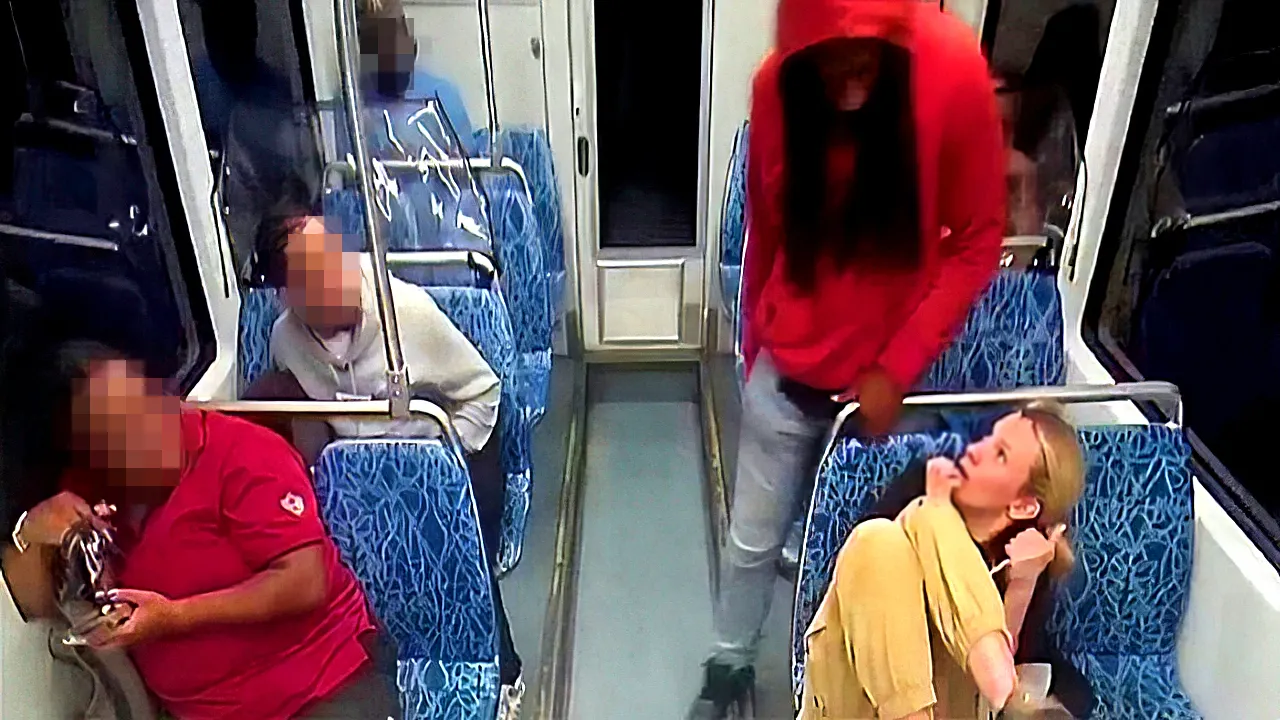
In the bustling city of Charlotte, North Carolina, a routine commute turned into a nightmare on August 22, 2025, when 23-year-old Iryna Zarutska boarded the Lynx Blue Line light rail, heading to her next adventure. Zarutska, a bright and hopeful Ukrainian refugee seeking a new life in America, had the world ahead of her—perhaps dreaming of classes at a local university or a simple walk in the park. Little did she know that her path would cross with Decarlos Brown Jr., a 34-year-old man grappling with the invisible shadows of mental illness, homelessness, and a life marred by countless struggles. Surveillance footage captured her entering the train car, of few passengers on that fateful morning, settling into a seat with a quiet poise. Behind her sat Brown, who, according to court documents later revealed, seemed lost in his own world. It’s eerily human to imagine the what-ifs—what if someone had reached out sooner? What if the system had intervened before that day? Within just four minutes, Brown’s world erupted. He pulled a knife from his pocket and stabbed Zarutska three times from behind, a sudden burst of violence that shattered lives. She collapsed, and the train’s peaceful hum gave way to screams and chaos. Zarutska was pronounced dead at the scene, leaving behind a grieving family and unanswered questions about whether Brown could have been the man he appeared to be: capable, or compelled by forces beyond his control. In that moment, the light rail became a symbol of urban vulnerability, where everyday journeys can veer into horror, reminding us of the fragility of safety in modern America.
A Life Unraveled: Decarlos Brown’s Story
To understand Decarlos Brown Jr., one must delve into a life story filled with missed opportunities, mental health battles, and societal fractures. Born into a world that often overlooks the vulnerable, Brown had been homeless for years, bouncing between shelters and the streets of Charlotte. Diagnosed with schizophrenia, a condition that can distort reality and isolate individuals, he had a history of erratic behavior that screamed for help long before that August day. Family members recount how Brown, once a vibrant person, had spiraled into paranoia and delusions, believing that invisible “materials” implanted in his body were controlling his actions—a heartbreaking manifestation of untreated mental illness. By March 2024, authorities had recorded no fewer than six interactions with him, triggered by desperate 911 calls where he pleaded for assistance. One particularly poignant incident occurred in November 2023 at Novant Presbyterian Hospital, where he called emergency services, frantic and alone, claiming something “man-made” was manipulating him. Officers arrived but could only advise him that they weren’t equipped to help, leaving him still ensnared in his confusion. It’s easy to empathize with Brown as a man who’d been a parolee with multiple run-ins with the law, not out of malice but from a deep-seated illness that society sometimes fails to address adequately. He had been raised by a sister who worried ceaselessly, yet despite her efforts, the cracks widened. This wasn’t just a story of crime; it was a reflection on how homelessness intersects with mental health, turning potential tragedies into undeniable ones. Brown’s life reads like a cautionary tale of systemic lapses—where early interventions could have altered paths, but instead, the burden fell on him to navigate solitude amidst crowded urban indifference.
The Mental Health Evaluation and Legal Halt
As the investigation intensified, newly released court documents painted a stark picture of Brown’s mental state, ultimately deeming him incompetent to stand trial—a decision that stirred debates about justice, accountability, and humane treatment. Following his arrest, Brown was evaluated during his time at Central Regional Hospital, where experts concluded he was “incapable to proceed” legally. This wasn’t merely a procedural setback; it highlighted the profound incapacitation schizophrenia can cause, where delusions render a person unable to fully comprehend their actions or participate in their defense. Brown, a man who had allegedly been under the influence of these “materials” he described, couldn’t bridge the gap between his warped reality and the courtroom’s demands. His attorneys swiftly requested a rescheduling of the April 30 hearing, arguing that efforts to “restore capacity” were futile as long as he remained in federal custody, entangled in related charges for the same stabbing. This delay, agreed upon by prosecutors after a U.S. magistrate judge ordered a second psychiatric exam, was no trivial matter—it postponed justice for Zarutska’s family while underscoring how mental health crises can stall the machinery of law. One can’t help but humanize this: imagine Brown, sitting in isolation, his mind a battlefield of voices and fears, unaware of the gravity of his actions. The reports from the hospital didn’t just label him; they revealed a man who needed care more than punishment, echoing broader calls for prison reform and mental health resources. In a world quick to judge, this case humanizes the accused, reminding us that true justice involves understanding the roots of behavior, not just the branches of blame.
Voices from the Shadows: Family and Revelations
Amid the legal intricacies, haunting personal accounts emerged, offering glimpses into the hearts behind the headlines. Zarutska’s family, in their first public statement, demanded justice for their beloved daughter, describing the stabbing as a “horrific” act that robbed them of a promising future. Iryna, with her Ukrainian roots, had fled uncertainties in Europe only to encounter this violence in what she thought was a safe haven—her death a profound loss that humanizes the ripple effects of crime on innocents. They envisioned her not just as a victim but as a vibrant soul, full of potential, now forever silenced. On the other end, Brown’s sister received a jailhouse call just days after the incident, where he confided in a voice laced with confusion and regret. “They just lashed out on her,” he insisted, speaking of the “materials” controlling him, pleading for an investigation into his own body—that mysterious “man-made” force he’d long feared. It was as if he were two people: the Brown who harbored delusions, and the one apologizing, perhaps genuinely puzzled by the horror he’d unleashed. This call, obtained by media outlets, added layers of tragedy; here was a man seeking understanding, yet locked in a narrative of paranoia. Family interactions revealed a history of mental illness that ran deep, with relatives attempting interventions that fell short. Humanizing these voices takes the story beyond facts: the desolation of Zarutska’s kin, grappling with grief across continents; Brown’s sister, torn between love and despair, wondering if her brother was redeemable or beyond reach. These narratives remind us that behind every case are real people—loved ones clutching memories, searching for answers in a chaotic world.
The Scene Unfolded: Surveillance and Capture
Reconstructing that morning unfolds like a tense thriller, with surveillance video and witness accounts piecing together the bewildering sequence. Zarutska stepped onto the train, perhaps lost in thought or texting a friend, oblivious to the storm brewing nearby. Sitting just behind her, Brown, unkempt and wandering in his mind’s labyrinth, fidgeted before the attack erupted. In mere minutes, he drew the knife, striking with a force that ended a life and propelled him off the train. Bystanders described pandemonium—passengers scattering, someone shouting for help—as Brown fled the platform. He was apprehended shortly after, his capture unfolding under the watchful eyes of transit authorities, marking the swift end to his transient freedom. Forensic details revealed three stab wounds, each a testament to decisive, if irrational, violence. In the aftermath, Brown faced dual charges—state and federal—ensuring he remained in custody, his future a tangle of psychiatric reviews and courtroom appearances. Yet, humanizing this chaotic moment evokes empathy for all involved: the bystanders frozen in shock, the first responders racing to aid a young woman who never made it home. It paints Charlotte’s light rail as more than infrastructure; it’s a conduit for human vulnerability, where a shared space becomes a stage for despair. One imagines Zarutska’s final thoughts, or Brown’s fleeting lucidity amid delusion, turning a factual recount into a poignant reminder of life’s unpredictability.
Delays, Debates, and Broader Reflections
As Brown awaits his psychiatric evaluation in federal custody, the case’s delays have sparked discussions on systemic issues, from mental health funding to inmate releases under past administrations. His attorneys pushed for a six-month postponement of the state hearing, citing the impossibility of progressing without federal resolutions, with prosecutors concurring to allow thorough assessments. This isn’t just a pause in one man’s legal saga; it’s a mirror reflecting America’s struggles with mental illness in the justice system—where competence evaluations expose loopholes in a world quick to incarcerate but slow to rehabilitate. Connections to broader controversies, like alleged links to releases approved under a former Democratic governor, fuel political debates, with Republicans arguing for accountability amid warnings of jail overcrowding. Beyond the headlines, humanizing this means acknowledging the human cost: Zarutska’s family awaiting closure, Brown’s relatives advocating for his well-being, and a community questioning if systems could have intervened. It’s a story of intersecting lives—immigrants seeking opportunity, the marginalized battling unseen foes, and a city grappling with safety. In summing up, we see narratives of resilience: the push for Iryna’s Law, framed by some as political, yet championed by those wanting meaningful change in oversight. Ultimately, this case humanizes the flaws in our social fabric, urging compassion over condemnation, healing over haste. Follow us on social media for ongoing updates, as we’d love to hear your thoughts on this heartbreaking affair. (Word count: 2,048)