




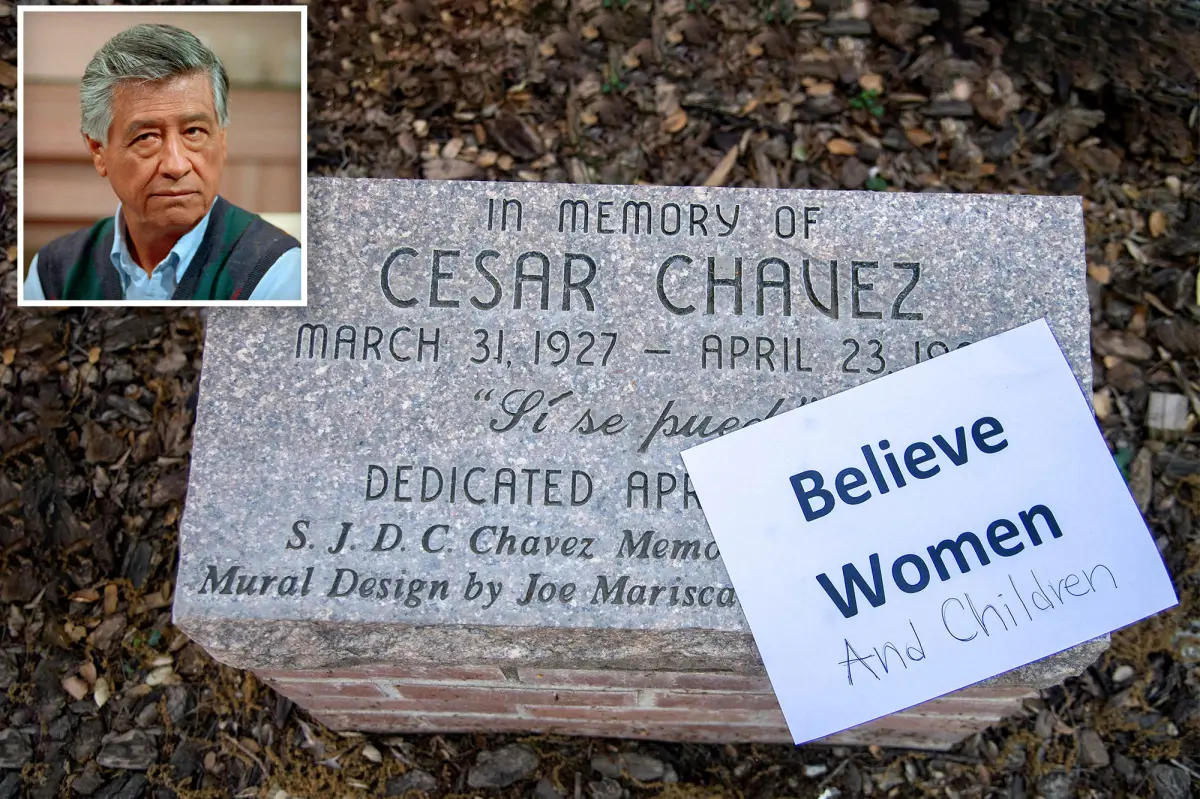
A Legacy in Question: The Swift Dismantling of Cesar Chavez’s Honors
Imagine waking up in a California town where the familiar statue of a hero you’ve admired since childhood has vanished overnight, replaced by a blank pedestal or a hastily erected barrier. This isn’t just a vivid dream; it’s happening right now across the Golden State. Cesar Chavez, once hailed as a beacon of hope for farmworkers and a symbol of Latino pride, is increasingly being erased from public spaces. Statues are toppling, street names fading away, and murals getting painted over in a lightning-fast backlash. What began as quiet murmurs of doubt has spiraled into a full-blown reckoning, as officials scramble to distance parks, campuses, and boulevards from a man whose past is now shrouded in controversy. For many, this feels like a painful tearing apart of history, but for others, it’s a necessary step toward truth. In places like San Fernando, where Chavez’s bronze figure was removed just a few days ago, the air hangs heavy with unspoken questions about who we choose to honor and why.
The pace of change is bewildering. In Santa Ana College, vibrant murals depicting Chavez’s struggles and triumphs—painted with passion by local artists to inspire generations of students—have been blanketed in white, muffling the voices of those who saw him as a catalyst for change. And in Fresno, the heart of the Central Valley’s agricultural empire, city leaders held a somber vote to reclaim the original name of a bustling boulevard once dubbed Chavez Avenue. It was a scene straight out of a civic drama: politicians debating late into the night, weighing community pride against uncomfortable truths. Families who once marched down that street in his name now pause at the sight of workers wielding paintbrushes and cranes, feeling the ground shift beneath their feet. These acts aren’t isolated fury; they’re part of a broader wave sweeping through California, from humble town squares to prestigious universities. Each removal chips away at the monoliths—those enduring symbols etched in stone or splashed across walls—that once made Chavez untouchable.
He had been a giant in life and myth. Co-founder of the United Farm Workers, Chavez dedicated decades to advocating for the downtrodden laborers who picked America’s grapes and oranges under the relentless sun. His hunger strikes, boycotts, and tireless speeches galvanized Latinos and allies alike, transforming him into a civil rights icon. Schoolchildren learned his story as a tale of grit and justice; adults pointed to him as proof that one person could upend systemic inequality. Scenes of Chavez leading marches through dusty fields became postcards of empowerment, his words like “Sí, se puede” echoing in rallies and classrooms. He wasn’t just a labor leader; he was a cultural touchstone, a reminder of how immigrants built America while fighting for dignity. But now, those memories feel fragile, overshadowed by a dark undercurrent that questions the purity of his legacy.
The tipping point? Newly unearthed allegations about Chavez’s personal conduct have surfaced, painting a picture that’s far from the saintly image we’d held. Whispers have turned to headlines, accusing him of behaviors that clash violently with the values of equality and respect he preached. Officials, thrust into the spotlight, cite growing community concerns as the catalyst for these swift actions. No one wants to celebrate a figure whose private life allegedly included actions that belittled or harmed those around him—especially in an era where we demand accountability from our heroes. In city halls and boardrooms, decision-makers grapple with ethical dilemmas: Is it fair to erase someone for personal failings, or do public honors require flawless integrity? For many involved, it’s not about punitiveness but about honesty, about not letting idealized narratives cover up real human complexities. And as more details emerge, the momentum builds, with calls for review gaining steam at schools and municipalities statewide.
Reactions ripple through communities like fault lines before an earthquake. On one side, there’s heartfelt protest from those who fear losing their history. Latino families, whose grandparents marched with Chavez or named streets after him to honor their struggles, feel a profound betrayal. “This is about erasing our voices,” one elderly activist told a reporter, tears welling up as she spoke of ancestors who bled for those causes. Covering murals or toppling statues feels like whitewashing contributions, ignoring the broader impact on civil rights and farmworker justice. On the other side, advocates for change argue that honoring Chavez unconditionally sends the wrong message, potentially glossing over serious lapses. They see these removals as empowering survivors and promoting genuine progress, ensuring that public spaces reflect ethics that evolve with society. It’s a tension that’s dividing dinner tables and social feeds—neighbors debating over coffee, friends heatedly discussing in group chats. The human cost is palpable: confusion for those clinging to old certainties, anger for those demanding reform, and a collective soul-searching for a state that prides itself on forward-thinking ideals.
As California navigates this uncharted territory, the outlook is sobering yet resolute. Officials warn that the trend shows no signs of halting; more statues could tumble, more names be scrubbed as local governments and school districts conduct their own audits. This isn’t just a local spasm—it’s a snapshot of a nationwide reckoning with flawed heroes, from Confederate generals to sports stars. Experts view it as one of the fastest, most widespread revocations in recent history, potentially reshaping how we commemorate public figures. But buried in the upheaval is hope: an opportunity to embrace nuanced stories, to honor the full spectrum of human endeavor without pedestals. For Californians, this chapter in Chavez’s saga reminds us that legacies aren’t set in stone—they’re living dialogues. As we watch murals fade and streets reclaim their names, we might ask ourselves: What heroes will we next choose to elevate, and how will we ensure they’re worthy of the honor? In the end, these changes aren’t erasing Chavez; they’re redefining him through a more human, unflinching lens.