







When Sex Toys Meet International Diplomacy: A Canadian Shop’s Unusual Encounter
In a peculiar twist of international relations, a small Canadian sex shop called Bonjibon recently found itself in an unexpected correspondence with the U.S. Department of Defense. The Toronto-based online retailer, owned by Grace Bennett, received two official letters from the Pentagon regarding some intimate products that had mysteriously made their way to Bahrain, a conservative Muslim nation in the Persian Gulf where such items are strictly prohibited. This unusual diplomatic incident highlights the cultural contrasts between Western liberal attitudes toward sexuality and the more conservative values maintained in many Middle Eastern countries.
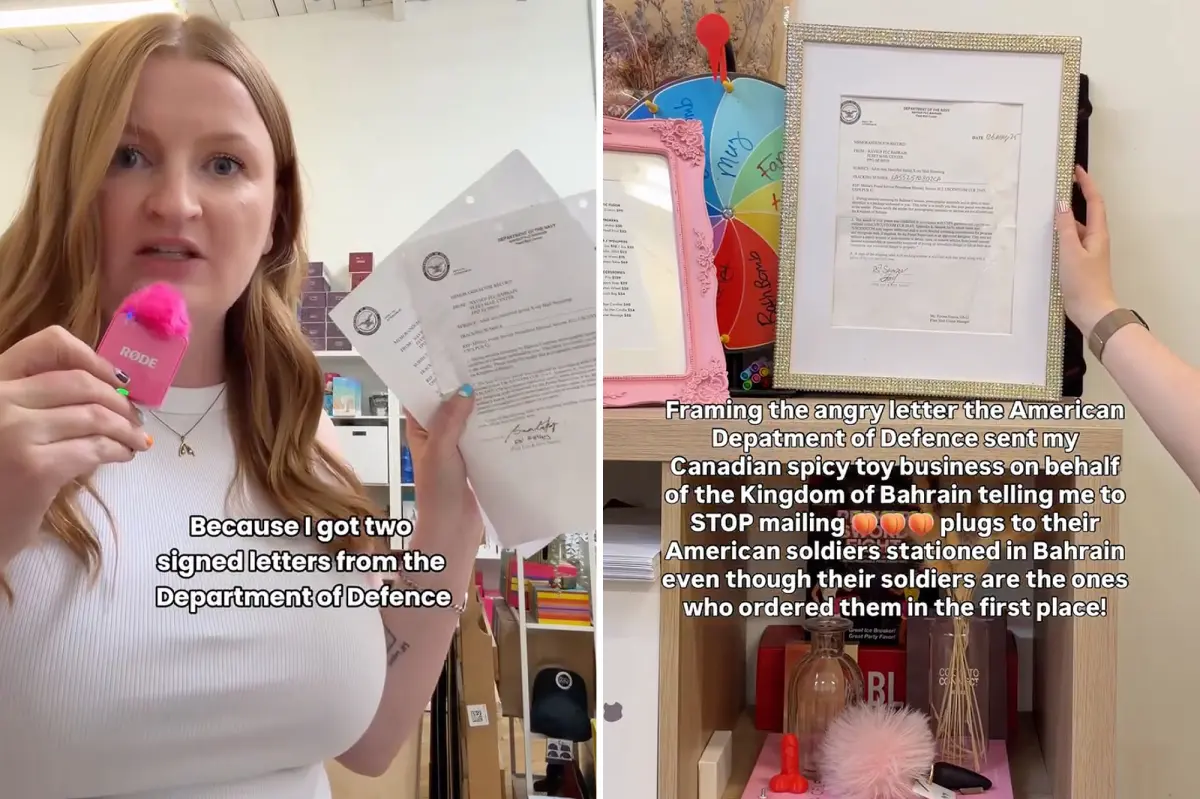
Bennett shared this surprising experience with her social media followers, explaining with a mix of amusement and bewilderment how she had unwittingly become entangled in an international incident. The shop owner revealed that two of her products – a butt plug and a bullet vibrator – had been intercepted during mail screening at a U.S. Navy base in Bahrain. Bennett emphasized that she hadn’t knowingly shipped these items to Bahrain and speculated that someone might have forwarded the packages to American military personnel stationed in the country. The official letters, bearing the grave subject line “adult item identified during x-ray mail screening,” came with the returned products and a stern reminder that “pornographic materials or devices are not allowed into the Kingdom of Bahrain.” To put Bahrain’s conservative stance in perspective, the country is so traditional in its values that even celebrity Kim Kardashian faced protests labeling her a “porn star” during a 2012 visit to promote a milkshake business.
The Pentagon’s communication took a surprisingly severe tone, categorizing the pleasure products as items that posed “an immediate danger to life or limb, or an immediate and substantial danger to property.” Bennett couldn’t help but laugh at this dramatic characterization of her merchandise, which stands in stark contrast to the casual attitude toward such products in Canada and many other Western countries. This incident illuminates the complex challenges of global commerce in an interconnected world where products can easily cross borders into jurisdictions with vastly different legal and moral frameworks. It also highlights the unique predicaments faced by military personnel stationed in foreign countries with different cultural norms, who must navigate both the regulations of their host nations and their personal desires for products freely available in their home countries.
Following this unusual exchange, Bennett took to social media to issue a friendly but firm warning to American soldiers stationed overseas, particularly in countries with conservative laws: “For all American soldiers who are stationed overseas, specifically ones stationed in countries where good vibes might be illegal, you cannot order from Bonjibon.” Her announcement mixed humor with genuine concern, recognizing the difficult position of service members posted far from home. “I’m so sorry for soldiers overseas,” she expressed sympathetically. “I know it’s a long and lonely journey – we cannot go on this journey with you.” Rather than being upset by the incident, Bennett chose to commemorate it by displaying the two Pentagon letters in bedazzled frames in her office, transforming what could have been an embarrassing international incident into a quirky anecdote and conversation piece.
The story quickly gained traction on social media, where users engaged in spirited discussions about the implications of the incident. Some commenters expressed surprise at the nature of the products ordered, with one Instagram user asking, “Hold on so the soldiers buying B-Plugs?” This prompted responses highlighting assumptions about gender and sexuality, with another user pointing out, “I can’t tell whether you forget women can be soldiers too, or that the male g-spot is found easiest through their backdoor. Either way, bplugs can be great for everyone.” The exchange reflects broader societal conversations about gender roles in the military and evolving attitudes toward sexual wellness products across diverse communities. Another commenter added personal perspective to the discussion, noting, “Wives are stationed there as well and we deserve a fun time while our spouses are away,” reminding audiences that military deployments affect entire families and relationships.
This lighthearted yet revealing incident bridges several significant themes: international relations, cultural differences, military life, and evolving attitudes toward sexuality across different societies. It demonstrates how even the most personal aspects of human life can unexpectedly become matters of international concern in our globally connected world. For Bennett and her small Canadian business, what began as routine transactions became an unusual brush with international diplomacy and military regulations. For the U.S. Department of Defense, it represented one of the more unusual aspects of managing a military presence in a culturally conservative ally nation. And for the wider public, the story provides a glimpse into the complex interplay between personal freedom, cultural norms, and international relations – all through the unlikely lens of a Canadian sex shop’s accidental shipment to Bahrain. In a world often divided by serious conflicts, this humorous episode reminds us of our shared humanity and the sometimes absurd situations that arise when different cultural attitudes collide.