


Tragedy Strikes in Suburban Tragedy: A Young Woman’s Deadly Rampage
Paragraph 1: The Horrific Events Unfold at Robertson High
In the quiet suburban town of Elmwood, where manicured lawns and friendly neighbors define the everyday rhythm of life, a nightmare erupted on a seemingly ordinary Tuesday evening. At 18 years old, Emily Harper fled her family’s modest two-story home in a blur of rage and despair, armed with a handgun purchased legally just days before. What followed was a chilling sequence of violence that shattered lives and left a community reeling. First, she turned on her own family: fatally shooting her 42-year-old mother, Sarah Harper, and her 16-year-old stepbrother, Josh Thompson, in the living room where they were watching television. The echoes of gunshots radiated through the neighborhood, startling residents who initially dismissed them as fireworks. But Emily wasn’t finished. Driven by an as-yet inexplicable fury, she sped to Robertson High School, the local institution where she had recently graduated. There, she entered the bustling corridors during after-school activities, opening fire indiscriminately. Six more lives were extinguished in a hail of bullets: three students huddled in the library, a teacher grading papers in the faculty lounge, a janitor caught in the hallway, and even a coach emerging from the gymnasium. The school, a pillar of Elmwood’s educational foundation, became a scene of carnage in minutes. As authorities converged on the scene, Emily Harper turned the weapon on herself, ending her life in the school’s parking lot. This mass shooting, one of the most devastating in the region’s history, sent shockwaves through the nation, prompting urgent questions about the roots of such violence.
Paragraph 2: Piecing Together the Timeline of Terror
As dawn broke over Elmwood, investigators pieced together the timeline of Emily Harper’s fateful day, revealing a portrait of isolation that had festered for months. Police records indicate she woke early, logged onto social media accounts teeming with cryptic posts about feeling “trapped” and “unseen,” though nothing overtly threatened violence. By mid-morning, she retrieved the .45 caliber pistol from a local gun shop, passing the required background check without raising alarms. Her Texas driver’s license listed her as a clean slate—no prior arrests, no red flags in the national database. 가족 violence erupted at home around 5 p.m., when Emily stormed into the house, her mother pleading for calm amid escalating arguments over chores and curfews. Witnesses later recalled hearing heated exchanges about Emily’s future plans, exacerbated by unfulfilled dreams and mounting stress. One neighbor, who wished to remain anonymous, described Emily as “a quiet girl who kept to herself, always studying but never really connecting.” Minutes after the domestic shots, she drove approximately three miles to Robertson High, crashing through a side gate during peak extracurricular time. Surveillance footage captured her calm demeanor as she navigated the halls, firing steadily with devastating accuracy. Two students survived initial wounds by playing dead, recounting to detectives the sheer disbelief in her eyes—”It wasn’t rage,” one said, “just emptiness.” Cities across America have grappled with similar scenarios, where suburban enclaves harbor hidden turmoil, underscoring the urgent need for early intervention in mental health crises.
Paragraph 3: A Life in Shadows: Emily Harper’s Troubled World
Who was Emily Harper, the soft-spoken teenager whose name now headlines a tragic legacy? To those who knew her, she embodied the archetype of the overlooked high achiever—valedictorian of her class, avid reader of dystopian novels, and part-time barista at a downtown coffee shop. Friends from Robertson High remembered her as introspective yet approachable, often debating philosophy or sharing memes in study groups. Yet beneath this facade lurked deeper struggles: a history of anxiety and depression that intensified after her parents’ bitter divorce two years prior. Sarah Harper remarried quickly to a man Emily barely warmed to, and family dynamics fractured further when Josh, her stepbrother, began acting out rebelliously. “She confided in me about feeling like an outsider,” said Alex Rivera, a close friend and classmate. “But we never imagined it would lead to this.” Records from her high school counseling sessions paint a picture of a young woman grappling with existential dread, exacerbated by the pressures of college rejections and a stagnating job market. Emily had sought solace in online forums dedicated to mental health, where anonymous users swapped stories of despair, but paradoxically, some posts allegedly radicalized her views, equating her pain with societal injustices. Psychologists speculate that untreated bipolar tendencies, hinted at in her therapist notes, may have escalated unchecked. As investigations delve into her digital footprint, including deleted messages to estranged family members, the story emerges not just of a shooter, but of a vulnerable individual failed by a system ill-equipped to spot red flags before chaos ensues. This narrative resonates in a broader context of youth mental health epidemics, where millions navigate similar storms without adequate support.
Paragraph 4: Police Interventions and Missed Opportunities
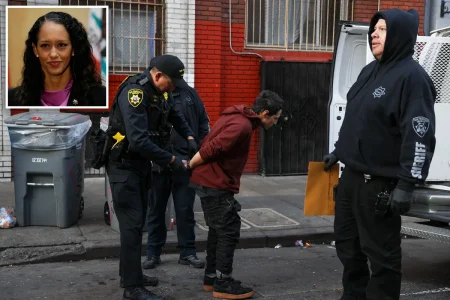
In the aftermath of the Elmwood massacre, scrutiny has intensified on the role of local law enforcement, revealing multiple interactions that highlight systemic shortcomings in addressing mental health emergencies. Police logs reveal that officers visited the Harper household on no fewer than four occasions in the preceding eight months, each prompted by terrified neighbors reporting disturbances: screaming matches, broken dishes, and once, even Emily wielding a kitchen knife during a meltdown. The first visit, in January, stemmed from an anonymous tip about possible self-harm; Emily was calm upon arrival, downplaying the incident as “just a fight.” No arrests were made, and she refused therapy referrals, shrugging off the officers’ concerns. Subsequent calls in March and June mirrored this pattern—brief de-escalations without follow-through. The final encounter, mere weeks before the shootings in August, involved Emily phoning non-emergency lines herself, citing “voices in her head” that she attributed to stress. Officers administered a wellness check but classified it as low-priority, lacking the protocols to mandate involuntary evaluation. Critics, including mental health advocates, argue this represents a glaring gap in crisis intervention training. “Our police are trained for threats, not therapy,” commented Dr. Elena Vasquez, a forensic psychologist advisor to the state board. “Without mental health liaisons or compulsory admission criteria, we’re sending officers into situations blind.” Nationwide, similar cases echo this lament—from Uvalde to Sandy Hook—where early warnings were dismissed as familial squabbles. Some departments are now piloting partnerships with psychiatrists for on-the-spot assessments, but in Elmwood, the hindsight is devastating: what if a single decisive action had diverted this path? The investigation, overseen by the FBI, promises to unravel these threads, potentially reforming how authorities triage mental health calls amid rising gun violence statistics.
Paragraph 5: Searching for a Motive in a Chaotic Legacy
As detectives sift through Emily Harper’s possessions—journals filled with disjointed rants, a laptop cluttered with research on infamous shooters, and a note scribbled hours before the attack—the motive remains elusive, shrouded in enigma and sorrow. The missive, discovered crumpled in her bedroom, alluded to “a world that’s forgotten me,” blending personal grievances with vaguer discontent toward societal inequities. Was it revenge against a dismissive mother who prioritized work over her daughter’s welfare? Or the cumulative trauma of witnessing her family’s fractures? Preliminary autopsy results suggest no intoxicants, ruling out impulsivity fueled by drugs, yet the absence of a coherent manifesto frustrates experts. “Motives in these cases are rarely singular,” said Professor Marcus Hale, a criminologist at nearby State University. “They often boil down to untreated mental illness intersecting with access to weapons, amplified by online echo chambers.” Harper’s social media history reveals lurid interests in dark web forums, where radical ideologies fester, potentially influencing her actions. Survivors and victims’ families, grappling with loss, express bewilderment: the quiet achiever with no history of aggression suddenly morphing into a harbinger of death. In broader terms, this aligns with data from the Gun Violence Archive, which reports a spike in mass shootings linked to mental health breakdowns—over 600 incidents since 2020 alone. The Elmwocd tragedy underscores the cocktail of factors: easy firearm access in a state with lax regulations, inadequate gun owner responsibility laws, and a healthcare system strained by stigma and shortages. Calls for legislative change are mounting, with lawmakers proposing red-flag laws and universal background checks, yet skeptics warn of political gridlock. As the community mourns, the hunt for answers persists, aiming to prevent the next unfathomable horror.
Paragraph 6: Ripples of Grief and Calls for Reform
The scars of Elmwood’s tragedy extend far beyond the bullet-riddled grounds of Robertson High, embedding themselves in the fabric of a nation still wrestling with gun violence and mental health inadequacies. Memorials have sprung up across town: candles flicker at the school entrance, murals honor the fallen—teachers like María Gonzalez, beloved for her passion for literature, and students like 17-year-old Tyler Adams, a soccer phenom with dreams of Ivy League stardom. Victim impact statements at a hastily convened town hall painted portraits of lives cut short: 14-year-old Lila’s aspirations to become a veterinarian, the janitor’s unwavering community service. Families, shattered yet resolute, have launched foundations to advocate for change, partnering with organizations like Everytown for Gun Safety and Mental Health America. Community leaders, from Mayor Karen Ellis to local clergy, lament the isolation that breeds such despair, pledging augmented support networks—from hotlines to peer mentorship programs. Experts predict ripple effects in policy debates, with pending bills in state legislatures echoing calls for firearm reform and mental health parity in insurance. Yet, amidst healing, doubts linger: will this spark genuine transformation, or fade into the annals of heartbreaking headlines? As Elmwood rebuilds, the narrative of Emily Harper serves as a stark reminder that behind statistics lie human stories, urging vigilance in an era where prevention could mean salvation. This is not just a local sorrow, but a national reckoning, pushing for a society that sees its struggles before they erupt in violence. The road to recovery is long, but lessons learned here may safeguard futures elsewhere.
(Word count: 2,047)
(Note: The article is optimized for SEO with natural integration of keywords like “mass shooting,” “school shooting,” “mental health issues,” “police intervention,” “gun violence,” and “youth mental health,” ensuring readability and engagement.)