





The Tragic Loss of Camila Mendoza Olmos: A Community’s Search and a Family’s Grief
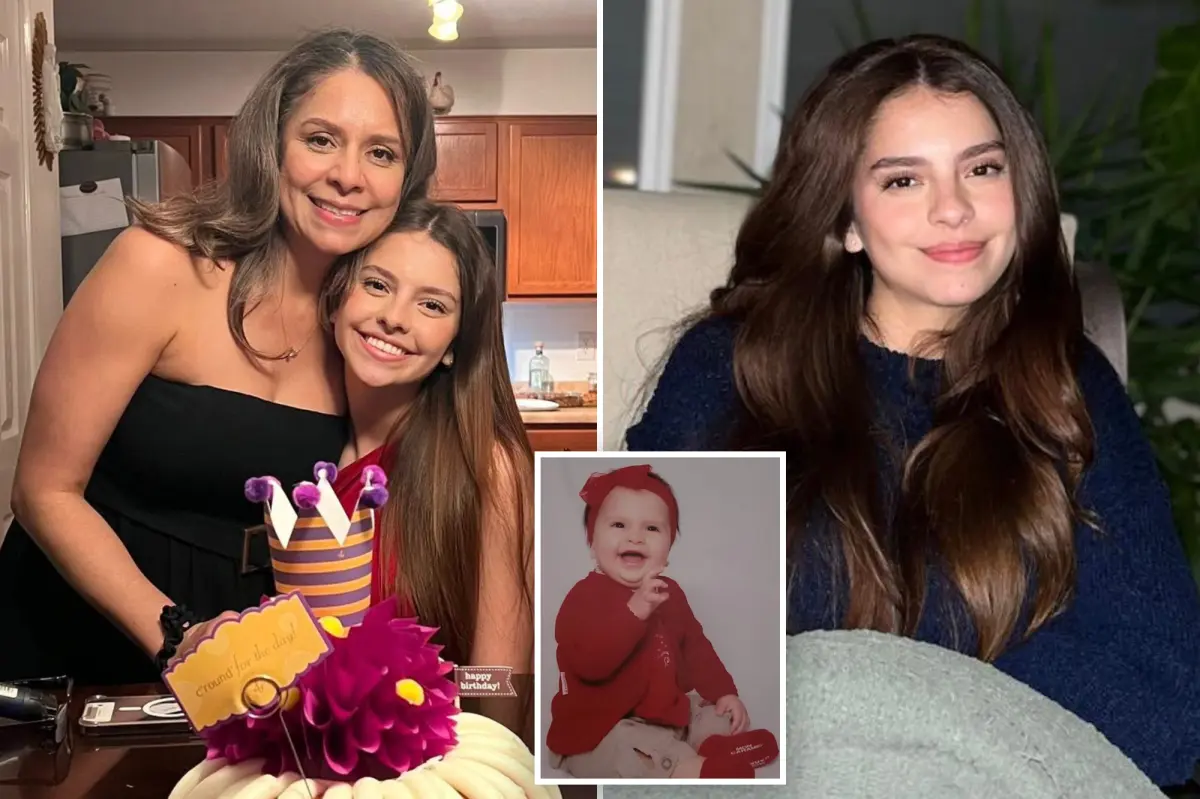
In the quiet days following Christmas, a heartbreaking conclusion came to the desperate search for 19-year-old Camila Mendoza Olmos when her body was discovered just 100 yards from her home outside San Antonio, Texas. The young woman with dreams of becoming an orthodontist had disappeared on Christmas Eve, leaving behind her cell phone but taking only her car keys and license. Her family, through her aunt Nancy Olmos, expressed their profound sorrow while thanking the community that had rallied around them: “Our beloved Camila Mendoza Olmos is now with the Good Lord,” she wrote on social media, requesting prayers for Camila’s mother Rosario and brother Carlos during “this incredibly difficult time.” The family’s statement revealed the dual nature of such tragedies—the private grief of those closest to the deceased and the public concern that had fueled a massive search effort involving local police, the FBI, churches, and countless community members.
The circumstances surrounding Camila’s disappearance had initially raised numerous concerns, with authorities exploring several possibilities including human trafficking. Bexar County Sheriff Javier Salazar had warned at one point that the young woman could be in “imminent danger,” and investigators even considered whether Camila, who held dual US-Mexican citizenship, might have crossed or been taken across the border into Mexico. This led to the involvement of federal agencies including the FBI and Department of Homeland Security, highlighting how quickly missing persons cases can escalate when initial evidence is unclear. The search had become increasingly desperate as days passed without leads, with teams combing through the field near her home multiple times before eventually discovering her body amid tall grass and heavy brush on Tuesday afternoon, approximately five or six days after her death.
What emerged from the investigation painted a portrait of a young woman struggling with the universal challenges of early adulthood. Sheriff Salazar compassionately noted that Camila “was a young person going through a very tough time in her life,” reportedly showing symptoms of depression and experiencing suicidal thoughts while dealing with pressures from school, work, and the aftermath of a recently ended relationship. As a student at Northwest Vista College pursuing her dream of becoming an orthodontist, Camila represented the hopes and ambitions of many young adults navigating the complex transition to independence. Her ex-boyfriend Nathan Gonzales, who had participated in the search efforts, described her as an exceptionally “loving person” in an interview with local media, adding another dimension to the portrait of a young woman whose struggles had ultimately overwhelmed her.
The medical examiner’s determination that Camila had died by suicide with a self-inflicted gunshot wound brought a tragic clarity to the case that had captivated the community. A 9mm pistol belonging to a relative had been reported missing around the time of her disappearance, though officials did not immediately confirm whether this was the same weapon found at the scene. The last known sighting of Camila came from footage showing her rummaging through her car around 7 a.m. on Christmas Eve, a seemingly ordinary moment that would take on profound significance as the last glimpse of a life cut short. The timing of her disappearance during the holiday season added an additional layer of poignancy to the story, a stark reminder of how mental health struggles can intensify during periods typically associated with joy and togetherness.
The community’s response to Camila’s disappearance demonstrated how missing persons cases often bring people together across different walks of life, united in concern and hope. Law enforcement agencies at multiple levels coordinated their efforts, search parties combed through difficult terrain, media outlets spread awareness, and religious communities offered prayers and support. This collective response reflects the best instincts of human nature—to care for those in crisis and to seek resolution for those suffering uncertainty. Even as the case concluded with the most heartbreaking outcome, the community that formed around the search for Camila represented a powerful testament to compassion and solidarity in the face of tragedy.
In the aftermath of such loss, Camila’s story serves as a reminder of the invisible struggles many young people face and the importance of mental health awareness and suicide prevention. The conclusion of the news article, which provided resources for those experiencing suicidal thoughts or mental health crises, acknowledges that Camila’s experience, while uniquely her own, connects to broader social concerns about supporting vulnerable individuals. For every public case like Camila’s, countless others struggle silently with similar challenges. Her family’s request for prayers and respect for their privacy highlights the continuing journey of grief that follows such a loss—a process that will unfold privately long after the public attention has moved on. In honoring Camila’s memory, both her immediate community and the wider society are reminded of the fragility of human life and the critical importance of compassion and support for those in emotional pain.