



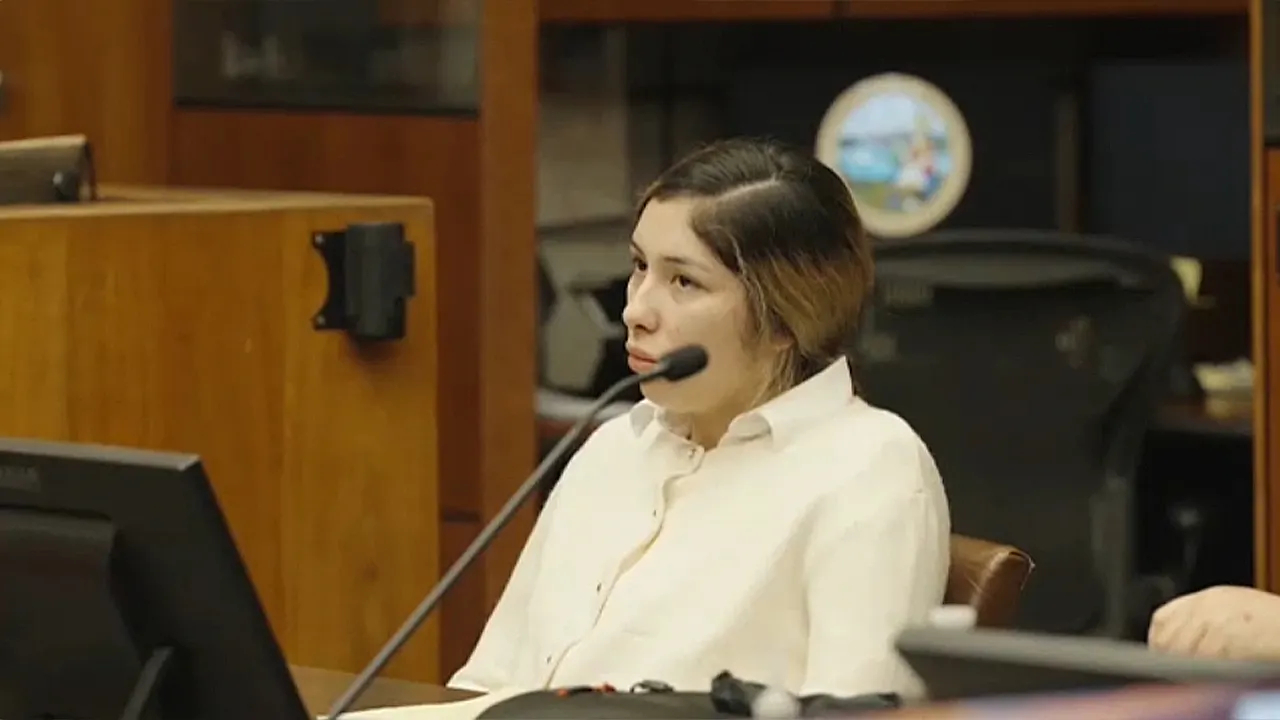
The Heartbreaking Case of Maya Hernandez and Her Lost Son
In the sweltering heat of a California summer, a young mother’s choices led to an unimaginable tragedy that would change lives forever. Maya Hernandez, just 20 years old, stood before a court in Bakersfield on a Wednesday that felt like any other day, but the verdict echoed with the weight of a decision made in haste and vanity. She had been found guilty of involuntary manslaughter in the death of her 1-year-old son, Amillio Gutierrez, after pleading down from a first-degree murder charge through a deal that reduced her sentence to a maximum of 15 years. Prosecutors painted her as someone who prioritized her appearance over her children’s safety, leaving them unattended in a scorching car while she indulged in cosmetic enhancements. The story began last June, when officers discovered Maya leaving her two young boys—Amillio and his 2-year-old brother—in a hot Toyota Corolla Hybrid outside a medical spa, where she had gone for lip and butt injections. Temperatures soared to 99 to 101 degrees that day, and without understanding the car’s automatic engine shutdown after an hour, the air conditioning stopped, turning the vehicle into a deadly oven. Amillio didn’t survive, pronounced dead at the hospital from hyperthermia, his body registering a terrifying 107.2 degrees. His brother, thankfully in stable condition, was taken into protective custody. It’s easy to imagine Maya as a young woman, perhaps overwhelmed by motherhood at such a tender age, seeking a moment of self-care amidst the chaos of raising toddlers alone. Yet, the facts reveal a cascade of poor judgments: she declined the spa’s offer to bring the kids inside, ignored opportunities to call relatives for help because she didn’t want to “irritate” her sister, and chose personal time over vigilance. As one prosecutor lamented, it was a criminal choice that favored her vanity above all. In humanizing this tale, we see Maya not just as a headline villain but as someone whose impulsiveness cost a life, forcing us to grapple with the fragility of responsibility and the unforgiving reality that one bad decision can shatter a family forever. Amillio’s aunt set up a GoFundMe, highlighting the father’s incarceration, leaving the boys momentarily without parental guidance. This narrative of loss reminds us that behind courtrooms and verdicts are real people—grieving families, a mother facing decades behind bars, and a community reckoning with preventable death.
A Mother’s Vanity Amid Family Struggles
Maya Hernandez was no stranger to hardship, growing up and navigating the challenges of young motherhood in a bustling Bakersfield neighborhood where dreams often clash with harsh realities. At 20, she had already become a parent to two little boys, their father locked away in prison, adding layers of isolation to her daily grind. Amillio, the youngest at just 1 year old, was a bundle of curiosity and energy, his big blue eyes lighting up the world around him; his 2-year-old brother, a sturdy little guy with a knack for mischief, depended on Maya for everything. Life wasn’t easy—financial strains, lack of support, and the unrelenting demands of infancy likely weighed heavily on her. Yet, in moments of vulnerability, Maya sought outlets, like the cosmetic procedures she pursued that fateful June day, perhaps chasing a fleeting sense of beauty or escape in a life that felt too confined. She drove to the medical spa in her Toyota Corolla Hybrid, bringing her sons along, unaware that what seemed like a quick errand would spiral into catastrophe. Leaving them in the car, she reasoned that the air conditioning would keep them cool; she even provided cookies and milk bottles as snacks and handed her older boy her phone for entertainment. It was meant to be brief, a selfish indulgence amid parental duties, but the spa’s staff saw through it, offering to let her bring the children inside—an offer Maya declined, prioritizing her “time to socialize with other adults” as prosecutors later argued. To humanize this, imagine Maya’s internal conflict: a young woman juggling toddler tantrums, sleepless nights, and self-doubt, who craved affirmation through her looks. Vanity, as the prosecution called it, felt like a small rebellion, a way to feel attractive and in control. But in declining help—fearing annoyances or complications—she unwittingly prioritized vanity over vigilance, leading to tragedy when the car’s engine shut off after an hour, shutting down the AC too. The defense countered that her negligence wasn’t callous; she didn’t foresee the hybrid’s quirks or the brutal heat. This paints Maya not as monstrous but as fallible, a reflection of how discretion slips when overwhelmed. Amillio’s brother survived, spared by chance, now in foster care, while Maya faces the fallout. Her family, especially the aunt who started the GoFundMe to honor Amillio, mourns a boy whose life ended because of choices born from desperation.
The Fateful Day in Bakersfield’s Heat
Picture the scene: Bakersfield in late June, the kind of oppressive sunshine that turns sidewalks into griddles, where locals seek reprieve in the shade but cars bake like ovens when neglected. Maya Hernandez arrived at the medical spa around midday, her mind on the injections that promised fuller lips and a lifted butt—a boost to her confidence amid the grind of single parenting. She parked her Toyota Corolla Hybrid, left the engine running to keep the AC humming, and stepped out, leaving Amillio and his brother strapped in their car seats. It was supposed to be a short procedure, maybe an hour or two, but the children were out of sight, out of mind. Outside, temperatures climbed to 99 to 101 degrees, and inside the car, the heat compounded quickly, turning it into a lethal trap. What Maya didn’t realize was the vehicle’s safety feature: after an hour, the hybrid automatically shut off to conserve energy, cutting the cool air flow. Minutes stretched into agony for the boys. Amillio, tiny and trusting at 1 year old, probably fussed at first, reaching for the cookies Maya left him, but as the heat escalated, his cries faded. His brother, 2 years old, held her phone tightly, watching videos to pass the time, perhaps unaware of the danger encroaching. Inside the spa, Maya underwent her treatment, chatting with staff, blissfully ignorant of the nightmare unfolding. Witnesses later described the scene of disarray when she returned: Amillio limp and purple, his body already cooling down in a way no mother should witness, carried urgently into the spa. The older boy looked stricken, “like he was going to have a stroke,” one person recalled, but he clung to life. Rushed to the hospital, Amillio arrived pale, blue-lipped, without a pulse; despite resuscitation efforts, his core temperature had soared to 107.2 degrees—far beyond survivable. He was pronounced dead, a victim of hyperthermia in a synthetic hell. To humanize this, consider the raw horror: Maya returning to find her baby unresponsive, the primal screams that must have escaped her as realization hit. It wasn’t malice; it was oversight amplified by technology and heat. The spa could have accommodated the kids, but she chose solitude. Her plea deal might offer some mercy, but the image of Amillio’s final moments lingers—a reminder that parental love, however genuine, must never be blinded by personal wants.
The Trial and Clash of Perspectives
Months later, in a December courtroom, Maya Hernandez faced a jury that mirrored the scorching Bakersfield sun in their scrutiny. Charged initially with second-degree murder, child endangerment, cruelty, and involuntary manslaughter, she took a plea, admitting to the lesser charge and avoiding a life sentence. Prosecutor Stephanie Taconi didn’t hold back, calling Maya’s actions criminal vanity: “Putting her looks above her children was wrong, not only morally but legally.” From the prosecution’s view, Maya made a deliberate chain of choices—ignoring spa offers for childcare, skipping calls to family to avoid “irritation,” and selecting self-indulgence over safety, ultimately costing Amillio his young life. They highlighted the heat’s deadliness, the car’s shutdown, and the boys’ helpless cries in the gathering inferno. Taconi’s words stung: “She chose a break, time to herself, time to socialize—and that choice killed her son.” Yet, to humanize the defense, they portrayed Maya not as callous but as tragically unaware, a young mother doing her best in bad circumstances. Her attorney argued negligence, yes, but not premeditated evil; she had left the AC on, provided snacks, entertained her older child with videos—all signs of care, not malice. The engine’s shutdown was unforeseen, a quirk of hybrid tech that even seasoned drivers might miss. Defense characterized it as an accident amplified by isolation—her husband’s incarceration leaving her support-less, her impulse for beauty a fleeting escape. They urged empathy, noting Maya’s youth, her role as a sole carer, and the plea as acceptance of responsibility. Witnesses painted vivid, emotional pictures: Amillio carried limp, his purplish hue betraying overheating’s toll; the 2-year-old’s stroke-like symptoms underscoring near-miss horror. In the end, the jury saw through defenses, but the plea softened the blow. Court TV reports captured the drama—accusations flying, emotions high—as Maya, facing up to 15 years, expressed remorse in pleas. This trial wasn’t just legal; it was a human reckoning, exposing how vanity intertwines with neglect, how one mother’s error becomes a family’s eternal scar. Amillio’s aunt, through GoFundMe, shared family grief, amplifying the boy’s memory in a plea for understanding amid judgment.
The Aftermath: A Family Shattered and Lessons Learned
As the gavel fell, Maya’s sentencing loomed for March 5, her path forward clouded by prison walls and reflection. At 20, she would spend at least a portion of her prime years behind bars, a stark contrast to the life she envisioned with her children. Amillio’s death reverberated through Bakersfield’s community, sparking conversations about parental responsibility amid modern life’s temptations. The GoFundMe organized by his aunt raised awareness and funds, detailing the father’s absence due to incarceration, underscoring how single parenting, compounded by external pressures, can lead to fatal oversights. Amillio’s brother, safe in protective custody, would grow up without his sibling or possibly his mother, his innocence marred by loss. For Maya, the consequence was a maximum 15-year sentence for involuntary manslaughter, a deal that acknowledged culpability without labeling her a killer. Prosecutors viewed it as justice for the “criminal” choice; defense saw mercy for a troubled young woman. To humanize this aftermath, imagine Maya’s remorseful nights, replaying the day—wishing she’d accepted spa help or called a cousin, regretting vanity’s hollow allure. Perhaps she dreams of Amillio’s giggles, vowing change if freed. Families touched by this tragedy grapple with prevention: never leave kids in cars, especially in heat, and recognize hybrid quirks. It’s a cautionary tale echoing wider societal issues—overworked parents, incarceration’s ripples, beauty industry’s lure. Maya, branded in headlines, becomes a symbol of fallibility, her story a sobering reminder that we all teeter on edges of error. Through grief, the Gutierrez family seeks solace, honoring Amillio while navigating a world forever altered.
Reflecting on Loss, Responsibility, and Redemption
In the quiet aftermath of tragedy, the story of Maya Hernandez and Amillio Gutierrez lingers as a poignant reminder of life’s fragility and the high stakes of human choices. Bakersfield’s relentless heat that June day mirrored the turmoil in Maya’s heart—a young mother grappling with youth, isolation, and desire for self-improvement. Her 1-year-old son’s death from overheating in the car, while she pursued cosmetic injections, wasn’t born of hatred but of unintended negligence, compounded by technological ignorance and personal imprudence. The plea to involuntary manslaughter and 15-year maximum sentence reflects a system balancing punishment with leniency, allowing Maya space for remorse. Yet, prosecutors’ damning critiques highlight how “vanity” eclipsed vigilance, a lesson for all parents: prioritizing self over children risks irreversible harm. Amillio’s aunt’s GoFundMe immortalizes his memory, painting a picture of a loving boy lost prematurely, with his father’s absence adding layers of devoid support. The older brother’s survival offers thin hope, even as he’s thrust into foster care. To humanize Maya beyond headlines, envision her as a product of circumstance—solo parenting toddlers, chasing fleeting beauty amidst hardship—whose error became fatal. This narrative urges empathy: mistakes happen, but accountability matters. As sentencing approaches in March, Maya’s path may include rehabilitation, emerging wiser. For society, it’s a call to action: support struggling families, educate on heat dangers, and question industries promoting self-improvement at family expense. Amillio’s story, tragic and preventable, compels us to forge stronger bonds, ensuring no child endures such preventable agony again. In human terms, it’s about loss etched in hearts, redemption sought in reflection, and hope that out of sorrow comes change. Maya’s trial marks not just punishment but a mirror for us all—reminding that true beauty lies in selfless love, not forsaken glances. As Fox News’ innovative audio feature invites listeners into stories like this, it bridges storytelling with empathy, prompting us to listen not just to facts, but to the quiet cries of lives affected. Ultimately, Amillio’s legacy endures through awareness, driving parents to guard their little ones fiercely, transforming tragedy into timeless wisdom for generations.